Finance · Markets
Taiwan Dollar Slides Past NT$32 as Foreign Reserves Drop by $7.9 Billion
The local currency hit its weakest level since March as a surging greenback and capital outflows triggered the steepest monthly reserve decline in four months
KEY TAKEAWAYS
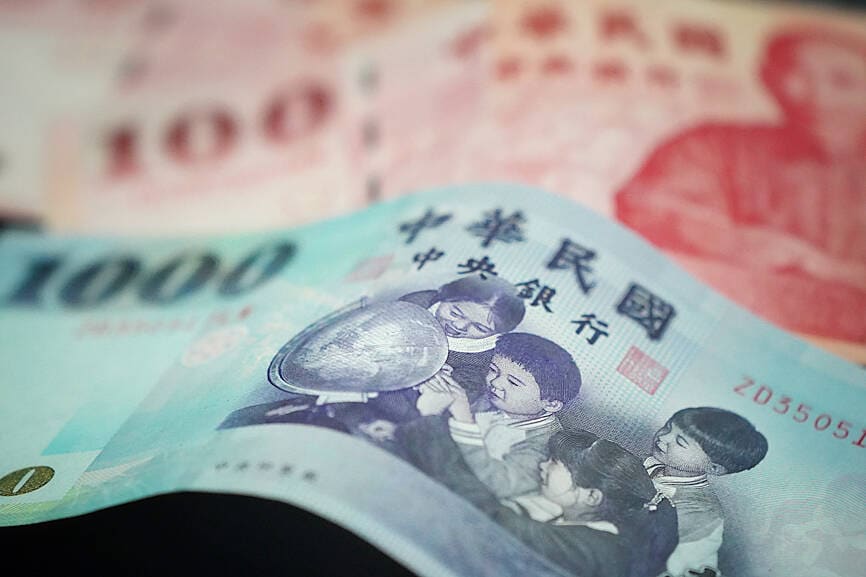
- ·Taiwan's dollar closed at NT$32.025 per US dollar, its weakest level since March, while foreign reserves declined $7.92 billion in June to $597.15 billion.
- ·Foreign institutional investors sold a net NT$580 billion in Taiwanese equities last month, driving dollar demand as capital exited the market amid elevated valuations.
- ·Central bank officials expect the Fed to hold rates steady this year, citing easing oil prices and weaker US employment data, though near-term currency direction hinges on dollar strength.
Currency Hits Three-Month Low
Taiwan's dollar closed at NT$32.025 against the greenback on Monday, marking its weakest position since late March and extending losses for a fourth consecutive session. The NT$0.095 decline from the previous trading day reflects broader regional currency weakness as the US dollar surges across Asian markets.
Foreign exchange reserves dropped $7.92 billion in June to $597.15 billion, the sharpest monthly contraction since March, according to central bank data released Monday. Taiwan retained its position as the world's fourth-largest holder of reserves, trailing China, Japan, and Switzerland.
The dual pressures on Taiwan's currency and reserves stem from shifting expectations around US monetary policy and substantial capital outflows from the island's equity markets. Foreign institutional investors sold a net NT$580 billion worth of Taiwanese stocks in June, amplifying demand for US dollars as funds exited the market.
Dollar Strength Drives Regional Moves
Eugene Tsai, director-general of the central bank's foreign exchange department, attributed the currency movements to US dollar strength reverberating across Asia. The Japanese yen has weakened to approximately ¥162 per dollar, illustrating the breadth of the greenback's advance.
Markets recalibrated their outlook following the Federal Reserve's June 17 meeting, as policymakers signaled continued efforts to bring inflation back to the 2 percent target. That shift raised expectations for tighter financial conditions, prompting global investors to redeploy capital toward higher-yielding assets.
Elevated valuations in the TAIEX, Taiwan's benchmark equity index, have also discouraged inflows, Tsai noted. The combination of expensive local stocks and anticipation of tighter US policy created an environment conducive to outflows.
Despite the recent turbulence, Tsai expects the Fed to hold rates steady this year. He pointed to easing international crude oil prices, which have retreated to pre-Iran conflict levels, and weaker US employment data as factors supporting a pause in rate hikes.
Reserve Decline Reflects Intervention and Valuation Effects
The $7.92 billion drop in foreign reserves resulted from two primary factors: the stronger dollar reduced the valuation of non-dollar holdings when converted back to US currency, and the central bank intervened to maintain orderly market conditions during periods of volatility.
Profit and dividend remittances totaled approximately $17 billion in June, contributing to a 1.5 percent monthly depreciation of the Taiwan dollar, central bank figures showed. The scale of outflows underscores the challenge authorities face in smoothing currency fluctuations during peak repatriation periods.
Dividend Season Concerns Downplayed
Tsai dismissed worries that the July-August dividend season would trigger further currency weakness. Major corporations including Taiwan Semiconductor Manufacturing Co. and MediaTek distribute dividends in multiple installments, spreading payment pressure over time rather than concentrating it in a single month.
Foreign investors do not automatically repatriate dividend income, Tsai emphasized. If they remain confident in returns from Taiwan's equity market, they may choose to reinvest locally rather than convert proceeds to dollars and remit them abroad.
Domestic firms are on track to pay out more than NT$2.5 trillion in cash dividends this year, the largest amount on record. While the sheer size of these payments could theoretically pressure the currency, the staggered distribution schedule and potential for reinvestment may mitigate the impact.
Outlook Tied to Global Factors
The Taiwan dollar's near-term trajectory will depend on the US dollar's path and global equity market performance, which influence both exporter hedging behavior and foreign fund flows. A sustained rally in the greenback or further weakness in regional equities could extend pressure on the local currency.
Taiwan's robust export performance and solid economic fundamentals provide underlying support for the currency, Tsai added. The island's technology exports continue to benefit from global demand for semiconductors and advanced electronics, generating steady dollar inflows that partially offset financial account outflows.
Currency markets across Asia remain sensitive to shifts in Fed policy expectations and risk sentiment. Any surprise in US inflation data or employment figures could trigger renewed volatility, reshaping the calculus for investors holding Asian assets and currencies.
RELATED STORIES

Fubon Hyundai Life Returns to Profit in First Half on Asset Management Gains
Cheng Wei-Lun · 2 min
Taiwan Stock Exchange Moves Odd-Lot Trading Start Time Forward
Cheng Wei-Lun · 3 min

Taiwan Consumer Confidence Falls Amid Record Growth Forecasts
Cheng Wei-Lun · 2 min

China Steel Pretax Profit Falls 55% as Asian Demand Weakens
Cheng Wei-Lun · 2 min
Spot something wrong? Email editor@briefasia.com. We log every correction publicly.