Technology · AI
STMicroelectronics Raises Cloud AI Revenue Target Amid Optical Component Supply Crunch
European chipmaker lifts data center forecast but warns full margin recovery depends on manufacturing restructuring through late 2027
KEY TAKEAWAYS
- ·STMicroelectronics increased its cloud AI revenue forecast on July 23, citing demand for optical components that exceeds current production capacity in data center applications.
- ·Gross margin is expected to improve sequentially through late 2026, but full profitability recovery depends on a manufacturing restructuring program concluding in the fourth quarter of 2027.
- ·The extended timeline may allow Asian foundries and optical suppliers in Taiwan, South Korea, and Southeast Asia to capture incremental market share as hyperscalers lock in multi-year procurement commitments.
Supply Bottleneck Caps Near-Term Growth
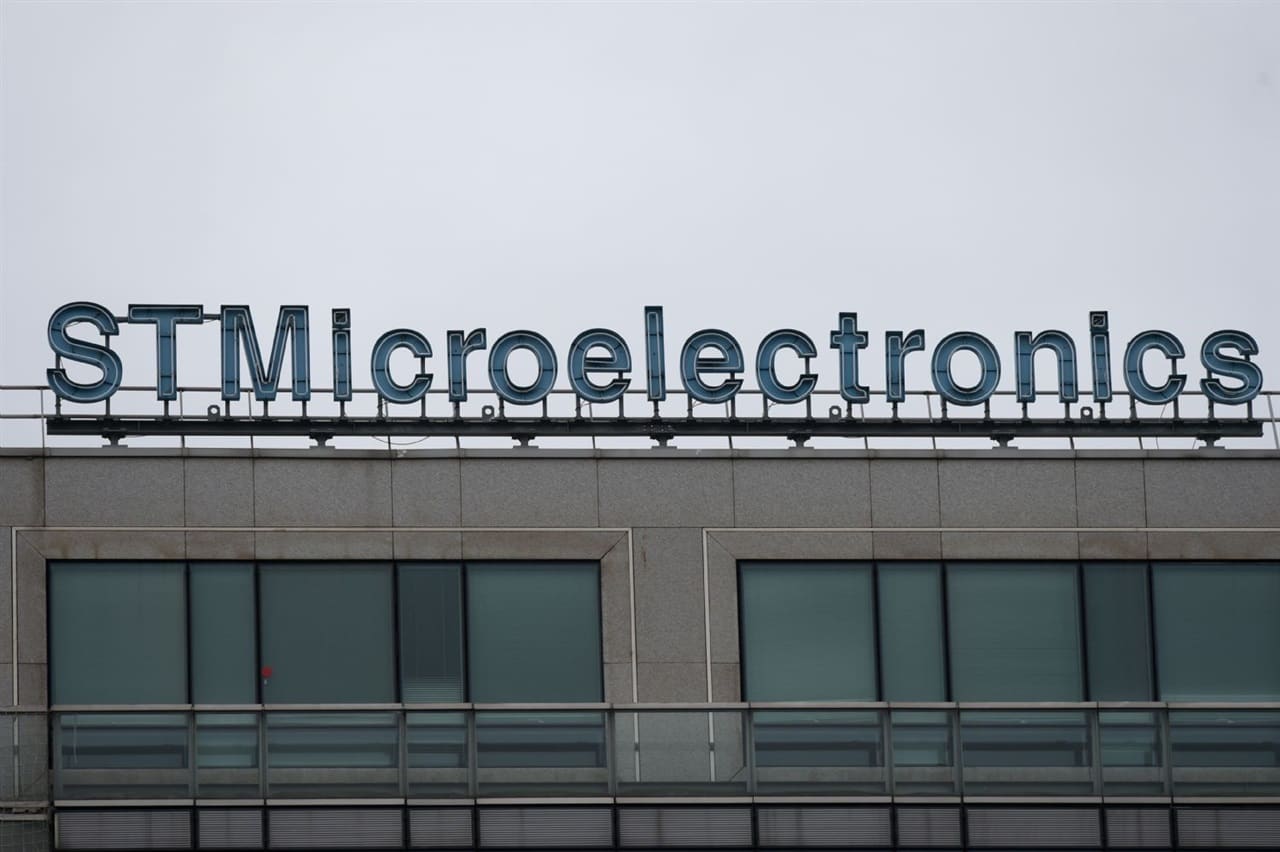
STMicroelectronics announced an upward revision to its cloud AI revenue projections during its second-quarter earnings call on July 23, revealing that demand for optical components serving data center applications is outpacing the company's ability to manufacture them. The Geneva-based semiconductor maker told analysts that its immediate constraint is production capacity, not customer orders.
The company guided investors toward improving gross margin performance through the remainder of 2026, but cautioned that meaningful profitability gains remain tied to a comprehensive manufacturing restructuring program that will not conclude until the final quarter of 2027. The timeline underscores the capital intensity and operational complexity of retooling fabrication lines to meet the specifications of next-generation AI infrastructure.
Optical Components Drive Upward Revision
The revised revenue target centers on silicon photonics and related optical interconnect technologies that enable high-speed data movement inside hyperscale data centers. Demand for these components has accelerated as cloud providers deploy larger AI training clusters and inference workloads that require exponentially higher bandwidth between processors, memory, and storage.
STMicroelectronics competes in this space with suppliers including Broadcom, Marvell, and a growing cohort of Asian foundries that have entered the optical module market over the past eighteen months. The European player has historically held a strong position in automotive and industrial semiconductors, but cloud infrastructure represents a smaller but rapidly expanding segment of its revenue mix.
The supply-demand imbalance reflects broader tightness in the optical component supply chain, where specialized materials, packaging equipment, and testing infrastructure have lagged the rapid scaling of AI workloads. Industry data suggests lead times for certain transceiver modules have stretched beyond twenty weeks, prompting hyperscalers to dual-source and pre-commit to volume allocations.
Margin Trajectory Split Across Two Phases
STMicroelectronics outlined a two-stage margin recovery. In the near term, gross margin is expected to trend upward sequentially through the third and fourth quarters of 2026, driven by higher utilization rates at existing fabs and a richer product mix tilted toward data center and automotive applications.
The second phase, contingent on the completion of the manufacturing overhaul, targets a structural improvement in profitability by mid-2027. The restructuring involves upgrading cleanroom equipment, transitioning select product lines to more advanced process nodes, and consolidating production across fewer but more efficient facilities. Management indicated that capital expenditure associated with the program remains within previously disclosed guidance ranges.
Analysts on the call pressed management on whether the margin outlook assumes stable pricing or incorporates potential declines as optical component supply catches up with demand. The company did not provide granular pricing assumptions but emphasized that its roadmap prioritizes differentiated products with integrated features that command premium positioning.
Asia Implications
The timeline carries significance for Asia's semiconductor ecosystem. Taiwan and South Korea have emerged as critical nodes in the optical component supply chain, with TSMC and Samsung foundries producing underlying silicon photonics chips, while assembly and test operations cluster in Taiwan, Vietnam, and Malaysia.
STMicroelectronics' extended restructuring schedule may create openings for Asian competitors to capture incremental share in the data center optical segment, particularly if they can ramp capacity faster. Conversely, the supply tightness validates the investment thesis for regional players expanding into silicon photonics, including emerging foundries in China that are targeting the domestic hyperscale market despite U.S. export controls on advanced lithography equipment.
The 2027 timeline also intersects with expected data center buildout cycles across Southeast Asia and India, where cloud providers are deploying AI-capable infrastructure to serve local language models and regional workloads. Procurement decisions made over the next twelve months will likely determine which suppliers lock in multi-year design wins as those facilities come online.
What Comes Next
Investors will watch STMicroelectronics' third-quarter results for evidence that gross margin is inflecting upward as promised, and for updates on the pace of the manufacturing transformation. The company's ability to meet its upgraded cloud AI revenue target without compromising profitability will hinge on execution discipline across both production ramp and cost structure optimization.
The broader question for the optical component market is whether other suppliers can close the supply gap before STMicroelectronics completes its overhaul, and whether demand remains robust if AI capital expenditure growth moderates in 2027. For now, the European chipmaker is betting that scarcity, not saturation, defines the near-term environment.
RELATED STORIES
Gigabyte Lifts Capital Spending as AI Server Orders Drive Record First Half
Cheng Wei-Lun · 2 min
SanDisk Posts Record Quarter as Data Center Revenue Surges on AI Storage Demand
Cheng Wei-Lun · 3 min

AMD Points to Server CPU Playbook as Template for AI Chip Growth
Cheng Wei-Lun · 3 min
Arm's Data Center Revenue Surge Fails to Offset Smartphone Royalty Concerns
Cheng Wei-Lun · 3 min
Spot something wrong? Email editor@briefasia.com. We log every correction publicly.