Asia · Politics
Southeast Asia Pushes Strait Access as Hormuz Closure Bites
ASEAN foreign ministers prepare draft language on navigation freedom while grappling with energy shortages from the US-Iran conflict
KEY TAKEAWAYS
- ·ASEAN foreign ministers are drafting a joint statement calling for freedom of navigation in international straits following the Strait of Hormuz closure that has disrupted regional energy supplies.
- ·The Philippines has declared a national energy emergency while previously announced regional fuel-sharing and grid initiatives remain unimplemented despite the crisis.
- ·China and the Philippines aim to finalize a South China Sea Code of Conduct by November, though analysts expect limited enforcement provisions in any agreement acceptable to all parties.
Energy Stress Shapes Diplomatic Agenda
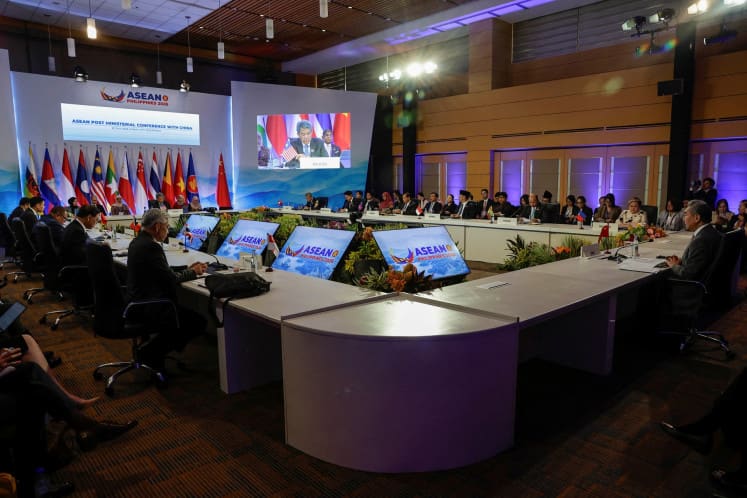
Foreign ministers meeting in Manila this week are preparing a joint statement that addresses navigation rights in international straits, a direct response to the closure of the Strait of Hormuz following recent military strikes on Iran. The draft communique introduces new phrasing on freedom of navigation and overflight above straits while separately demanding unimpeded passage through Hormuz.
The language reflects growing anxiety across import-dependent Southeast Asia, where fuel shortages and price spikes have intensified since the strait's closure. The Philippines has declared a national emergency to manage energy supply disruptions.
US Secretary of State Marco Rubio used his Manila visit to warn that Iranian control of Hormuz would establish a dangerous precedent. The concern resonates in a region that hosts the Strait of Malacca and Strait of Singapore, two of the world's busiest shipping lanes carrying vast volumes of containerized goods and energy shipments.
Regional Energy Plans Stall
While the draft statement gestures toward energy cooperation among member states, concrete progress remains elusive. Previously announced initiatives including a regional energy grid and fuel-sharing mechanism have yet to materialize, leaving individual countries to scramble for supply solutions as Middle East turmoil disrupts markets.
The gap between diplomatic language and operational capacity underscores a persistent challenge for the ten-nation bloc: translating consensus statements into binding commitments that address immediate crises.
South China Sea Tensions Persist
The Manila meetings opened under strain after a fresh clash between Chinese and Philippine vessels in disputed South China Sea waters. President Ferdinand Marcos summoned China's ambassador over the incident, yet both sides insisted the confrontation would not derail ongoing negotiations for a Code of Conduct governing the waterway.
Ambassador Jing Quan told reporters that Beijing's commitment to completing the code by year-end remains unchanged, regardless of bilateral friction. Malaysian Foreign Minister Mohamad Hasan expressed optimism that the agreement would be finalized by November's leaders summit in Manila.
Jing emphasized that the code would focus on rules of engagement rather than resolving territorial disputes, a limitation that has drawn skepticism from analysts who question whether any document acceptable to both Beijing and the diverse member states can carry meaningful enforcement provisions.
Dual Waterway Worries
The simultaneous focus on Hormuz and the South China Sea highlights Southeast Asia's vulnerability to chokepoint disruptions. The region depends on energy imports transiting the Persian Gulf while also managing tensions in its own contested waters, where overlapping territorial claims and naval incidents create persistent flashpoints.
The draft communique's emphasis on navigation freedom attempts to thread a diplomatic needle, asserting a principle that applies both to distant conflicts affecting energy supply and to local disputes where member states face direct pressure from a larger neighbor.
Whether the statement translates into coordinated action on energy security or substantive progress on maritime conduct rules will test the bloc's ability to move beyond declaratory diplomacy in a period of compounding regional stress.
RELATED STORIES
Philippine Water Operator Earmarks $400 Million for Southeast Asia Expansion
Mariel D. Santos · 2 min

Philippines Energy Budget Climbs 26% as Electric Vehicle Funding Surges
Priyanka V. Rao · 3 min
Philippine Manufacturing Expands at Fastest Pace Since 2016
Priyanka V. Rao · 3 min

Filipino Household Income Rose 16% but Spending Outpaced Gains
Mariel D. Santos · 3 min
Spot something wrong? Email editor@briefasia.com. We log every correction publicly.