Sustainability · Story
South Australia Faces Four-Day Wind Drought as Battery Storage Runs Dry
The renewable energy leader confronted wholesale prices hitting the legal ceiling twice while gas plants ran flat-out to keep power flowing.
KEY TAKEAWAYS
- ·South Australia experienced its worst wind lull since 2019, with 2,800 MW of wind capacity delivering just 124 MW on average over four days, a 4.5 per cent availability rate.
- ·Wholesale electricity prices hit the legal maximum of $20,300 per megawatt hour twice, while batteries drained and struggled to recharge during the extended shortfall.
- ·The state plans to double large-scale battery capacity to 2,500 MW and increase gas supply to manage future multi-day renewable energy droughts.
When the Wind Stops
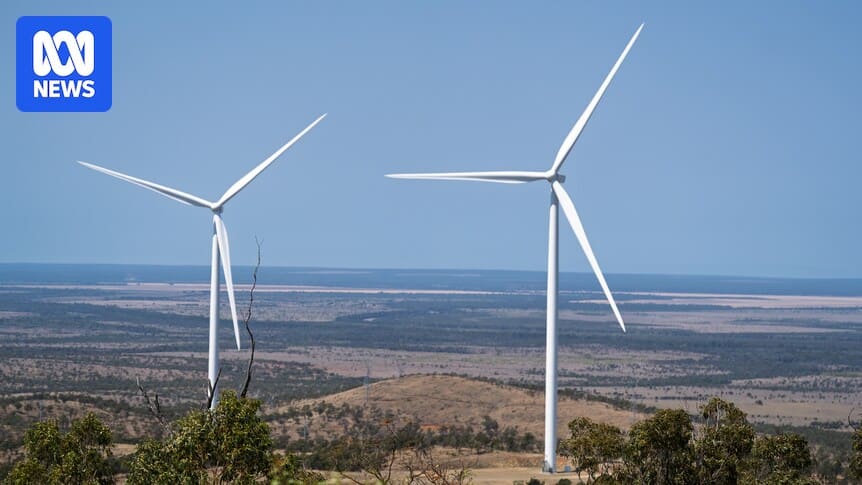
South Australia's electricity grid, one of the world's most wind-dependent systems, confronted an extreme test last week when wind generation dropped to 1 per cent of total supply during a four-day lull that began in late June. The state, which typically sources around 50 per cent of its power from wind turbines, saw its nearly 2,800 megawatts of installed wind capacity deliver an average of just 124 megawatts over the period, an availability rate of 4.5 per cent.
Gas-fired plants that normally sit idle sprang to life and operated at full capacity for days. Imports from neighbouring Victoria, itself running primarily on coal during the calm conditions, filled the gap. Wholesale electricity prices spiked to the legal ceiling of $20,300 per megawatt hour on two separate occasions, according to data from the Australian Energy Market Operator.
The episode marks the most severe wind drought the state has experienced since detailed records began in 2019, according to Paul McArdle of energy analysis firm Global-ROAM. Previous worst-case lulls had seen wind availability rates of 5.6 per cent and 6.6 per cent, making the recent event notably more extreme.
Battery Limits Exposed
Large-scale batteries, a key component of South Australia's renewable infrastructure, struggled to manage the prolonged shortage. Many battery operators discharged heavily through the afternoon and early evening of the first price spike on a Monday, with roughly half capturing the initial $20,300 interval. But almost none had sufficient charge remaining to capitalise when prices hit the ceiling again the following morning.
Some batteries were even charging during the second price spike, paying up to $10,000 per megawatt hour to store electricity generated overwhelmingly by gas plants. The dilemma facing operators was stark: holding charge for a spike that might never materialise versus discharging early and missing the peak.
Adding to the strain, transmission network constraints meant South Australia continued exporting electricity to Victoria even as domestic prices soared, a phenomenon electricity market designer Jess Hunt described as "counter-price flows" that were "particularly painful" during the crisis.
A Stress Test for Transition
The four-day period provided what electrical engineer Geoff Eldridge termed a "stress test" for a grid running predominantly on renewable sources. While a single day of low wind and solar output can create volatility, a multi-day lull examines the deeper resilience of the system, testing batteries, gas reserves, interconnector capacity and demand response mechanisms simultaneously.
The state's long-term trajectory remains upward. Six years ago, wind accounted for barely 40 per cent of South Australia's electricity; that share has now reached approximately 50 per cent on a rolling annual basis. But the recent lull underscored the flip side of weather-dependent generation: rapid swings from excess to scarcity, the continuing central role of gas as backup, and the limitations of batteries in managing extended shortfalls.
Solar generation remained solid throughout the week, partially offsetting the wind deficit. Yet the episode highlighted what former Kaluza Australia manager Gavin Mooney identified as the industry's evolving challenge: ensuring sufficient flexibility to manage the rare periods when wind and solar output falls across large geographic areas.
Planning for the Extremes
South Australia Energy Minister Tom Koutsantonis acknowledged the challenges posed by abnormal weather, even when infrequent. The state government is targeting significant volumes of long-duration storage that can be dispatched on demand. Large-scale battery capacity is set to more than double to 2,500 megawatts, enough to power roughly 300,000 homes for eight hours.
The minister noted that the state, as one of the world's leading jurisdictions in integrating high proportions of variable renewable energy, has been among the first to confront these challenges. A comprehensive strategy to bring more gas into the state is also intended to apply downward pressure on the elevated prices associated with short-term backup services.
Throughout the crisis, Adelaide's 1.5 million residents experienced no blackouts. The lights stayed on, but the cost of keeping them on revealed the growing pains of a grid at the bleeding edge of the renewable transition. The question now facing South Australia and other jurisdictions following its path is not whether renewables can power a modern economy, but how much flexibility, storage and backup capacity are needed to manage the extremes.
RELATED STORIES
Australia's Battery Surge Trims 1,500 Kilometers From Grid Expansion Plan
Priyanka V. Rao · 4 min
Australian Councils Block Water Supply to $12 Billion Renewable Project
Priyanka V. Rao · 4 min

Indian Benchmarks Hold Above Key Thresholds as Oil Prices Retreat
Priyanka V. Rao · 3 min
Aditya Infotech Valuation Hits 47x After 427% Rally, Market Share Claims Draw Scrutiny
Priyanka V. Rao · 4 min
Spot something wrong? Email editor@briefasia.com. We log every correction publicly.