Sustainability · Story
Australia's Battery Surge Trims 1,500 Kilometers From Grid Expansion Plan
Household storage boom and utility-scale pipeline push grid operator to scale back transmission infrastructure, but wind approvals still lag renewable targets
KEY TAKEAWAYS
- ·Australia's grid operator cut planned transmission lines to 6,000 kilometers from 7,500 kilometers after battery capacity hit 45 gigawatts, well above the 33 gigawatts forecast for 2030
- ·Household battery installations reached 600,000, driven by federal rebates, while utility-scale projects move through approvals in two years versus four years for wind and solar farms
- ·Wind energy approvals remain below target with only 9 gigawatts of the required 18 gigawatts in the pipeline, risking the 82 percent renewable electricity goal by 2030
Distributed Storage Reshapes Grid Blueprint
Australia's electricity grid operator has trimmed its transmission build-out by nearly 20 percent after distributed battery capacity surged past earlier forecasts, according to the latest national infrastructure plan released this week.
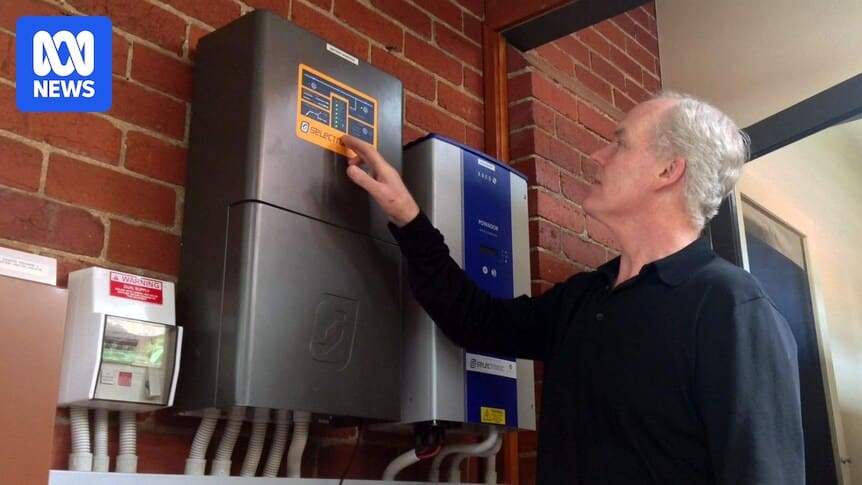
The Australian Energy Market Operator now expects 6,000 kilometers of new transmission lines will be needed by 2050, down from 7,500 kilometers projected in the previous blueprint. The revision follows explosive growth in household batteries, which have reached 600,000 installations nationwide, and a utility-scale storage pipeline that has ballooned to 45 gigawatts, well ahead of the 33 gigawatts the operator had modeled for 2030.
Most household battery installations have occurred in the past twelve months, driven by government rebate programs that lowered upfront costs. At the utility scale, battery projects are moving through connection approvals in roughly two years, faster than the four-year average for wind and solar farms.
The operator's biennial Integrated System Plan maps the lowest-cost path to overhaul the country's aging coal-dependent grid. Total private investment required through 2050 has been revised down to 106 billion Australian dollars, reflecting falling technology costs and the accelerated pace of distributed energy adoption.
Transmission Still Critical, Savings Quantified
While battery growth has eased pressure on high-voltage infrastructure, the grid operator emphasized that the remaining 6,000 kilometers of transmission remain essential. Those lines will require roughly six billion dollars in capital but are forecast to deliver 28 billion dollars in consumer savings by unlocking access to lower-cost renewable energy zones.
"Transmission is a relatively small share of overall system investment but delivers substantial benefits for consumers," said Daniel Westerman, the operator's chief executive, in a statement accompanying the plan.
Energy Consumers Australia noted that household investments in solar and storage reduce the need for large centralized projects, spreading cost benefits across the national market. The advocacy group argued that minimizing grid-scale spending ultimately lowers bills for all customers, not just those who install their own systems.
Wind Approvals Fall Short of 2030 Pathway
The plan identifies a significant gap in wind energy development. To meet the federal government's 82 percent renewable electricity target by 2030, the grid requires 38 gigawatts of new utility-scale solar and wind capacity. While solar projects are broadly on track, only nine gigawatts of the 18 gigawatts of required wind capacity are currently in the approval pipeline.
Permitting delays and community opposition have slowed wind farm approvals, with projects averaging four years from proposal to connection. The operator called for streamlined processes to accelerate delivery and avoid reliability risks as coal plants retire.
Two-thirds of the national coal fleet is forecast to close by 2035, with all coal generation expected offline by mid-century. Renewable sources supplied roughly 45 percent of electricity demand in the 2025-26 financial year, according to the operator, and exceeded 50 percent during the December 2025 quarter. For a brief half-hour period in October 2025, renewables met nearly 80 percent of instantaneous demand.
Data Centers Drive Commercial Load Growth
Artificial intelligence infrastructure is emerging as a major new source of electricity demand. The grid operator identified more than 160 data centers currently operating in Australia, concentrated in Sydney, Melbourne, Brisbane, and Perth. These facilities account for approximately two percent of grid-supplied power today but are projected to grow at 25 percent annually, reaching nearly 10 percent of underlying demand by 2050.
That growth trajectory would represent five times the current share and equal roughly 20 percent of today's total consumption. The operator noted it is examining regulatory frameworks to manage system impacts and ensure data center expansion does not undermine grid stability.
Household demand, by contrast, is expected to decline in absolute terms despite population growth, as rooftop solar and home batteries increasingly meet residential needs. The expansion in overall grid size will be driven almost entirely by commercial and industrial users.
Asia-Pacific Context
Australia's battery deployment outpaces most regional peers on a per-capita basis, supported by high rooftop solar penetration and targeted subsidy schemes. The Cheaper Home Batteries Program, a federal initiative, has been central to the residential storage boom, offering rebates that reduce purchase costs by thousands of dollars per unit.
Globally, renewable energy attracted three times the investment of coal in 2024 and 2025, according to the operator's analysis. Australia's shift mirrors broader trends across Asia-Pacific markets, where falling battery and solar costs are reshaping generation planning and reducing reliance on centralized thermal plants.
The grid operator acknowledged that technical challenges are only part of the transition equation. Workforce shortages, rising material costs, and community opposition to infrastructure projects all pose risks to timelines. Slower progress, the plan warned, would erode consumer benefits and threaten reliability as coal retirements accelerate.
Energy Minister Chris Bowen said the independent analysis confirms that renewable energy backed by gas and battery storage remains the most cost-effective pathway for the national electricity system.
RELATED STORIES
Australian Councils Block Water Supply to $12 Billion Renewable Project
Priyanka V. Rao · 4 min
Hong Kong Tests Real-Name Booking for Geopark Trail After Visitor Surge
Lim Hui Ying · 3 min

India's Equity Markets Show Signs of Recovery Amid Easing Macro Pressures
Priyanka V. Rao · 4 min

Jefferies Warns Investor Returns May Derail AI Rally
Cheng Wei-Lun · 3 min
Spot something wrong? Email editor@briefasia.com. We log every correction publicly.