Sustainability · Story
Australian Councils Block Water Supply to $12 Billion Renewable Project
Local governments in New South Wales refuse infrastructure access until state funds upgrades, threatening construction timeline for major clean energy zone
KEY TAKEAWAYS
- ·Four councils in New South Wales have blocked EnergyCo's access to municipal water systems for the New England renewable energy zone, citing treatment capacity limits that would exceed local supply during construction between 2028 and 2032.
- ·EnergyCo's assessment shows peak construction in Uralla would push water demand to 332 percent of the council's daily capacity, while Armidale could face 130 percent usage during drought conditions.
- ·The state government allocated $60 million in May for local infrastructure tied to the zone, but councils demand binding commitments to upgrade water systems before allowing project access.
Standoff Over Infrastructure
Four regional councils in northern New South Wales have cut off water supply negotiations with EnergyCo, the state entity developing one of Australia's largest renewable energy zones. The local governments are demanding the state commit funding for infrastructure upgrades before allowing access to municipal water systems needed for construction.
EnergyCo's recently completed infrastructure assessment reveals that building out the New England zone will push demand beyond what existing treatment plants can deliver. During the anticipated construction window between 2028 and 2032, daily requirements would hit 8.7 megalitres in Armidale, 11.8 megalitres in Uralla, 7.8 megalitres in Walcha, and 7.2 megalitres in Tamworth.
The figures represent water needed for concrete batching, dust suppression, and temporary housing for construction crews. Current groundwater and surface treatment systems would supply most of it, but the assessment flags critical gaps.
Capacity Crunch
Treatment facilities in Uralla and Walcha lack the throughput to handle both residential needs and project demand simultaneously. Across all four jurisdictions, summer peak usage periods would leave systems unable to meet the combined load, according to EnergyCo's study.
Armidale's situation illustrates the scale of the mismatch. If drought conditions return during peak construction activity, project water requirements could consume 130 percent of the municipality's total potable capacity. That scenario prompted Armidale Regional Council to pass a resolution last month barring water allocation to renewable projects until the state addresses what officials term a regional water security deficit.
Sam Coupland, Armidale's mayor, criticized the state government for what he described as slow movement on enabling infrastructure. He noted the region is hosting the renewable zone and expects reciprocal investment in local systems before construction equipment arrives.
The council has designed a package that includes rehabilitating Oaky River Dam, building connecting pipelines, and raising Malpas Dam's wall by 6.5 meters. Planning approvals are underway, with funding requests submitted to state and federal governments. Coupland emphasized the council is not opposing renewable energy but insists infrastructure must precede construction activity.
Uralla's Hard Line
Conditions are tighter in Uralla Shire, where peak project demand would drive total water use to 332 percent of the council's 5-megalitre daily capacity. Mayor Robert Bell said the numbers make water allocation impossible under current infrastructure.
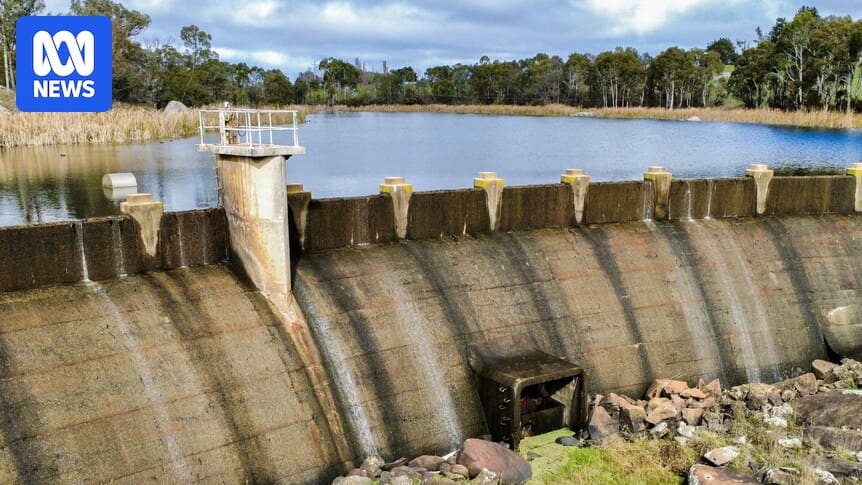
The shire draws from Kentucky Creek Dam, which fell below 25 percent capacity during the 2018-2022 dry period. Recent assessments found approximately 30 percent of the dam's nominal 500-megalitre volume is now silt, reducing effective storage. Annual consumption runs around 350 megalitres, leaving little margin during dry cycles.
Uralla implemented level two restrictions early in 2026 before autumn rainfall provided relief. Bell said the council lacks financial resources to develop alternative sources and expects the state to fund solutions.
EnergyCo's Response
EnergyCo's assessment examined several mitigation pathways, including reducing the total project count from 114 facilities to 37, trucking water from distant sources, or constructing new treatment and storage infrastructure in the region.
Jullian Watson, deputy project director at EnergyCo, said the forthcoming Environmental Impact Statement will detail strategic responses to the water constraints. Release is scheduled for later this year. Watson noted researchers are exploring unconventional sources, including treated water from decommissioned mining operations, though feasibility studies are still in early stages.
In May, the state government allocated $60 million for local infrastructure, services, and employment programs tied to the New England zone through a Community and Employment Benefit Program. Watson expressed confidence that workable solutions will emerge before the 2028 construction start date, emphasizing collaboration with local governments to avoid compromising either project timelines or municipal water availability.
Regional Stakes
The New England renewable energy zone represents a cornerstone of New South Wales' decarbonization strategy, with planned wind and solar capacity intended to replace retiring coal generation. The state has designated five such zones across regional areas, each requiring substantial construction water for foundations, roads, and ancillary facilities.
The current impasse underscores a recurring challenge in Australia's energy transition: aligning state-level project timelines with the fiscal and operational realities of rural local governments. Councils typically operate on narrow budgets and maintain aging infrastructure designed for stable populations, not large temporary influxes of industrial activity.
Water security has become a flashpoint in multiple renewable energy zones across the country. In Queensland's Central West zone, similar disputes emerged over bore water extraction limits. In Victoria, councils near the Western Renewable Energy Zone negotiated upfront infrastructure funding before granting access approvals.
The New England dispute also highlights the gap between planning assessments and physical delivery. EnergyCo's study quantifies the shortfall but does not bind the state to fund upgrades. Councils, meanwhile, face political pressure from ratepayers wary of shortages and infrastructure wear.
Negotiations are expected to intensify as EnergyCo finalizes its Environmental Impact Statement and moves toward construction procurement. The outcome will likely set precedent for how state governments manage infrastructure dependencies in future renewable energy zones across Australia's rural regions.
RELATED STORIES
Australia's Battery Surge Trims 1,500 Kilometers From Grid Expansion Plan
Priyanka V. Rao · 4 min

Australia's Job Market Cools as Vacancies Fall and Unemployment Creeps Higher
Priyanka V. Rao · 4 min

Three Kirloskar Group Stocks Post 20%-Plus Profit Growth Over Three Years
Rajesh K. Iyer · 4 min
Hong Kong Tests Real-Name Booking for Geopark Trail After Visitor Surge
Lim Hui Ying · 3 min
Spot something wrong? Email editor@briefasia.com. We log every correction publicly.