Technology · Products
SkyDrive Tests High-Speed Flying Car Over Japan's Seto Inland Sea
Japanese startup demonstrates advanced eVTOL prototype as it accelerates toward commercial launch in two years
KEY TAKEAWAYS
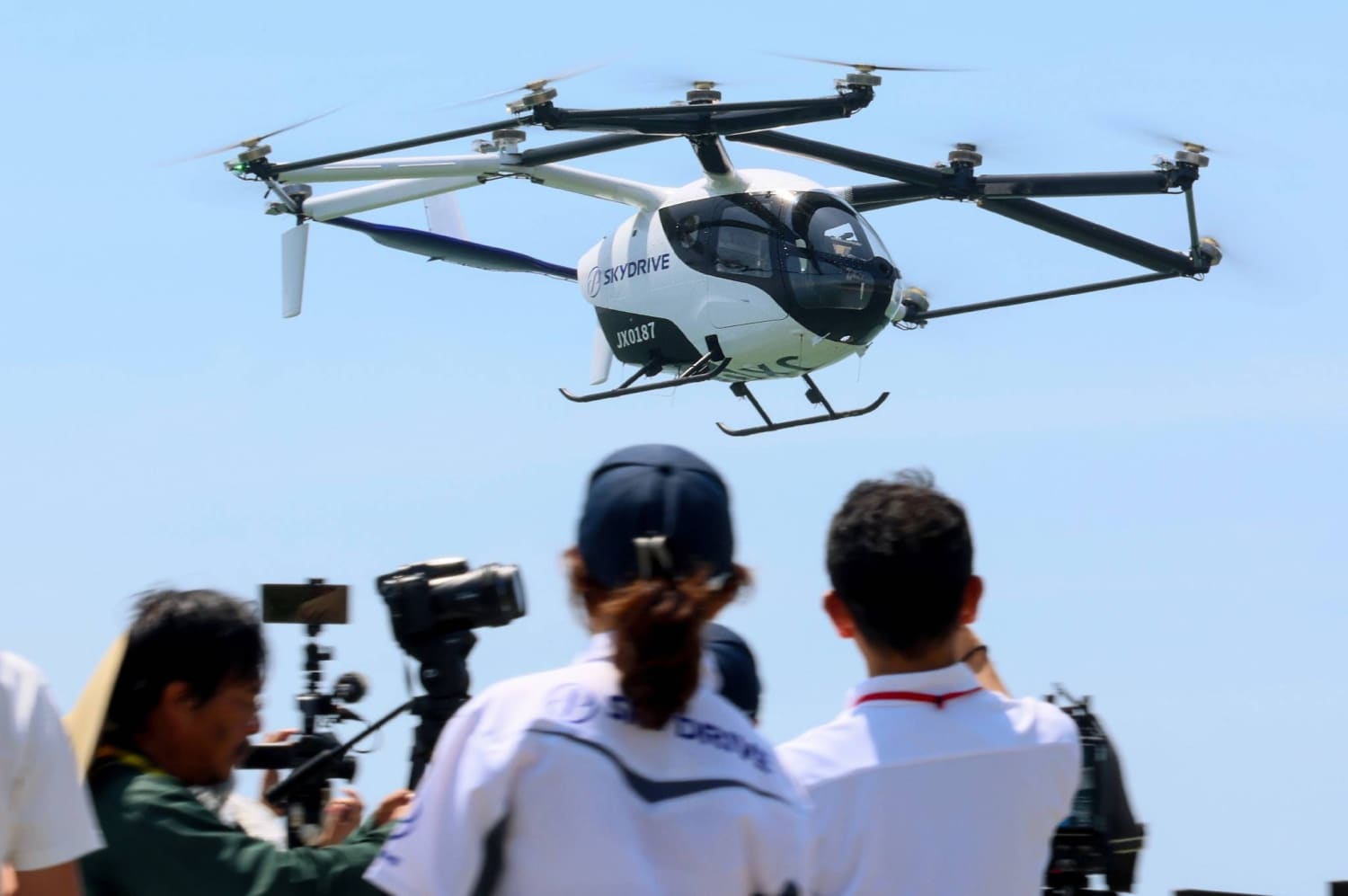
- ·SkyDrive conducted a high-speed test flight of its eVTOL prototype over the Seto Inland Sea from Yamaguchi city, moving from controlled environments to open-water operations.
- ·The demonstration supports the Japanese startup's goal to launch commercial flying car services by 2028, aligned with Japan's urban air mobility regulatory framework.
- ·The test over island-dotted coastal waters reflects practical deployment scenarios for short-distance air taxi routes where ground infrastructure is limited.
Pushing Toward Commercial Flight
SkyDrive conducted a high-speed test flight of its flying car prototype over the Seto Inland Sea this week, launching from Yamaguchi city in western Japan. The demonstration represents a critical step in the startup's roadmap to bring electric vertical takeoff and landing (eVTOL) vehicles to market by 2028.
The Japanese company has been refining its compact single-seat aircraft design since its first piloted test in 2020, when it achieved a brief hover inside a netted test facility. Monday's flight over open water signals a shift from controlled environments to real-world operational scenarios, a transition that typically precedes regulatory certification efforts in the aviation sector.
Japan's Urban Air Mobility Push
SkyDrive's timeline aligns with broader Japanese government ambitions to integrate flying cars into urban transportation networks by the end of the decade. Tokyo has outlined regulatory frameworks and infrastructure plans intended to support air taxi services in time for the 2025 World Expo in Osaka, though technical and certification hurdles have pushed most commercial launches beyond that milestone.
The Seto Inland Sea corridor, with its mix of island communities and coastal cities, offers a practical testing ground for short-distance air mobility. The region's geography mirrors the kinds of routes where early eVTOL operators expect to find demand: connecting areas where ground infrastructure is constrained and travel times by road or ferry are lengthy.
Technical Milestones and Market Context
SkyDrive's vehicle uses multiple rotors and battery-electric propulsion, a configuration shared by most eVTOL developers worldwide. The company has secured funding from Toyota-affiliated investors and has been working with Japan's Civil Aviation Bureau on safety standards tailored to this emerging category of aircraft.
Globally, the urban air mobility sector has seen a wave of investment over the past five years, with companies in the United States, Europe, and Asia racing to certify and deploy air taxis. Several manufacturers, including Joby Aviation and Volocopter, have conducted public demonstrations and secured conditional orders from airlines and logistics firms. However, none have yet achieved full commercial certification for passenger operations.
Japan's domestic market presents both opportunities and constraints. Dense urban corridors and high land costs favor aerial routes, but strict regulatory oversight and limited vertiport infrastructure will shape the pace of adoption. SkyDrive's focus on compact, single-seat designs differentiates it from competitors pursuing larger multi-passenger models, potentially easing certification complexity but narrowing initial use cases.
What Comes Next
The 2028 target leaves SkyDrive roughly two years to complete flight testing, secure type certification, establish operational partnerships, and build out the ground infrastructure required for commercial service. That timeline is ambitious by aviation standards, where certification processes for novel aircraft categories often stretch across multiple years.
Industry observers note that the shift from demonstration flights to revenue service hinges not only on technical performance but also on public acceptance, insurance frameworks, and the economics of operating small fleets in niche markets. SkyDrive's test over the Seto Inland Sea is a visible marker of progress, but the path from prototype to profitable operation remains long and capital-intensive.
For now, the company's ability to conduct high-speed flights in open airspace suggests it has cleared internal technical milestones and secured the necessary approvals for expanded testing. Whether that translates into a 2028 commercial launch will depend on how quickly regulatory, financial, and operational challenges can be resolved in the months ahead.
RELATED STORIES

Fujitsu to Exit Commodity Hardware as AI Shifts Production Strategy
Aiko Nakamura · 4 min

Preferred Networks Eyes Public Listing to Scale AI Chip Production
Aiko Nakamura · 2 min
Honda and Nissan Form Alliance to Develop Software-Defined Vehicle Platforms
Aiko Nakamura · 3 min
Honda and Nissan Align on Software-Defined Vehicle Development
Cheng Wei-Lun · 2 min
Spot something wrong? Email editor@briefasia.com. We log every correction publicly.