Asia · Trade
Singapore GDP Could Rise 1.8% From Johor Rail Link, Study Finds
Cross-border rapid transit expected to boost purchasing power and productivity as commute times collapse between Singapore and Johor Bahru
KEY TAKEAWAYS
- ·The Asia Competitiveness Institute estimates the Johor Bahru-Singapore Rapid Transit System Link could raise Singapore's GDP by approximately 1.8%.
- ·The rail connection will compress cross-border travel from half a day to minutes, expanding purchasing power and access to lower-cost goods in Johor.
- ·Economic benefits from the infrastructure project are expected to materialize over years as firms, workers, and markets adjust to seamless connectivity.
Economic Lift From Rail Integration
The Johor Bahru-Singapore Rapid Transit System Link stands to lift Singapore's GDP by approximately 1.8%, according to research from the Asia Competitiveness Institute. The projection reflects expected gains from reduced travel friction, expanded labor mobility, and tighter economic integration across the Strait of Johor.
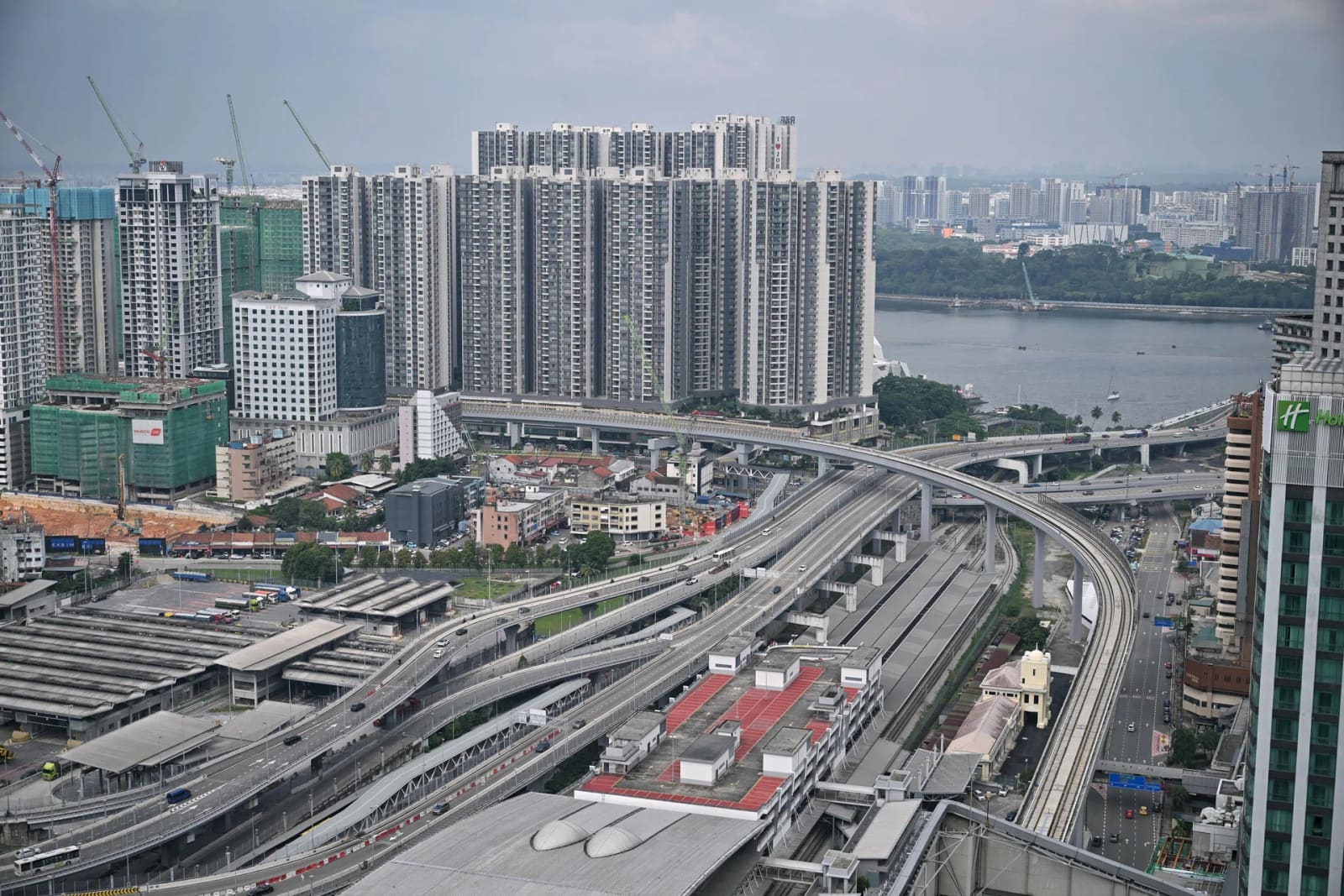
The rail connection will compress what is currently a half-day errand into a morning trip. Families in northern Singapore will clear immigration at Woodlands North, cross the strait in minutes, and arrive at Bukit Chagar in central Johor Bahru without the delays that define the Causeway today. The time savings open new patterns of consumption, employment, and investment that have been constrained by congestion.
Purchasing Power and Real Income
Lower travel costs translate directly into higher purchasing power for Singaporean households. Grocery runs to Johor, previously a weekend commitment requiring early starts and traffic checks, become routine errands. The price differential on consumer goods, long visible but often inaccessible, moves within reach for residents across the island.
Real income rises not only through cheaper goods but through productivity gains. Workers living in Johor and commuting to Singapore face shorter, more predictable journeys. Firms gain access to a broader talent pool without relocating operations. The frictionless movement of people supports denser networks of suppliers, clients, and collaborators on both sides of the border.
Infrastructure as Economic Catalyst
The RTS fits into a broader strategy of cross-border infrastructure that includes the Johor Bahru-Singapore Special Economic Zone. That zone, announced in recent years, aims to synchronize regulatory frameworks, streamline customs, and coordinate industrial policy between the two jurisdictions. The rail link provides the physical spine for those ambitions.
Singapore has historically leveraged infrastructure to multiply economic activity. Changi Airport, the Mass Rapid Transit network, and the port complex each unlocked growth by reducing transaction costs and expanding connectivity. The RTS extends that logic across a national boundary, treating the southern tip of the Malay Peninsula as a single labor and consumer market.
Time Horizon and Adjustment
The 1.8% GDP figure represents a medium-term estimate, not an immediate shock. Economic benefits from transport infrastructure typically materialize over years as firms adjust supply chains, workers relocate, and property markets reprice. Early adopters will capture gains quickly; broader effects will compound as cross-border commuting becomes normalized.
Johor Bahru itself stands to benefit from increased foot traffic, investment, and integration with Singapore's financial and professional services ecosystem. The flow is bidirectional: Singaporean capital and expertise move north, while Malaysian labor and consumers move south. The net effect is a thicker economic corridor that raises productivity on both sides.
Regional Implications
The RTS also signals a template for Southeast Asian connectivity. The region's cities remain less integrated than their European or East Asian counterparts, despite geographic proximity. High-frequency rail links that treat borders as administrative checkpoints rather than barriers could unlock similar gains between Bangkok and Kuala Lumpur, or Jakarta and its satellite cities.
For Singapore, the project hedges against land and labor constraints. The city-state's physical footprint limits housing supply and inflates costs; Johor offers relief valves for both. The rail link turns adjacency into advantage, allowing Singapore to tap hinterland resources without annexing territory or loosening immigration controls.
The study's findings underscore a larger trend: infrastructure investments that shrink distance generate returns that compound over time. The RTS will not transform the economy overnight, but it rewires the geography of daily life in ways that lift incomes, expand choices, and deepen cross-border ties. The family loading groceries in Johor after a quick Saturday morning trip will be living proof.
RELATED STORIES

Southeast Asian Firms Overlook Digital Pact Worth USD 2 Trillion
Lim Hui Ying · 4 min

Five ASEAN Members Back Regional Oil Stockpile as Study Nears Completion
Tran Quoc Bao · 3 min

Southeast Asia's Data Centre Rush Faces Power Grid Reality
Mariel D. Santos · 4 min
Blackstone's AirTrunk Lines Up S$2 Billion Loan for Singapore REIT IPO
Anand Sundaram · 3 min
Spot something wrong? Email editor@briefasia.com. We log every correction publicly.