Sustainability · Climate
Singapore Builders Invest in Heat Mitigation as Climate Costs Mount
Construction firms adopt cooling infrastructure beyond regulatory minimums to protect productivity and worker safety as temperatures rise
KEY TAKEAWAYS
- ·Singapore contractor Hwa Seng Builder has installed water sprinklers, industrial fans, and outdoor showers beyond Ministry of Manpower heat stress requirements.
- ·The firm treats cooling infrastructure as investment to prevent productivity loss, project delays, and higher labor turnover from heat stress.
- ·Worker feedback drives site-specific mitigation measures, allowing contractors to allocate capital toward interventions with the highest operational return.
Beyond Compliance
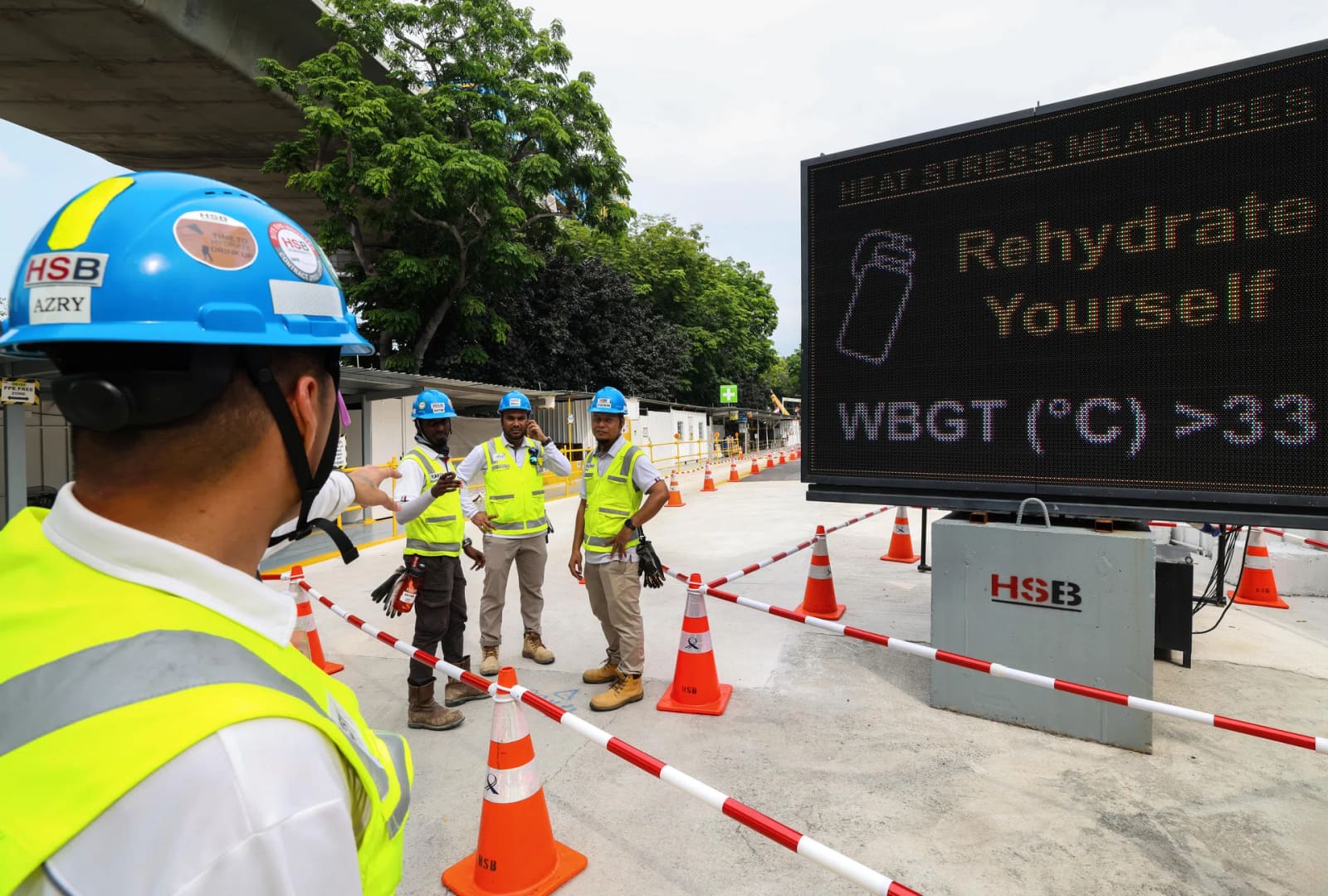
Singapore construction sites are adding infrastructure once considered optional: water sprinklers, outdoor shower tents, industrial-scale fans, and insulated roofing under work shelters. The measures reflect a calculation that climate adaptation is now a business imperative, not an expense line.
Hwa Seng Builder, a local contractor, has implemented heat stress controls that exceed the Ministry of Manpower's mandatory requirements for outdoor work. The decision stems from direct worker input, according to Alan Nah, executive director of projects at the firm.
"You treat it as an investment rather than expenditure," Nah told reporters. "We have to take their feedback seriously because they actually know where the pain points are."
The approach signals a shift in how regional contractors are managing climate risk. Where regulatory floors once defined workplace standards, firms are now pricing in the cost of heat-related productivity loss, project delays, and labor retention challenges.
The Business Case for Cooling
Heat stress poses measurable risks to construction timelines and labor costs. Extended breaks, reduced work hours during peak temperatures, and higher turnover all compress margins in an industry where delays cascade through supply chains.
Singapore's equatorial climate means outdoor work has always contended with heat, but the frequency and intensity of extreme temperature days have increased. The Ministry of Manpower introduced mandatory heat stress measures in recent years, requiring rest breaks, hydration, and shade provisions when workplace temperatures exceed certain thresholds.
Hwa Seng Builder's voluntary additions reflect a recognition that meeting minimum standards may not suffice to maintain competitive productivity levels. The company's outdoor shower tent and spray cooling systems are designed to lower core body temperatures faster than passive shade alone, allowing workers to return to tasks more quickly.
Worker Feedback as Risk Intelligence
The construction firm's reliance on worker input to shape its heat mitigation strategy points to a broader trend in operational climate adaptation. Frontline employees often identify stress points before they appear in productivity data or incident reports.
Industrial fans and roof insulation, two of Hwa Seng Builder's additions, were implemented after workers flagged specific discomfort zones on site. The feedback loop allows the company to allocate capital toward interventions with the highest return in comfort and output.
This bottom-up approach contrasts with top-down compliance models, where firms adopt uniform measures across all sites regardless of microclimate conditions or task profiles. By treating heat mitigation as a dynamic process, contractors can adjust to localized risks and worker needs.
Implications for Regional Construction
Singapore's small geographic footprint and high regulatory capacity make it an early mover in formalizing heat stress protocols. Other Southeast Asian markets, where construction booms continue amid rising temperatures, face similar productivity pressures but with less institutional support.
The capital investments required for advanced cooling infrastructure may be prohibitive for smaller contractors or projects with thin margins. This creates a bifurcation in the industry, where larger firms with access to financing can absorb adaptation costs while smaller players struggle to compete.
Heat mitigation also intersects with labor supply dynamics. Singapore's construction sector relies heavily on foreign workers from South and Southeast Asia. Firms that can demonstrate superior working conditions may gain an edge in attracting and retaining skilled labor as regional competition for workers intensifies.
The broader question for Asia's built environment sector is whether voluntary measures will scale or whether governments will need to mandate higher standards as climate conditions deteriorate. Singapore's example suggests that commercial logic and worker welfare can align, but only when firms have the capital and foresight to invest ahead of regulation.
RELATED STORIES
Singapore Banks Hit Record Highs on Wealth Management Surge
Priyanka V. Rao · 2 min
Allianz Acquires HSBC Singapore Insurance Operations in $2.3 Billion Deal
Priyanka V. Rao · 3 min

Singapore Expands Bank Network for Financial Crime Intelligence Platform
Priyanka V. Rao · 3 min
Singapore Approves 37 Crypto Firms From Nearly 300 License Applications
Priyanka V. Rao · 2 min
Spot something wrong? Email editor@briefasia.com. We log every correction publicly.