Finance · Deals
Shein Targets $1.8 Billion in Hong Kong IPO at 70% Discount to 2022 Peak
The fast-fashion retailer is seeking a $27 billion valuation after slowing growth and regulatory headwinds forced it to abandon plans for a US listing.
KEY TAKEAWAYS
- ·Shein is raising up to $1.77 billion in Hong Kong at a $27 billion valuation, down 70 percent from its $98.2 billion peak in 2022.
- ·First-half 2026 revenue growth is expected near 1.1 percent, with operating margins falling due to EU import charges and weaker Middle East demand.
- ·The IPO is Hong Kong's largest this year and follows sustained regulatory resistance to a US listing over supply-chain and data concerns.
The Repricing of Fast Fashion
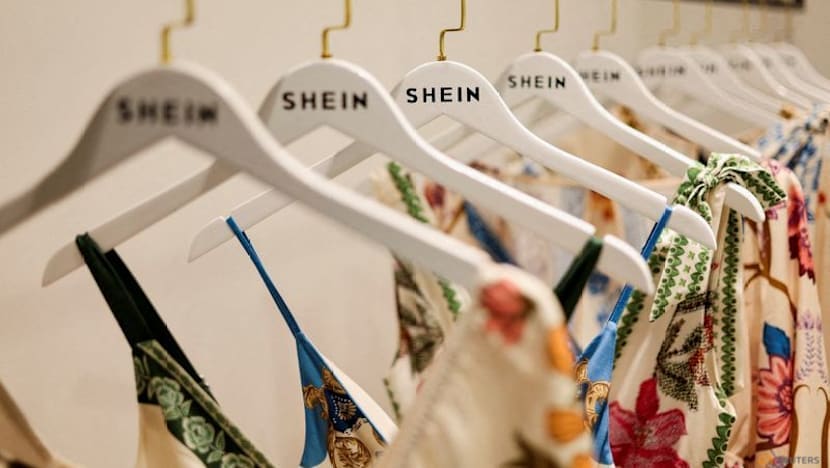
Shein opened the books on its Hong Kong initial public offering Monday, aiming to raise as much as HK$13.86 billion ($1.77 billion) at a valuation that marks a dramatic reset from the heady days of pandemic-era e-commerce.
The Singapore-based retailer is offering 280 million shares priced between HK$47.60 and HK$49.50 each, according to the company's prospectus. At the top of that range, Shein would be valued at approximately $27 billion. That figure sits roughly 70 percent below the $98.2 billion valuation the company commanded in private fundraising rounds during 2022, when venture capital flowed freely into consumer internet businesses and cross-border logistics infrastructure appeared unassailable.
Shein's valuation slid to $64 billion in both 2023 and April 2024 fundraising rounds as investors recalibrated expectations. The company plans to price the offering on August 31 and begin trading on the Hong Kong Stock Exchange on September 1.
Why Hong Kong, Why Now
The decision to list in Hong Kong came after Shein encountered sustained regulatory resistance in the United States, where lawmakers raised concerns over supply-chain transparency and data security. The company had originally explored a New York listing before shifting focus to Asia's financial hub.
Hong Kong has emerged as the default venue for large-scale Asian IPOs in 2026. The city has raised approximately $41 billion in new listings through August, more than double the $17 billion raised in the same period last year, according to LSEG data. Shein's offering is the largest Hong Kong IPO this year, surpassing autonomous driving company Momenta Global's $751 million float in July. Across Asia, only two mainland China onshore offerings have been larger: CXMT raised $9.8 billion and China Resources New Energy pulled in $3.6 billion.
Cornerstone investors have committed roughly $383 million to the deal. Existing shareholders Boyu, Tiger Global, and General Atlantic are leading that group, joined by Tencent, Greenwoods, Taikang Life, and UBS Asset Management, the prospectus shows.
The Business Model Under Pressure
Shein built its business on ultra-low prices and rapid inventory turnover, selling $5 dresses and $10 jeans to customers in roughly 160 countries. The company operates a vertically integrated supply chain anchored in southern China, turning design concepts into finished goods in as little as seven days.
That model is now facing structural headwinds. Shein disclosed in the prospectus that first-half 2026 revenue growth is expected to align closely with the 1.1 percent expansion recorded in the first quarter. Operating margin is forecast to fall slightly below first-quarter levels.
Three factors are compressing profitability. European Union regulators eliminated import duty exemptions on low-value parcels earlier this year, directly raising Shein's cost structure in one of its largest markets. Competitive pricing pressure has intensified as incumbents like Zara and H&M accelerated their own digital transformation while new entrants from Southeast Asia flooded Western markets. Demand in the Middle East weakened sharply amid the Iran conflict, disrupting a previously fast-growing region.
The United States delivered a separate blow when it removed a longstanding exemption on import duties for packages valued under $800. That change pushed Shein to a $99 million quarterly loss. An additional $328 million charge related to the fair-value accounting treatment of convertible preferred shares further weighed on reported results.
Control and Capital Allocation
Co-founders Sky Yangtian Xu, Maggie Gu, Molly Miao, and Tony Ren will retain 90 percent of voting rights after the IPO through a dual-class share structure. Shares sold to public investors will carry one-tenth the voting power of founder-held stock.
Shein plans to allocate roughly 80 percent of IPO proceeds to technology infrastructure and expanding brand presence in international markets. The company has also agreed to pay up to $3.5 billion in cash to certain investors who purchased special shares in earlier private funding rounds, according to the prospectus.
The Investor Calculus
The sharp valuation cut reflects investor skepticism that Shein can return to the growth trajectory that justified its 2022 peak. During roadshow meetings ahead of the IPO, the company initially sought a valuation between $30 billion and $40 billion. Pushback from institutional investors forced the range lower.
The repricing underscores a broader recalibration in how global capital markets value cross-border e-commerce platforms. Regulatory fragmentation, rising logistics costs, and the end of preferential trade treatment have eroded the unit economics that once made ultra-fast fashion appear structurally advantaged. Shein's ability to stabilize margins and reignite revenue growth in the coming quarters will determine whether the Hong Kong listing marks a floor or merely a pause in its valuation descent.
RELATED STORIES

Shein Prices Hong Kong IPO at $27 Billion Valuation
Priyanka V. Rao · 3 min

Shein IPO Values Fast-Fashion Giant at $27 Billion, Down 70% From Private Peak
Cheng Wei-Lun · 3 min
Shein Pushes Hong Kong Listing to September as Valuation Slides to $26 Billion
Cheng Wei-Lun · 2 min
Shein Targets $1.76 Billion in Hong Kong IPO After Four-Year Delay
Cheng Wei-Lun · 3 min
Spot something wrong? Email editor@briefasia.com. We log every correction publicly.