Asia · Business
Selangor Economy Hits RM460.1 Billion as Chip and Aerospace Bets Pay Off
Malaysia's wealthiest state now contributes over a quarter of national GDP, powered by semiconductor design, electric vehicles, and a three-month factory approval window that has become the region's fastest.
KEY TAKEAWAYS
- ·Selangor's GDP reached RM460.1 billion in 2025, up 6.3 per cent year-on-year, contributing 26.5 per cent to Malaysia's national economy.
- ·The state secured RM33.5 billion in approved investment in Q1 2026, the highest in Malaysia, aided by a sub-three-month factory approval process under Speed Selangor.
- ·Selangor now accounts for nearly 70 per cent of Malaysia's aerospace activities and is prioritizing semiconductor chip design, electric vehicles, and digital economy sectors.
Speed and Sector Focus
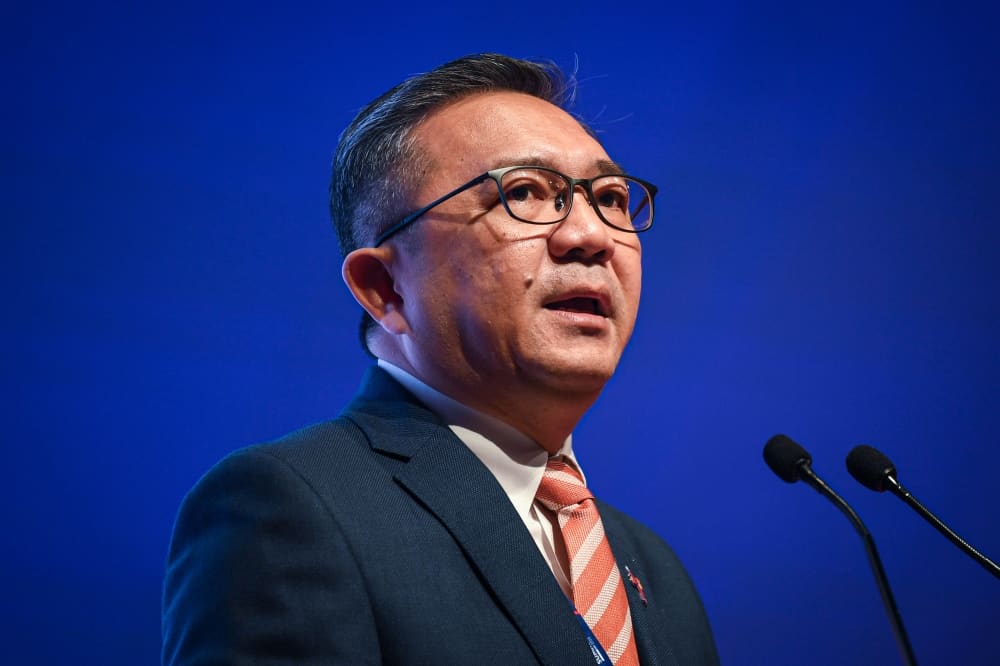
Selangor's economy expanded to RM460.1 billion in 2025, a 6.3 per cent increase from the prior year, according to Menteri Besar Datuk Seri Amirudin Shari. The state now accounts for 26.5 per cent of Malaysia's total output, maintaining its position as the country's largest economic contributor and underscoring the importance of subnational policy experimentation in Southeast Asia's investment competition.
The growth reflects a deliberate pivot toward technology-intensive industries. Selangor State executive councillor for investment, trade and mobility, Ng Sze Han, said the government is targeting semiconductor chip design, electric vehicles, the digital economy, and aerospace under a strategy to reach RM500 billion in economic output by 2026. The state now hosts nearly 70 per cent of Malaysia's aerospace activity, a concentration that mirrors Singapore's aerospace hub model but at lower operating costs.
Approval speed has become a competitive weapon. Under the Speed Selangor policy, factory construction permits are issued in under three months, half the national average of six months. The streamlined process helped Selangor secure RM33.5 billion in approved investment during the first quarter of 2026, the highest among Malaysian states, according to Ng.
Investment Missions and Local Content
Selangor's investment promotion has shifted from generic roadshows to targeted missions in the Greater Bay Area, Hong Kong, Singapore, and the United States. Ng emphasized that the state prioritizes "high-quality investments that create value" over headline investment figures, a stance that aligns with growing scrutiny across Asia of announced versus realized foreign direct investment.
The draft Selangor Plan 2 includes local content requirements for foreign investors, ensuring domestic suppliers participate in incoming supply chains. This approach borrows from Indonesia's downstream processing mandates and Thailand's Board of Investment localization incentives, reflecting a regional trend toward conditional investment approval.
Ng said the ultimate measure of success is job creation. "The state government's principle is to ensure that a strong economy translates into a better quality of life for the people. For us, that is the true measure of successful policymaking," he stated.
Sectoral Breakdown and National Impact
Selangor contributed 35.9 per cent of Malaysia's construction output, 32.8 per cent of manufacturing, and 27.1 per cent of services in 2025, according to figures cited by UniKL Business School associate professor Dr Aimi Zulhazmi Abdul Rashid. He noted that Malaysia's economic structure increasingly mirrors the advanced services and manufacturing model Selangor developed ahead of other states.
Aimi Zulhazmi argued that high-quality investment inflows provide a foundation for Malaysia to avoid the middle-income trap, a challenge that has stalled peers such as Thailand and the Philippines. However, he cautioned that GDP figures alone are insufficient measures of success. "The success of an economy should not be measured solely by GDP figures, but by the extent to which growth raises incomes and strengthens the competitiveness of local companies," he said.
Cost of Living and Distribution Questions
Despite the headline growth, Selangor faces persistent cost-of-living pressures, particularly in Petaling and Shah Alam districts. Aimi Zulhazmi identified wealth distribution, wage growth, and living costs as challenges that must be addressed for long-term sustainability.
The tension between rapid economic expansion and affordability is familiar across Asian gateway cities. Singapore, Hong Kong, and Seoul have all grappled with housing and transport costs that outpace wage gains, even as GDP per capita climbs. Selangor's ability to manage this balance will determine whether its growth model can be sustained beyond the current investment cycle.
For now, the state's combination of sector focus, approval speed, and infrastructure investment has positioned it as Malaysia's primary engine. Whether that engine can deliver broadly shared prosperity remains the harder test.
RELATED STORIES
Penang Captures 34% of Malaysia's Manufacturing Investment in First Half
Anand Sundaram · 2 min
Malaysia's Petronas Reports Steady Earnings Amid Energy Security Push
Priyanka V. Rao · 2 min
Malaysia's July Trade Surge Points to Strengthening Regional Demand
Priyanka V. Rao · 3 min
Malaysia's Rare Earth Deposits Draw Foreign Interest Ahead of China Export Controls
Priyanka V. Rao · 3 min
Spot something wrong? Email editor@briefasia.com. We log every correction publicly.