Travel & Dining · Trends
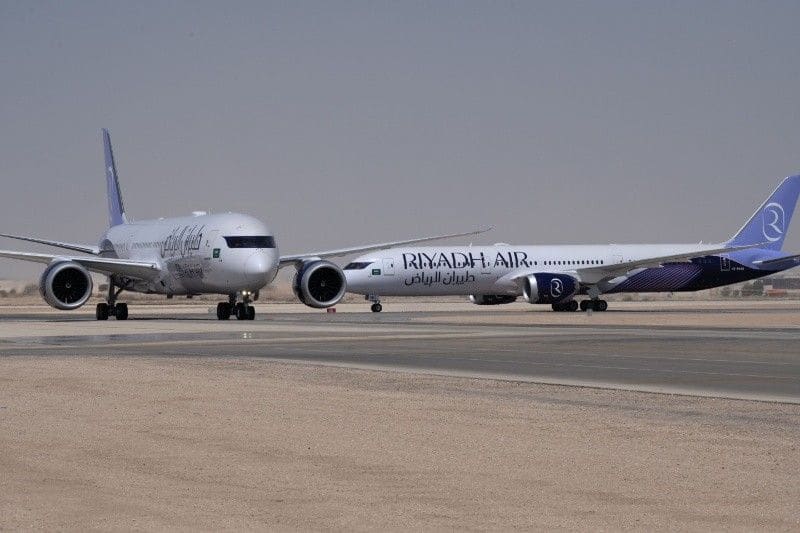
Saudi Arabia's Riyadh Air Launches Daily Manila Service
The new carrier deploys Boeing 787-9 Dreamliners on the route starting September, targeting Filipino workers and growing trade ties
KEY TAKEAWAYS
- ·Riyadh Air launches daily Manila-Riyadh flights September 9, 2026, using Boeing 787-9 Dreamliners with four cabin classes and Panasonic Astrova entertainment.
- ·The route serves hundreds of thousands of Filipino workers in Saudi Arabia and aims to support growing trade and investment under Vision 2030.
- ·The carrier targets over 100 global destinations by 2030, entering a competitive Manila-Middle East corridor dominated by Gulf and Philippine airlines.
New Route Connects Two Growing Markets
Riyadh Air, Saudi Arabia's second national flag carrier, will launch daily nonstop service between Manila's Ninoy Aquino International Airport and King Khalid International Airport beginning September 9, 2026. The airline announced that tickets are now on sale for the route, which will be operated with Boeing 787-9 Dreamliner aircraft.
Flight RX0873 departs Riyadh at 1:05 a.m. and lands in Manila at 3:55 p.m., while the return flight RX0874 leaves Manila at 5:25 p.m. and touches down in Riyadh at 10:15 p.m. Both services run seven days a week.
The carrier is wholly owned by Saudi Arabia's Public Investment Fund and represents the kingdom's latest push to diversify its economy and aviation sector. The Manila connection marks an important Southeast Asian foothold as the airline scales operations.
Targeting the Filipino Diaspora and Trade Flows
According to Riyadh Air, the route responds to strengthening ties between Saudi Arabia and the Philippines across commerce, education, leisure, and wellness tourism. The airline highlighted that the service will offer additional travel options for the substantial Filipino community working in the kingdom, while also facilitating trade and cultural exchange.
Hundreds of thousands of Filipinos are employed in Saudi Arabia across healthcare, construction, hospitality, and domestic work. The new direct link shortens travel time and removes the need for connections through hubs such as Dubai or Doha, which have historically dominated the corridor.
Beyond labor mobility, the route is designed to capture growing business travel as Saudi Arabia pursues Vision 2030, the government's framework to reduce oil dependence and attract foreign investment. Philippine firms in construction, IT services, and logistics have shown increasing interest in Saudi projects, particularly in Neom and other megadevelopment zones.
Onboard Experience and Loyalty Program
Passengers on the Manila route will fly in Boeing 787-9 cabins configured with four classes: Business Elite, Business, Premium Economy, and Economy. Riyadh Air said the aircraft feature ergonomic seating, enhanced privacy and storage, Panasonic Avionics' Astrova entertainment system, mobile-first connectivity, wireless listening, and curated onboard dining.
The airline also introduced its Sfeer loyalty program, which offers members benefits including a "Best Offer Guarantee," no points expiry, complimentary onboard Wi-Fi, and additional rewards. The program is part of Riyadh Air's effort to compete with established Gulf carriers that have long cultivated frequent flyer bases in Asia.
Expansion Plans and Regional Competition
Riyadh Air has set an ambitious target to serve more than 100 destinations worldwide by 2030. The Manila launch follows the carrier's initial routes to European and Middle Eastern cities and signals a broader Southeast Asian expansion.
The airline enters a crowded market. Philippine Airlines, Cebu Pacific, Saudi Arabian Airlines, and Gulf carriers including Emirates, Etihad, and Qatar Airways already serve the Manila-Middle East corridor with varying frequencies and connection options. Riyadh Air's differentiation hinges on its new fleet, premium cabin products, and the appeal of a direct Riyadh gateway.
For the Philippines, the new service adds seat capacity on a route with consistent demand. The Department of Transportation has prioritized expanding air service agreements with Middle Eastern countries to support overseas worker travel and inbound tourism from the Gulf.
What Comes Next
Industry observers will watch load factors and yield performance closely in the route's early months. Success in Manila could accelerate Riyadh Air's plans for additional Southeast Asian cities, including Jakarta, Bangkok, and Ho Chi Minh City, all of which have significant labor export ties to Saudi Arabia.
The carrier's ability to secure slots at congested Manila airport and coordinate with Philippine aviation authorities will also be tested. Ninoy Aquino International Airport remains one of Asia's most operationally challenged gateways, with limited runway and terminal capacity.
Riyadh Air's entry underscores the shifting center of gravity in global aviation, as Gulf states invest heavily in new carriers and infrastructure to compete with legacy hubs in Europe and Asia. For the Philippines, it represents one more option in a market where competition typically benefits consumers through lower fares and improved service.
RELATED STORIES

Manila's New Bulacan Airport Faces Construction Delays Over Sand Supply
Mariel D. Santos · 3 min
Manila Plans $87 Million Cruise Terminal Near Entertainment City
Mariel D. Santos · 3 min
Philippine Economy Stalls as Investment Collapse Drags Growth to Pandemic Lows
Priyanka V. Rao · 3 min

Philippines Central Bank Fielded 120,000 Customer Disputes in 2025
Priyanka V. Rao · 3 min
Spot something wrong? Email editor@briefasia.com. We log every correction publicly.