Technology · Dev
Samsung Set to Reclaim Lead in High-Bandwidth Memory Market by 2027
UBS forecasts the Korean chipmaker will capture 41% of global HBM shipments next year, driven by aggressive HBM4 rollout and Nvidia qualification wins
KEY TAKEAWAYS
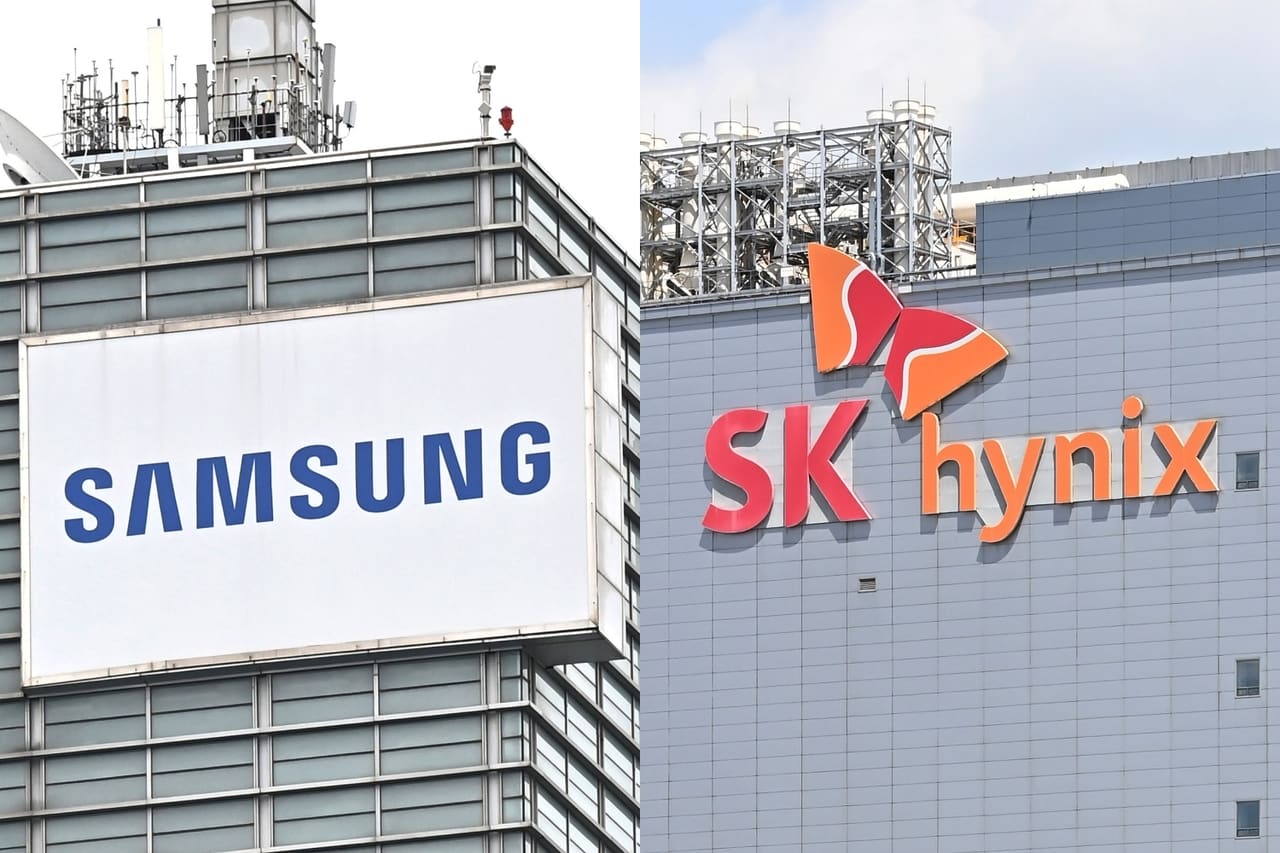
- ·UBS forecasts Samsung will hold 41 percent of global HBM bit shipments in 2027, ahead of SK hynix at 39 percent and Micron at 20 percent.
- ·Samsung's market-share gain is driven by accelerated HBM4 production and improved qualification status with Nvidia and other AI accelerator customers.
- ·The HBM market is projected to grow at over 60 percent annually through 2028, fueled by expanding AI infrastructure and data-center demand.
Samsung's Strategic Push in Advanced Memory
Samsung Electronics is on track to reclaim the top position in the high-bandwidth memory sector by next year, according to projections from UBS. The Swiss investment bank forecasts Samsung will command 41 percent of worldwide HBM bit shipments in 2027, edging past SK hynix at 39 percent. Micron Technology trails with an expected 20 percent share.
The shift represents a notable acceleration in Samsung's trajectory. UBS had previously estimated in May that the company would merely achieve parity with its Korean rival. The revised outlook reflects Samsung's faster-than-anticipated progress in scaling HBM4 production and securing design wins with major AI accelerator customers.
High-bandwidth memory has become the critical bottleneck in artificial intelligence infrastructure. Each advanced GPU requires multiple HBM stacks to feed data at speeds conventional DRAM cannot match. TSMC-fabricated AI chips from Nvidia, AMD, and hyperscale cloud providers all depend on HBM supply, creating a seller's market that has driven prices up more than 80 percent year-on-year through mid-2026.
HBM4 as the Differentiator
Samsung's expected market-share gain hinges on its HBM4 roadmap. The fourth-generation standard doubles bandwidth per stack compared to HBM3E and integrates through-silicon via technology at finer pitch, enabling tighter integration with compute dies. Volume production of HBM4 is slated to begin in the second half of this year, with Samsung reportedly allocating two additional clean-room lines at its Pyeongtaek facility to meet demand.
SK hynix has maintained its lead in HBM3 and HBM3E, shipping the majority of memory modules used in Nvidia's H100 and H200 accelerators. The company's close engineering collaboration with Nvidia gave it a head start, and it retains qualification for upcoming Blackwell-based systems. However, UBS analysts note that Samsung's qualification status has improved markedly over the past six months, opening the door to dual-sourcing arrangements that favor volume expansion.
Micron entered the HBM market later than its Korean competitors but has secured a foothold with alternative customers, including certain hyperscale data-center operators and non-Nvidia GPU vendors. Its 20 percent projected share reflects a conservative but profitable strategy focused on high-margin contracts rather than all-out capacity expansion.
Implications for Asia's Memory Ecosystem
The HBM race is reshaping capital-expenditure priorities across Asia's semiconductor industry. Samsung's memory division is expected to invest more than $20 billion in 2027 alone, much of it directed toward advanced packaging and HBM production. SK hynix has similarly ramped spending, converting older DRAM fabs and adding cleanroom capacity in Icheon.
The competition extends beyond Korea. Taiwan's advanced packaging houses, including ASE Technology and Amkor's Taiwan operations, are expanding CoWoS and hybrid-bonding capabilities to support HBM integration. Japan's equipment suppliers, led by Tokyo Electron and Disco, are benefiting from orders for through-silicon via drills, wafer thinning tools, and inspection systems tailored to HBM manufacturing.
China's memory ambitions add another dimension. CMOS Image Sensor and DRAM maker ChangXin Memory Technologies has announced plans to develop HBM, though industry observers expect any volume production to remain several years away and constrained by export controls on advanced lithography and metrology equipment.
What Comes Next
UBS expects the HBM market to grow at a compound annual rate exceeding 60 percent through 2028, driven by expanding AI training clusters and inference deployments at the edge. Samsung's ability to convert forecast into reality will depend on yield ramps, continued qualification wins, and the pace at which customers adopt HBM4 over incumbent HBM3E.
SK hynix is not conceding ground. The company has accelerated its own HBM4 timeline and is exploring partnerships with logic foundries to co-optimize memory-logic integration. Micron, meanwhile, is investing in proprietary packaging techniques that could offer cost or performance advantages in specific workloads.
The outcome will shape not only corporate fortunes but also the competitive dynamics of AI hardware. A more balanced supplier base reduces risk for hyperscale buyers and may moderate the pricing power memory makers have enjoyed over the past two years. For now, the race remains open, with execution the deciding factor.
RELATED STORIES
Memory Makers Gain Leverage as AI Server Costs Climb
Cheng Wei-Lun · 3 min

Samsung's Device Division Reports First Quarterly Loss as Chip Costs Surge
Cheng Wei-Lun · 3 min
Samsung and SK Hynix Turn Down KEPCO's Multibillion-Dollar Prepayment Demand
Cheng Wei-Lun · 4 min

South Korea Records Highest September Export Start on Semiconductor Demand
Tran Quoc Bao · 3 min
Spot something wrong? Email editor@briefasia.com. We log every correction publicly.