Asia · Trade
Sabah Maintains Four-Year Trade Streak Above RM100 Billion Despite 2025 Dip
Malaysia's eastern state posts RM105.5 billion in total trade, with crude petroleum and palm oil driving exports amid weakening global commodity demand
KEY TAKEAWAYS
- ·Sabah recorded RM105.5 billion in total trade for 2025, its fourth consecutive year above RM100 billion despite a 2.1 percent decline from 2024.
- ·The state's trade surplus narrowed to RM9.9 billion as exports fell 5.9 percent to RM57.7 billion while imports rose 2.8 percent to RM47.8 billion.
- ·Crude petroleum and palm oil led exports at RM17.1 billion and RM16.8 billion respectively, with Peninsular Malaysia accounting for 47.1 percent of total trade.
Trade Resilience Amid Global Headwinds
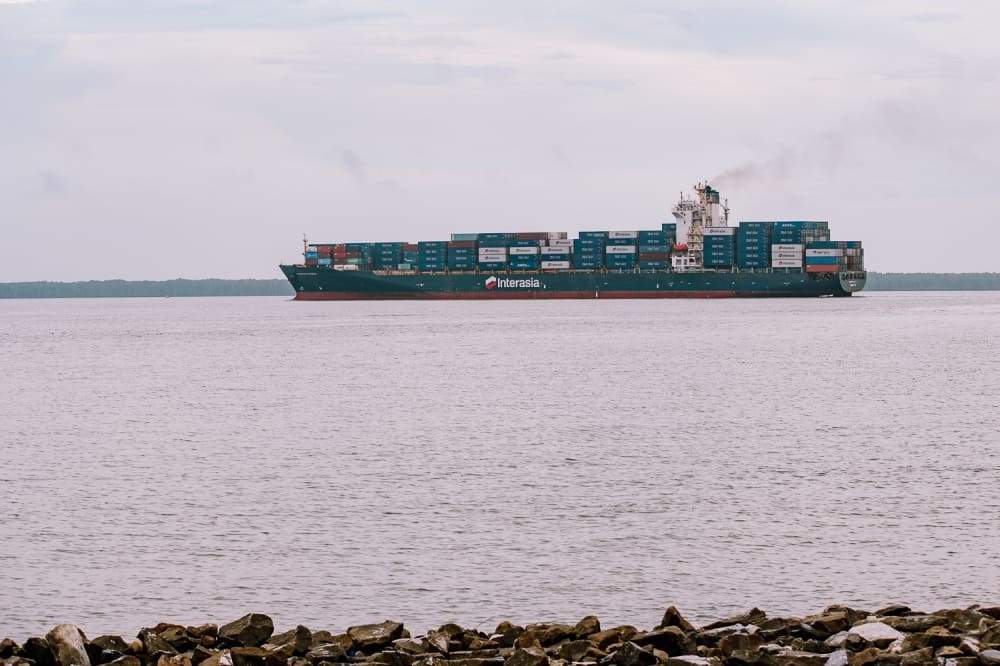
Sabah closed 2025 with RM105.5 billion in total trade, sustaining a four-year run above the RM100 billion threshold even as global economic uncertainty weighed on commodity markets, according to the Department of Statistics Malaysia (DOSM). The figure represents a 2.1 percent decline from 2024's RM107.8 billion but underscores the eastern Malaysian state's continued relevance in regional supply chains.
The state's trade trajectory has seen volatility in recent years. After peaking at RM118.0 billion in 2022, total trade dropped to RM105.0 billion in 2023 before recovering to RM107.8 billion in 2024. The 2025 figure reflects softer demand for key export commodities, particularly in energy and agriculture sectors that dominate Sabah's outbound shipments.
Sabah's trade surplus narrowed sharply to RM9.9 billion in 2025, down 33.3 percent from RM14.9 billion the previous year. Exports contracted 5.9 percent to RM57.7 billion, while imports climbed 2.8 percent to RM47.8 billion, signaling stronger domestic consumption and capital investment even as external demand cooled.
Crude Petroleum Leads, LNG Shows Growth
Crude petroleum remained the backbone of Sabah's export economy, generating RM17.1 billion and accounting for 29.7 percent of total exports. Palm oil followed closely at RM16.8 billion, reflecting the state's dual reliance on extractive and plantation industries.
Liquefied natural gas exports rose 2.0 percent to RM4.6 billion, one of the few categories to post growth amid broader export weakness. The uptick suggests sustained demand from Northeast Asian buyers, particularly as energy security concerns drive long-term LNG contracts in the region.
On the import side, refined petroleum products topped the list at RM4.8 billion, highlighting Sabah's dependence on processed fuels despite its substantial crude output. The state lacks sufficient refining capacity to meet domestic needs, a structural constraint that has persisted for decades.
Peninsular Malaysia Dominates Trade Flows
Peninsular Malaysia accounted for RM49.6 billion, or 47.1 percent, of Sabah's total trade, reinforcing the economic integration between the peninsula and East Malaysia. China ranked as the second-largest trading partner at RM10.4 billion, followed by Thailand at RM4.4 billion, South Korea at RM4.2 billion, and Japan at RM4.0 billion.
Within ASEAN, the Philippines emerged as Sabah's top export destination, absorbing RM3.9 billion in goods and representing 34.5 percent of the state's shipments to the regional bloc. Total exports to ASEAN countries reached RM11.2 billion, underscoring the importance of intra-regional trade corridors for Sabah's resource-based economy.
Sectoral Breakdown and Import Composition
Mining contributed RM23.2 billion to Sabah's exports, the largest share by sector, followed by agriculture at RM22.1 billion and manufacturing at RM12.3 billion. The figures illustrate the state's continued orientation toward primary industries, with limited value-added manufacturing despite decades of diversification rhetoric.
Intermediate goods dominated imports at RM17.5 billion, reflecting ongoing industrial activity and infrastructure projects. Consumption goods imports surged 13.2 percent, while capital goods rose 9.1 percent, pointing to rising household spending and business investment in machinery and equipment.
The import growth in consumption and capital goods suggests Sabah's domestic economy remains buoyant, even as external demand for its exports softens. This divergence may reflect federal stimulus measures and state-level infrastructure spending, which have buffered local activity against global trade headwinds.
Outlook and Structural Challenges
Sabah's ability to sustain trade above RM100 billion for four consecutive years, despite commodity price volatility and fluctuating global demand, speaks to the structural importance of its natural resource base. However, the narrowing trade surplus and export contraction in 2025 highlight vulnerabilities tied to dependence on a narrow range of commodities and external market conditions.
The state's lack of downstream processing capacity, particularly in petroleum and palm oil, limits its ability to capture higher value-added margins. While LNG exports showed modest growth, the broader energy complex remains exposed to price swings and shifts in regional demand patterns.
As global trade dynamics evolve, Sabah's trade performance will likely hinge on its ability to deepen integration with ASEAN partners, attract investment in refining and processing infrastructure, and navigate the energy transition's impact on fossil fuel demand. For now, the RM105.5 billion figure offers a mixed signal: resilience in absolute terms, but mounting pressure to diversify and upgrade its export mix.
RELATED STORIES

Southeast Asian Firms Overlook Digital Pact Worth USD 2 Trillion
Lim Hui Ying · 4 min
Penang Captures 34% of Malaysia's Manufacturing Investment in First Half
Anand Sundaram · 2 min

Selangor Pulls RM70 Billion in Six Months as Services and Manufacturing Drive Malaysia's Richest State
Anand Sundaram · 4 min

Five ASEAN Members Back Regional Oil Stockpile as Study Nears Completion
Tran Quoc Bao · 3 min
Spot something wrong? Email editor@briefasia.com. We log every correction publicly.