Finance · Markets
Ringgit Gains Ground on Softer US Rate Expectations
Malaysia's currency strengthens against major peers as market reprices September Fed trajectory, while domestic inflation remains anchored below 2 percent
KEY TAKEAWAYS
- ·The Malaysian ringgit strengthened against the euro, pound, and yen Tuesday morning as traders reduced expectations for a September US rate hike.
- ·Malaysia's inflation moderated to 1.8 percent in July for both headline and core measures, providing room for Bank Negara to maintain its current policy stance.
- ·The ringgit is expected to trade between 4.06 and 4.08 against the US dollar, with further direction dependent on US economic data and Fed signals.
Morning Strength Across Major Pairs
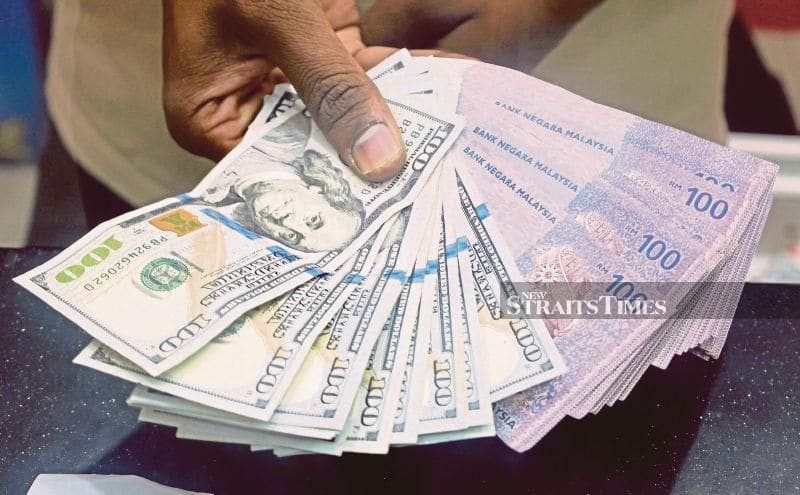
The Malaysian ringgit opened Tuesday's session with gains against a basket of major currencies, driven by a recalibration of US Federal Reserve policy expectations that has shifted capital flows back toward emerging Asia. The local unit held steady at 4.0585 per US dollar as of 8am Kuala Lumpur time, unchanged from Monday's close.
Against the euro, the ringgit appreciated to 4.7010 from 4.7062, while it firmed to 5.4993 versus the British pound from 5.5021 in the previous session. The currency also edged higher against the Japanese yen, moving to 2.5471 from 2.5496.
The shift reflects a broader repricing of risk across Asian currency markets. Traders have dialed back the probability of a September interest rate increase in the United States, a move that typically reduces the appeal of dollar-denominated assets and benefits currencies in the region's export-driven economies.
Domestic Fundamentals Provide Cushion
Malaysia's economic backdrop continues to offer support for the ringgit's trajectory. GDP growth remains robust while inflation pressures stay contained, a combination that gives the central bank room to maintain its current policy stance without immediate pressure to match moves by the Federal Reserve.
Consumer price index data for July showed both headline and core inflation moderating to 1.8 percent, well below the levels seen in many peer economies. The contained price environment allows Bank Negara Malaysia to prioritize growth stability over preemptive tightening, a stance that has historically supported currency confidence when global conditions are uncertain.
Bank Muamalat Malaysia's chief economist Mohd Afzanizam highlighted the favorable positioning. If diminished odds of a US rate hike persist, emerging market currencies including the ringgit stand to benefit from renewed inflows as investors hunt for yield in markets with stronger growth fundamentals.
Regional Currency Performance
Within Southeast Asia, the ringgit's performance was mixed but generally constructive. It strengthened to 3.1772 against the Singapore dollar from 3.1804 and rose versus the Thai baht to 12.2836 from 12.2948. Against the Philippine peso and Indonesian rupiah, the local note was nearly flat, holding at 6.60 and 228.0 respectively.
The divergence in regional currency moves points to differentiated investor sentiment across ASEAN economies. Singapore's persistent strength reflects its status as a financial hub and safe haven within the region, while Thailand's baht has faced headwinds from sluggish tourism recovery and domestic political noise.
Trading Range and Outlook
Market participants expect the ringgit to trade within a narrow band of 4.06 to 4.08 against the US dollar through the current session, according to Mohd Afzanizam. That range suggests limited volatility as traders await fresh catalysts from either US economic data or domestic policy signals.
The stability comes as Malaysia's export sector continues to benefit from global semiconductor demand and resilient commodity prices, two pillars that have underpinned ringgit performance over the past quarters. Palm oil and liquefied natural gas shipments remain strong, providing a steady flow of foreign exchange earnings that support the currency's floor.
For now, the ringgit's trajectory hinges on the interplay between US monetary policy signals and Malaysia's own economic resilience. A sustained pullback in Fed tightening expectations would likely keep emerging Asian currencies, including the ringgit, on a firmer footing. Conversely, any surprise uptick in US inflation or labor market strength could quickly reverse recent gains and push the ringgit back toward the weaker end of its recent range.
The Malaysian currency's performance in the coming weeks will also reflect broader risk appetite across Asian markets. With China's economic recovery still uneven and geopolitical tensions simmering in the region, currency traders remain attuned to both macro fundamentals and headline risk. For the ringgit, the current environment offers a window of support, but one that requires continued domestic policy discipline and favorable global conditions to sustain.
RELATED STORIES
Malaysia's Currency Holds Steady as Federal Reserve Rate Shift Lifts Regional Outlook
Priyanka V. Rao · 5 min
Ringgit Gains Ground as Weaker US Data Shifts Fed Outlook
Priyanka V. Rao · 2 min
Ringgit Strengthens as Fed Rate Hike Odds Drop Below 30 Percent
Priyanka V. Rao · 3 min

Malaysia's Money Supply Growth Hits Pandemic-Era Pace as Producer Prices Surge
Priyanka V. Rao · 3 min
Spot something wrong? Email editor@briefasia.com. We log every correction publicly.