Asia · Business
Philippines Reaches Upper-Middle Income Status After 38-Year Wait
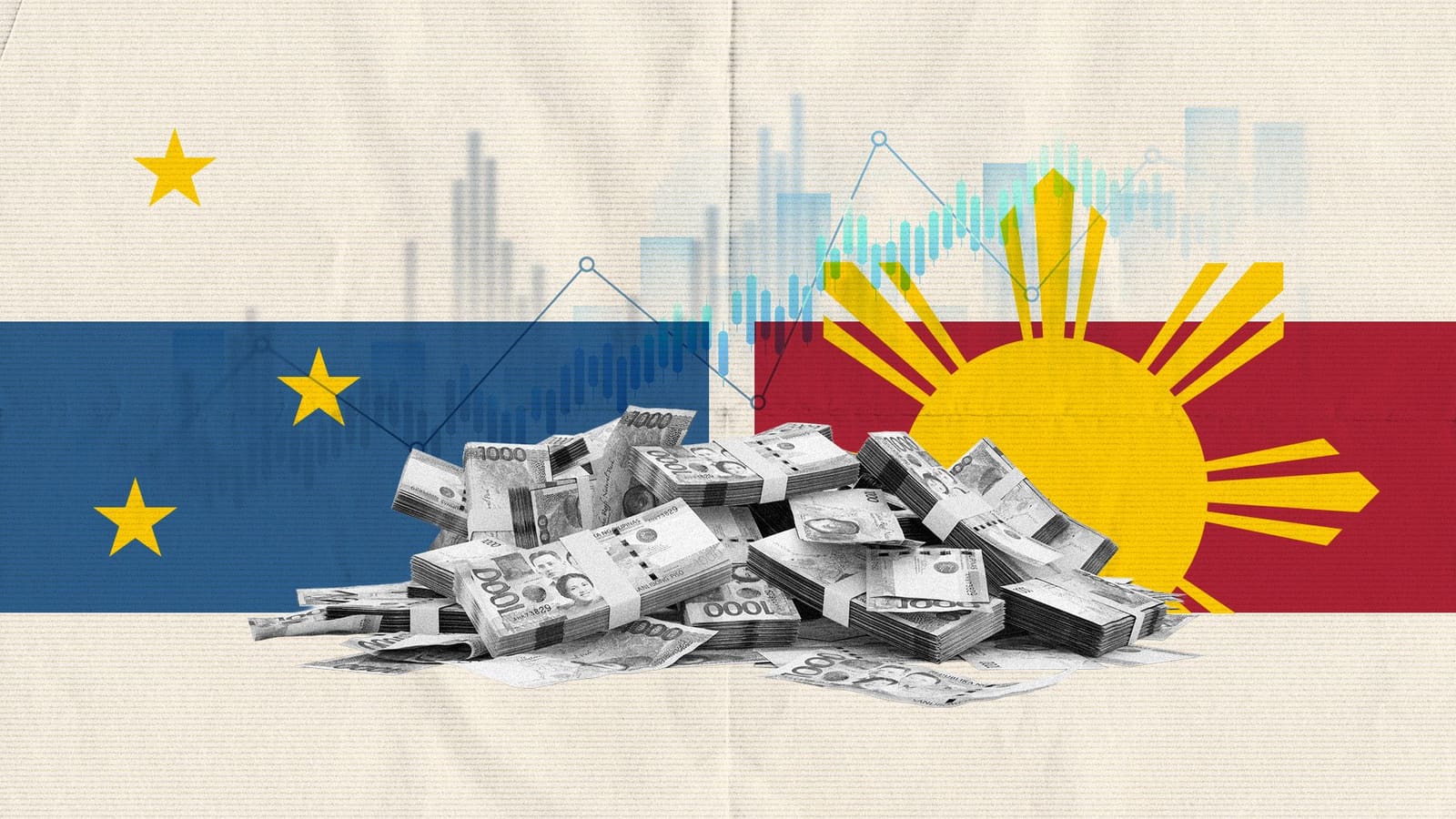
The World Bank's July 1 reclassification marks the country's first income bracket upgrade since 1987, but economists warn the milestone masks persistent wage stagnation and looming aid cuts.
KEY TAKEAWAYS
- ·The Philippines crossed the World Bank's upper-middle income threshold at $4,850 GNI per capita in 2025, ending a 38-year wait since 1987.
- ·Real wages have stagnated despite two decades of rapid GDP growth, and the 2026 slowdown to 2.8% first-quarter growth undercuts the milestone.
- ·The upgrade will phase out concessional lending and development aid, raising borrowing costs as the debt-to-GDP ratio climbs past 65%.
The Long-Awaited Upgrade
On July 1, the World Bank moved the Philippines into its upper-middle income country (UMIC) category, ending a 38-year stretch in the lower-middle income tier. The archipelago's gross national income (GNI) per capita hit $4,850 in 2025, clearing the new $4,636 threshold by $214, or roughly 4.6%.
The milestone had been a government target since at least 2017. Last year, the country missed the cutoff by just $26. This time, it crossed with room to spare, prompting swift official celebration. The Department of Economy, Planning, and Development called it a "historic economic milestone," while President Ferdinand Marcos Jr., speaking from Canada, described the upgrade as a "vote of confidence" that would draw more foreign capital.
The World Bank updates its four-tier income classification each July, using three-year rolling averages of exchange rates to convert GNI per capita into US dollars. For 2025, the calculation placed the Philippines squarely in the new bracket alongside Vietnam, which posted a GNI per capita of $4,970 and cleared the line by 7.2%.
Decades of Accumulation, Not Overnight Success
The reclassification reflects sustained expansion through the 2000s and 2010s, rather than a sudden windfall. Growth accelerated during that period, lifting aggregate income steadily even as population climbed. The label change captures momentum built over decades, not the performance of any single administration.
Other countries that moved up this year did so for different reasons. Sri Lanka returned to UMIC status after rebounding from its 2022 crisis. Jordan's crossing owed partly to a national accounts rebasing that increased measured GDP by 10%. Togo advanced to lower-middle income after revised population estimates. In some cases, statistical revisions matter as much as real economic gains.
The 2025 snapshot also predates this year's slowdown. Government disbursement delays tied to a flood control scandal, inflation spikes linked to US-Iran tensions, and weakened investor sentiment have all dented 2026 growth. First-quarter GDP expanded just 2.8%, a sharp deceleration from prior quarters. The UMIC badge reflects last year's data, not current conditions.
What the Average Conceals
GNI per capita is an arithmetic mean. The $4,850 figure translates to roughly 23,000 pesos per person per month, but that average says nothing about distribution. A country can graduate to a higher income bracket while millions remain poor, though recent Philippine poverty data has shown improvement.
Economists point to a long-standing puzzle: real wages have stagnated even as the economy grew rapidly over two decades. Productivity gains typically lift wages, yet Philippine workers have seen little movement in inflation-adjusted pay. The World Bank and local researchers have documented the disconnect, though no consensus explanation has emerged.
The distinction between income and wealth also matters. Income is a monthly or annual flow; wealth is the stock of assets a household owns. Finance Secretary Frederick Go framed the upgrade as increased "per capita wealth," but GNI measures the former, not the latter.
The Road Ahead and the Costs of Promotion
Graduation to upper-middle income status brings trade-offs. Concessional lending rates and official development assistance typically taper as countries move up the ladder. Exact figures are not yet clear, but the Philippines can expect borrowing costs to rise precisely when infrastructure investment needs remain high. The debt-to-GDP ratio already stands at 65% and is climbing.
Vietnam, which crossed the threshold alongside the Philippines, posted 7.83% growth in the first quarter of 2026, a pace it considers modest. Its export-led model has proven more resilient. The two countries reached the finish line together, but their trajectories diverge.
The next tier is high-income status, a category only Singapore and Brunei hold within ASEAN. Reaching it will require policy reforms and fiscal discipline. Without them, the gap between upper-middle and high income could take as long to close as the gap just crossed, a prospect that would push the milestone well beyond the working lives of today's Filipinos.
For now, the reclassification offers a benchmark, not a guarantee. The label reflects decades of collective effort, but sustaining the growth that delivered it remains uncertain. The real test lies not in the celebration, but in whether the Philippines can maintain momentum through the headwinds already visible in 2026.
RELATED STORIES
Philippine Manufacturing Expands at Fastest Pace Since 2016
Priyanka V. Rao · 3 min
Filipino Household Income Rose 16% but Spending Outpaced Gains
Mariel D. Santos · 3 min

Philippine Water Operator Earmarks $400 Million for Southeast Asia Expansion
Mariel D. Santos · 2 min

Philippines Energy Budget Climbs 26% as Electric Vehicle Funding Surges
Priyanka V. Rao · 3 min
Spot something wrong? Email editor@briefasia.com. We log every correction publicly.