Asia · Business
Philippines Rice Self-Sufficiency Climbs to 78% as Import Ban Reverses Multi-Year Decline
A four-month suspension of rice imports pushed the nation's domestic reliance ratio up from a 37-year low, though experts warn the metric masks underlying productivity challenges.
KEY TAKEAWAYS
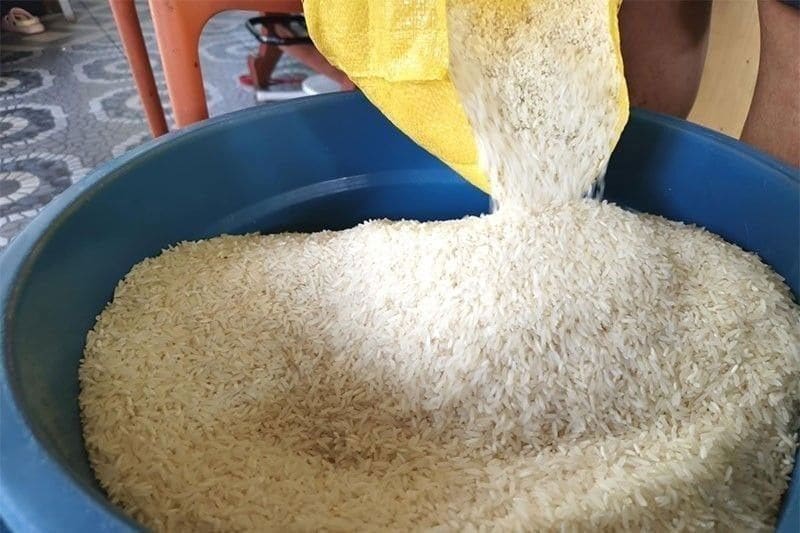
- ·The Philippines raised its rice self-sufficiency ratio to 78.1 percent in 2025 from 71.7 percent in 2024, driven by a four-month import ban that reduced inbound shipments by 30 percent to 3.39 million metric tons.
- ·Experts caution the metric masks stagnant productivity per hectare and does not reflect fundamental agricultural improvements, with the ratio rising mainly because imports fell rather than because domestic output surged.
- ·The government's 84 percent self-sufficiency target for 2026 faces headwinds from El Niño conditions expected to cut palay production by 700,000 metric tons and rising fertilizer and fuel costs that threaten total output.
Domestic Share Rebounds After Policy Intervention
The Philippines recorded a rice self-sufficiency ratio of 78.1 percent in 2025, a 6.4 percentage point improvement over the prior year's 71.7 percent, the lowest mark in 37 years, according to the Philippine Statistics Authority. The metric measures local production as a share of total supply, which includes domestic output, imports, and exports.
The gain came primarily from a four-month government prohibition on rice imports that ran from September through December. The move cut total inbound shipments to 3.39 million metric tons, down nearly 30 percent from the record 4.68 million MT logged in 2024.
Despite the rebound, the country still falls short of the 80 percent threshold last crossed in 2021, when the ratio stood at 81.5 percent. The Department of Agriculture had projected a self-sufficiency level of 84 percent by the end of 2026 during a congressional budget hearing last year.
Weather and Policy Converge
Former agriculture undersecretary Fermin Adriano attributed the 2025 improvement to the import suspension combined with favorable weather conditions. Yet he stressed the figure does not signal a fundamental shift in rice productivity or a diminished need for imports, nor does it indicate success in controlling food inflation.
Adriano emphasized that yield per hectare remains the more meaningful measure of agricultural progress. Without gains in that area, he argued, self-sufficiency ratios can fluctuate based on policy decisions rather than actual farm performance.
Raul Montemayor, national manager of the Federation of Free Farmers, described the self-sufficiency ratio as a "deceptive measure" because it reflects only the relationship between imports and domestic output. When import volumes decline, the ratio rises even if production levels remain unchanged. He suggested a more accurate gauge would compare local production against total national rice requirements.
Headwinds for 2026 Target
The government's 84 percent goal for 2026 faces significant obstacles. El Niño conditions are expected to reduce palay, or unmilled rice, production by 700,000 MT this year, according to Department of Agriculture projections. Rising fertilizer and fuel costs are forecast to push total production down to a range between 18.6 million and 18.8 million MT.
Adriano noted that achieving an 84 percent ratio would require an additional 1.6 million MT of milled rice, equivalent to nearly three million MT of palay. Given current input cost pressures and climate risks, he called the target unfeasible.
Montemayor concurred, citing anticipated lower production and rising imports as factors likely to push the ratio downward in 2026. The Bureau of Plant Industry reported that rice imports had already reached 3.27 million MT by late July, underscoring the country's continued dependence on foreign supply.
Structural Reliance on Imports
The Philippines remains a net importer of rice, with domestic production unable to meet national demand. While the 2025 self-sufficiency gain offered a temporary reprieve, the underlying dynamics have not shifted. Productivity improvements per hectare have lagged, and farmers face mounting input costs that erode margins and discourage expansion.
The import ban provided a short-term statistical boost, but the policy also constrained supply at a time when global rice prices were volatile. Balancing food security, inflation control, and farmer livelihoods continues to challenge policymakers in Manila.
With El Niño conditions intensifying and input costs climbing, the trajectory for 2026 points toward renewed pressure on domestic producers and a likely return to higher import volumes. The question is whether the government will prioritize short-term self-sufficiency metrics or invest in the productivity gains needed for lasting food security.
RELATED STORIES
Philippines Dairy Imports Rise 2% as Domestic Production Stalls
Priyanka V. Rao · 2 min
Philippine OFW Transfers Climb to $3.39 Billion in June Amid Slowing Growth
Priyanka V. Rao · 3 min
San Miguel Reports 48% Core Profit Surge on Energy and Food Strength
Mariel D. Santos · 3 min

Philippines Gaming Revenue Hits Record P396 Billion on POGO Ban and Tax Cuts
Priyanka V. Rao · 2 min
Spot something wrong? Email editor@briefasia.com. We log every correction publicly.