Asia · Business
Philippine OFW Transfers Climb to $3.39 Billion in June Amid Slowing Growth
Cash from overseas workers reached a seven-month peak even as annual expansion decelerated to its weakest pace in over four years
KEY TAKEAWAYS
- ·Overseas Filipino worker transfers hit $3.39 billion in June 2026, the highest monthly level since December 2025, though annual growth slowed to 1.7 percent.
- ·Middle East conflict uncertainty and higher living costs in host economies constrained the amount workers could send home, contributing to the slowest growth since February 2022.
- ·The United States remained the largest source at 39.4 percent of first-half inflows, with remittances accounting for eight percent of Philippine GDP in the second quarter.
Transfers Peak Despite Headwinds
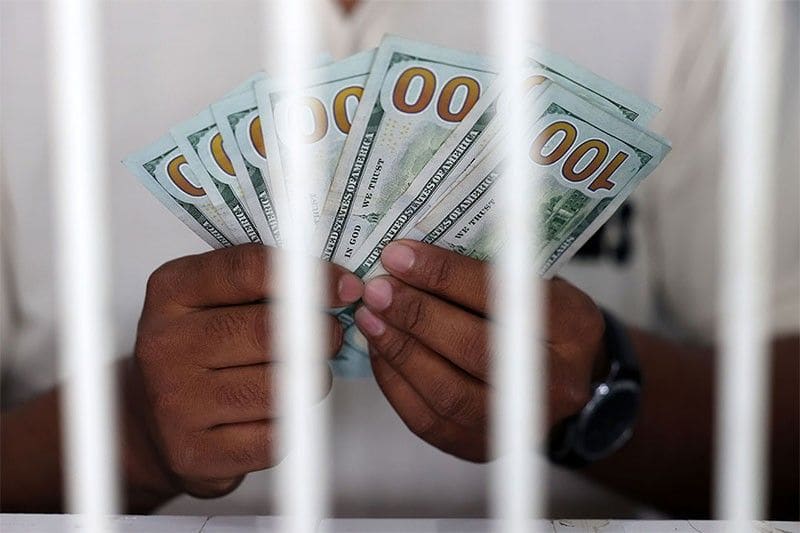
Money transfers from Filipino workers abroad climbed to $3.39 billion in June 2026, marking the strongest single-month total since December 2025, according to Bangko Sentral ng Pilipinas data released this week. The figure represents a 1.8 percent increase over the $3.33 billion recorded in the same month a year earlier.
Bank-channeled cash flows rose 1.7 percent year-on-year to $3.04 billion, up from $2.99 billion in June 2025. That growth rate, however, stands as the slowest annual expansion since February 2022, when transfers grew just 1.3 percent.
The central bank tracks two categories: personal remittances, which include both formal bank transfers and informal channels plus in-kind goods, and the narrower cash remittances metric that captures only bank-routed money. Both hit seven-month highs in June, though the deceleration in growth signals emerging constraints on workers' ability to send money home.
First-Half Flows Support Consumption
For the January-to-June period, personal remittances totaled $19.12 billion, up 2.4 percent from $18.67 billion in the first half of 2025. Cash remittances over the same span increased at an identical 2.4 percent pace, reaching $17.15 billion compared with $16.75 billion a year prior.
Bangko Sentral ng Pilipinas noted that the sustained inflows continue to bolster recipient households' income and spending, underpinning overall domestic demand. The flows remain critical to the Philippine economy: personal remittances accounted for eight percent of gross domestic product in the second quarter, while cash remittances represented 7.1 percent.
Robert Dan Roces, group economist at SM Investments Corp., characterized the transfers as a stable pillar for household consumption despite the modest growth trajectory. The funds flow into food purchases, retail spending, housing costs and other essential outlays for families of overseas workers, helping to maintain domestic demand even as inflation erodes purchasing power.
Middle East Conflict and Cost Pressures
Ruben Carlo Asuncion, chief economist at UnionBank, attributed the slower growth to several converging factors. Ongoing conflict in the Middle East has created uncertainty around labor deployment and raised concerns about employment stability for Filipino workers in that region, which has historically been a major destination.
Higher living costs in host economies have also constrained the amounts available for workers to transfer back home. Additionally, base effects from relatively stronger inflows in the prior-year period contributed to the softer year-on-year comparison.
Despite these obstacles, Asuncion emphasized that the continued expansion and relatively elevated absolute level of transfers indicate Filipino workers abroad remain employed and continue providing crucial support for household consumption and broader economic activity.
Geographic Concentration Persists
The United States remained the dominant source of bank-routed cash in the first half, accounting for 39.4 percent of total inflows. Singapore ranked second with a 7.2 percent share, followed by Saudi Arabia at 6.3 percent, Japan at 5.1 percent, and the United Kingdom at 4.6 percent.
This geographic distribution underscores the Philippines' reliance on a handful of labor markets for foreign exchange. Any economic disruption or policy shift in these key destinations could materially affect the flow of funds that millions of Filipino families depend on for daily expenses.
The June peak comes at a time when Philippine policymakers are navigating multiple growth pressures, including tighter credit conditions for households and businesses. Remittances offer a buffer, channeling dollars into the economy and supporting consumption even as other growth engines face headwinds.
For now, the steady stream of cash from overseas workers continues to anchor household spending, though the deceleration in growth and external uncertainties suggest the sector faces a more challenging environment than in previous years.
RELATED STORIES
San Miguel Reports 48% Core Profit Surge on Energy and Food Strength
Mariel D. Santos · 3 min

Philippines Gaming Revenue Hits Record P396 Billion on POGO Ban and Tax Cuts
Priyanka V. Rao · 2 min
ABS-CBN Revenue Falls 17 Percent as First-Half Losses Deepen
Mariel D. Santos · 3 min

Philippine Regulator Probes Ramon Ang's Lopez Inc. Stake for Power Market Impact
Priyanka V. Rao · 3 min
Spot something wrong? Email editor@briefasia.com. We log every correction publicly.