Finance · Markets
Philippines' Repo Market Climbs to P119 Billion on Central Bank Reforms
Adoption of global contract standards and new interest rate swap benchmarks signal deeper liquidity infrastructure across Manila's fixed-income markets.
KEY TAKEAWAYS
- ·The Philippines' repurchase agreement market has grown to P119 billion, a 55 percent increase since end-2024, driven by adoption of the Global Master Repurchase Agreement standard.
- ·Peso interest rate swap contracts have reached P114 billion since November 2024, with the central bank planning to replace the BVAL curve with an IRS-based pricing benchmark.
- ·Philippine government bonds will join the JPMorgan Emerging Markets Bond Index with a 1.78 percent weighting, expected to attract passive and active foreign investors into Manila's debt markets.
Market Activity Accelerates
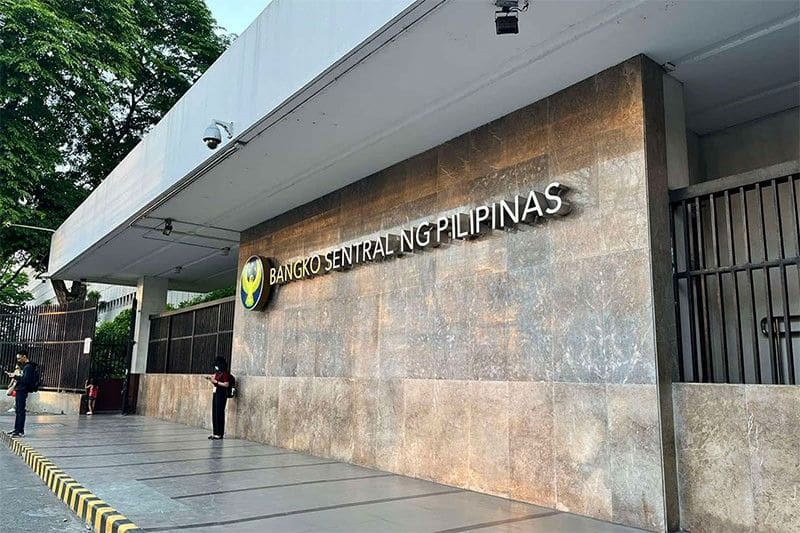
The Philippines' repurchase agreement market has grown to P119 billion as of July, marking a 55 percent increase since the end of 2024. The expansion follows the Bangko Sentral ng Pilipinas' push to adopt the Global Master Repurchase Agreement, a standardized contract framework used internationally for repo transactions.
The central bank views the growth as evidence that its efforts to deepen fixed-income trading are taking hold. Governor Eli Remolona described the increase as a significant step forward, noting that a more active repo market strengthens how monetary policy decisions flow through the financial system.
In a repo transaction, a financial institution sells securities to another party with an agreement to buy them back at a specified date, typically to raise short-term funding. The arrangement helps banks and other institutions manage liquidity needs while supporting broader trading in government bonds.
Standardized Contracts Drive Adoption
The GMRA framework provides an umbrella agreement that allows market participants to conduct repo transactions under consistent legal terms. According to the Bangko Sentral ng Pilipinas, the shared contractual structure reduces friction and encourages more frequent transactions between counterparties.
Remolona has previously characterized the country's fixed-income markets as underdeveloped, a condition that weakens the transmission of monetary policy into the broader economy. The central bank's reforms aim to build infrastructure that allows interest rate adjustments to influence borrowing costs and investment decisions more predictably.
Alongside repo market development, the central bank has introduced a peso interest rate swap platform. Outstanding contracts in that market have reached approximately P114 billion since the benchmark launched in November 2024. Interest rate swaps allow two parties to exchange interest payment obligations, typically swapping fixed-rate payments for floating-rate payments or vice versa, helping institutions manage exposure to rate fluctuations.
Swap Curve to Replace Legacy Benchmark
The peso interest rate swap contracts now trade on a platform with a matching mechanism designed to support price discovery. The Bangko Sentral ng Pilipinas intends to use the IRS curve as the main pricing benchmark for fixed-income instruments, replacing the Bloomberg Valuation Service curve currently relied upon by market participants.
The BVAL curve estimates yields by using government securities with varying maturities and observed market rates. The central bank is working with Bloomberg to implement the transition, which would shift pricing references to a market-based swap curve derived from actual transactions.
JPMorgan Index Inclusion on the Horizon
Philippine peso-denominated government bonds are set to join the JPMorgan Emerging Markets Bond Index, a move expected to draw foreign capital into Manila's debt markets. The country's bonds will represent about 1.78 percent of the index, equivalent to roughly $50 billion in market value.
JPMorgan has selected nine government securities for inclusion, with the eligible bonds valued at approximately P3 trillion. The Bangko Sentral ng Pilipinas anticipates that passive funds tracking the index will enter the market initially, followed by active investors as familiarity with Philippine instruments grows. The central bank cited India's experience as a precedent, where index inclusion preceded a broader expansion of the investor base.
Remolona emphasized that a diverse set of market participants with varying views is essential for sustained trading activity. The central bank expects the index inclusion to materially change the structure and liquidity of the domestic bond market.
Corporate Debt Remains Underdeveloped
Despite progress in government securities and derivatives, the Philippines' corporate bond market remains shallow. Outstanding corporate bonds represent only about six percent of gross domestic product, far below Thailand's 22 percent. The gap underscores the economy's continued reliance on bank financing for corporate funding needs.
The Bangko Sentral ng Pilipinas is collaborating with the World Bank and the International Finance Corporation to strengthen the country's credit-rating infrastructure. The initiative may include participation from Moody's Ratings and S&P Global Ratings, with the goal of making corporate bond issuance more accessible and transparent.
A deeper corporate bond market would provide companies with an alternative to bank loans, potentially lowering funding costs and reducing concentration risk in the financial system. The central bank sees credit-rating improvements as a necessary step toward building that market.
RELATED STORIES
Philippines Central Bank Raises Rate to 5% Despite Economic Slowdown
Priyanka V. Rao · 3 min

PhilWeb Trading Halted After P4.2 Billion JKS Tech Bet
Tran Quoc Bao · 3 min

Manila Halts Approvals for Digital Payment Operators Pending Fraud Review
Jun-ho Seo · 4 min
GCash Parent Mynt Wins SEC Approval for $1.6 Billion Manila IPO
Tran Quoc Bao · 3 min
Spot something wrong? Email editor@briefasia.com. We log every correction publicly.