Asia · Business
Nearly Half of the Philippines' Grid-Connected Power Providers Charge Above National Average
Forty-eight distribution utilities exceed the record-high P12.43 per kilowatt-hour benchmark as generation costs drive electricity expenses across the archipelago.
KEY TAKEAWAYS
- ·Forty-eight of 106 grid-connected distribution utilities in the Philippines charge residential rates above the national average of P12.43 per kilowatt-hour, with Southern Leyte's SOLECO at P16.57 per kWh the highest.
- ·Generation charges account for at least 46% of total electricity costs, driven by liquefied natural gas imports that now comprise 46% of the country's natural gas feedstock for power production.
- ·The Philippines surpassed Singapore in July to hold the highest residential power rates in Southeast Asia, with Meralco announcing a July adjustment bringing its rate to P14.8261 per kWh.
Widespread Premium Pricing
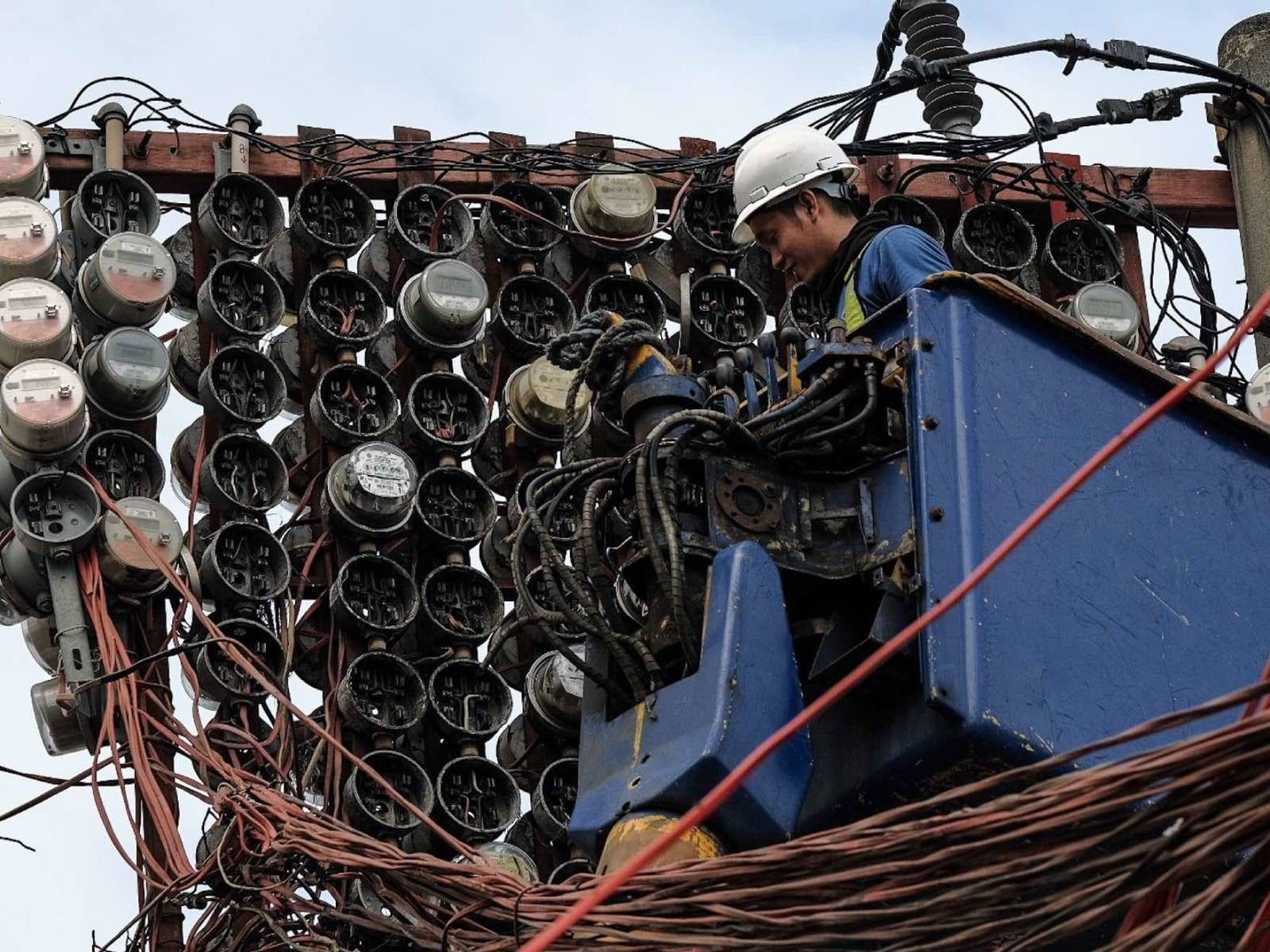
Forty-eight of the Philippines' 106 grid-connected distribution utilities now charge residential customers electricity rates exceeding the national average of P12.43 per kilowatt-hour recorded in June, according to data from the Institute for Climate and Sustainable Cities. The energy advocacy group tracked rates through its PRESYO-PH monitoring platform, which compiles monthly billing data from 116 distribution utilities nationwide.
The findings reveal a pattern where consumers in roughly half of grid-connected service areas pay premiums over the benchmark figure. Southern Leyte Electric Cooperative (SOLECO) tops the list at P16.57 per kWh, while Tarlac Electric I (TARELCO I) charges the lowest above-average rate at P12.45 per kWh. Manila Electric Company (Meralco), which serves approximately 80% of the market, ranks ninth among premium providers at P14.48 per kWh in June.
Grid-connected utilities typically operate at lower cost structures than their off-grid counterparts, drawing power from centralized transmission networks without requiring local battery storage or isolated generation assets. The prevalence of above-average rates among these utilities suggests structural cost pressures affecting even well-integrated service territories.
Generation Costs Drive Bills Higher
Generation charges form the dominant component of Philippine electricity bills, representing at least 46% of the total rate mix across distribution utilities, data from the Institute for Climate and Sustainable Cities shows. This cost category consistently outweighs transmission fees, distribution charges, and other line items in monthly consumer statements.
Meralco announced a rate adjustment of P0.3428 per kWh effective July, pushing the overall charge to P14.8261 per kWh. Households consuming 200 kWh monthly will see bills increase by approximately P69. The adjustment reflects rising input costs for power generation across the archipelago.
Liquefied natural gas accounts for 22% of the Philippines' power generation mix in 2026, according to the US International Trade Administration. Imported LNG now comprises 46% of the country's natural gas feedstock, exposing the electricity sector to global commodity price swings and foreign exchange volatility.
Regional Context and Cost Structure
The Department of Energy confirmed on July 20 that the Philippines now carries the highest residential power rates in Southeast Asia, surpassing Singapore's P0.09 per kWh. The milestone marks a shift in the region's energy cost hierarchy, with the archipelago's island geography and import dependence creating upward pressure on tariffs.
Ten of the 116 monitored distribution utilities operate off-grid systems in remote islands and provinces, relying on diesel generators and battery storage to meet local demand. These isolated networks face inherently higher costs due to fuel transportation expenses and smaller economies of scale. However, the presence of 48 on-grid utilities charging above-average rates indicates that connectivity to the main transmission backbone does not guarantee competitive pricing.
The Institute for Climate and Sustainable Cities emphasized that the national average figure masks significant variation in what households actually pay. Distribution territories with above-average rates serve populations facing monthly electricity expenses materially higher than headline benchmarks suggest.
Fuel Import Exposure
The Philippines' reliance on imported energy inputs creates a structural vulnerability to external price shocks and currency fluctuations. Natural gas imports have grown as the country transitions away from coal-fired generation, but the shift introduces new dependencies on international suppliers and shipping routes.
The Institute for Climate and Sustainable Cities noted that diversifying the power generation mix with indigenous renewable resources could reduce exposure to imported fuel price volatility. Solar, wind, geothermal, and hydro resources across the archipelago remain underutilized relative to their technical potential, while fossil fuel imports continue to set marginal generation costs.
Expanding renewable capacity would require transmission infrastructure upgrades, grid integration technology, and policy frameworks that incentivize private investment in clean generation assets. The current rate structure reflects a system still heavily weighted toward thermal generation fueled by imported commodities, with consumers bearing the cost through monthly utility bills.
The concentration of generation charges in overall electricity costs points to the power production segment as the primary driver of rate increases. Distribution utilities pass through fuel and generation expenses to customers with limited ability to absorb volatility, creating direct transmission of global energy market conditions to household budgets across the Philippines.
RELATED STORIES

Philippine Water Operator Earmarks $400 Million for Southeast Asia Expansion
Mariel D. Santos · 2 min

Philippines Energy Budget Climbs 26% as Electric Vehicle Funding Surges
Priyanka V. Rao · 3 min
Philippine Nickel Miners Push for Unified Policy Framework as Critical Minerals Race Intensifies
Priyanka V. Rao · 3 min
Philippine Economic Zones Pull Record ₱216 Billion in Eight Months
Priyanka V. Rao · 3 min
Spot something wrong? Email editor@briefasia.com. We log every correction publicly.