Finance · Deals
Philippines Plans Retail Bond Return as Treasury Eyes Small Investor Demand
Bureau of the Treasury signals second-half retail bond offering, building on last year's P507 billion success while monitoring market conditions
KEY TAKEAWAYS
- ·The Philippines will issue retail Treasury bonds in the second half of 2026 with a P5,000 minimum, following a P507.16 billion five-year offering at six percent in 2025.
- ·Timing depends on market conditions, potential JPMorgan index inclusion, and a P100 billion retail bond maturity in September 2027 that could drive rollover demand.
- ·The Marcos administration plans P2.73 trillion in gross borrowing for 2026 and P3.3 trillion for 2027 across domestic and foreign markets.
Manila Eyes Small Investor Base
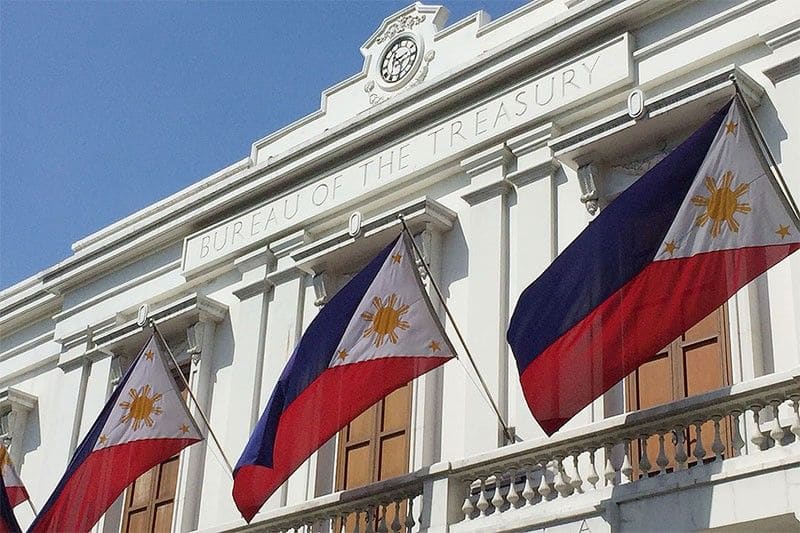
The Philippines is preparing to tap the retail bond market again this year, opening another round of government securities to small investors after raising more than half a trillion pesos in 2025. National Treasurer Sharon Almanza confirmed the Bureau of the Treasury plans to issue retail Treasury bonds within the second half of 2026, though no specific date has been set.
Retail Treasury bonds offer quarterly interest payments and carry the full backing of the Philippine government's financial capacity. The minimum purchase threshold remains P5,000, making them accessible to individual savers seeking relatively low-risk instruments. Finance Secretary Frederick Go emphasized that any issuance decision will hinge on prevailing market developments and the government's financing requirements.
Strong Precedent from 2025
The government raised P507.16 billion from its 31st retail Treasury bond offering in 2025, a five-year instrument carrying a six percent coupon rate. That marked the first time such securities became available through GCash's GBonds feature, broadening distribution beyond traditional bank channels. Demand proved robust, underscoring appetite among Filipino retail investors for government-backed instruments in an environment where deposit rates have lagged inflation.
The upcoming issuance will likely follow a similar structure, though officials have not disclosed tenor or coupon details. Almanza noted that the government's 2027 bond calendar will depend on market conditions and could include euro, yen, or dollar-denominated issues alongside domestic offerings.
Timing and Market Considerations
Several factors are shaping the timing calculus. Rizal Commercial Banking Corp. chief economist Michael Ricafort pointed to the potential for lower borrowing costs if Philippine government bonds gain inclusion in the JPMorgan Emerging Market Bond Index. That would attract passive fund flows and tighten spreads, reducing the coupon the Treasury needs to offer.
Another consideration is the September 2027 maturity of a P100 billion ten-year retail bond. Timing the next issuance to capture rollover demand from that maturity could improve take-up, Ricafort noted. He also flagged the need to hedge national borrowing plans amid geopolitical uncertainty, particularly after the lapse of a 60-day interim agreement between the United States and Iran on August 17.
Broader Borrowing Program
The Marcos administration has outlined gross borrowing targets of P2.73 trillion for 2026 and P3.3 trillion for 2027, according to the latest Budget of Expenditures and Sources of Financing. Retail bonds form one component of a diversified funding strategy that spans domestic and foreign markets, with tenors ranging from short-term bills to multi-decade global bonds.
The Treasury's willingness to return to the retail channel reflects confidence in domestic liquidity and the continued appeal of government paper in a market where commercial bank lending growth has moderated. Retail participation also broadens the investor base, reducing reliance on institutional buyers and foreign portfolio flows that can be volatile during risk-off episodes.
What Comes Next
Market participants will watch for details on tenor, coupon, and distribution channels in the coming months. If the Treasury replicates the GCash partnership, it could further deepen retail penetration, particularly among younger, mobile-first savers. The success of the 2025 issuance set a high bar, and officials will be mindful of pricing the bond competitively without overshooting fiscal costs.
For small investors, the upcoming offering represents another opportunity to lock in fixed income at a time when deposit rates remain compressed and equity markets face external headwinds. The timing of the launch will ultimately depend on how global interest rate trends, domestic inflation, and regional credit conditions evolve through the middle of the year.
RELATED STORIES
Philippines Holds A- Credit Rating as Infrastructure Delays Cloud Growth
Priyanka V. Rao · 3 min

Philippines Central Bank Warns Digital Access Alone Won't Achieve Financial Inclusion
Priyanka V. Rao · 3 min
Philippines Shifts Digital Payments From Convenience to Critical Infrastructure
Priyanka V. Rao · 3 min
London Fintech Challenges Manila on Remittance Fee Disclosure
Priyanka V. Rao · 5 min
Spot something wrong? Email editor@briefasia.com. We log every correction publicly.