Asia · Business
Philippines Faces Labor Productivity Gap as Wage Debate Intensifies
New minimum wage hike sparks clash over productivity data, with economists warning of structural challenges while labor advocates cite stagnant real wages
KEY TAKEAWAYS
- ·Metro Manila's P85 daily minimum wage increase has intensified debate over whether Filipino worker productivity at $8,400 annual value per worker justifies the hike, compared to Vietnam's $11,500 and Thailand's $18,000.
- ·IBON Foundation data shows labor productivity rose 28.9 percent over a decade while real wages declined, with top 1,000 corporate profits climbing 35 percent from 2012 to 2019 and another 25 percent by 2021.
- ·Economists warn the 12 percent wage increase outpaces three percent GDP growth and risks forcing MSMEs into informal hiring or closure, while the family living wage gap in Manila now exceeds P570 per day.
The Productivity Question
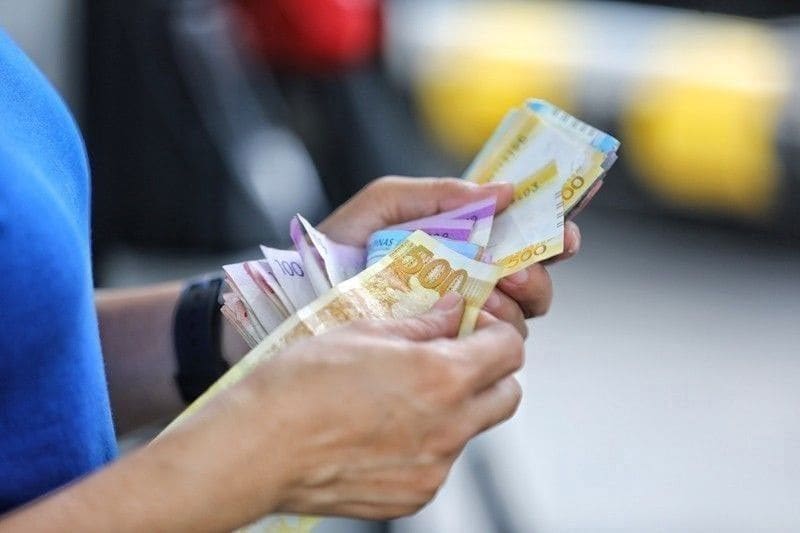
The recent P85 daily minimum wage increase in Metro Manila's Wage Order NCR-27 has triggered a sharp debate over labor productivity in the Philippines. Employers argue the hike lacks foundation in output gains, while labor advocates counter that workers have seen productivity rise without corresponding pay increases.
At the center sits a regional competitiveness problem. World Bank data shows the Philippines generates approximately $8,400 in annual economic value per worker, trailing Vietnam at $11,500, Thailand at $18,000, and Malaysia exceeding $30,000. This gap forces manufacturing firms to redirect capital toward neighboring markets where labor efficiency translates into stronger returns.
The Foundation for Economic Freedom warns the wage order, driven primarily by inflation indexing rather than productivity metrics, creates macroeconomic strain. When nominal wages rise faster than worker output, businesses face a choice: absorb higher costs, raise prices, or reduce headcount. For the Philippines, where micro, small and medium enterprises account for the bulk of employment, the third option often prevails.
Competing Narratives on Worker Output
IBON Foundation presents a contrasting view. The think tank calculates that Filipino labor productivity measured at constant prices climbed 28.9 percent over a recent decade, moving from P330,035 per worker to P425,511. During the same period, real wages adjusted for inflation declined, meaning purchasing power eroded even as output increased.
IBON points to corporate profit growth as evidence the gains bypassed workers. The top 1,000 corporations saw profits rise nearly 35 percent between 2012 and 2019, from P1.1 trillion to P1.5 trillion, then jump another 25 percent to P1.8 trillion by 2021. Meanwhile, the nominal average daily basic pay of P544 in 2022 represented just 49 percent of the family living wage estimated at P1,103, leaving a gap of P559. That gap has since widened, with the national average family living wage now exceeding P1,310 per day against a nominal minimum wage around P510.
In Metro Manila, the daily minimum of up to P645 still falls roughly P570 to P600 short of the regional living standard, according to IBON computations.
The MSME Squeeze
The Philippine Institute for Development Studies identifies what it calls a "scale effect" from mandated wage floors. Small firms reduce headcount to keep operating costs static, raising hiring standards and creating barriers for younger, less-educated applicants. Large capital-intensive firms respond by investing in automation or streamlining operations, but MSMEs operate on thin margins without capital cushions.
To survive mandated rates that outpace actual output, many small enterprises slip into the informal economy, hiring workers under undocumented arrangements to bypass mandatory pay levels. The Foundation for Economic Freedom warns this dynamic discourages investment in manufacturing, agribusiness and other labor-intensive industries, particularly when combined with current economic conditions: roughly three percent growth, elevated fuel costs and compressed corporate margins.
A 12 percent wage increase mathematically outpaces these near-term metrics, raising concerns about businesses passing increased labor costs to consumers through higher prices for basic commodities. If nominal wages rise without corresponding productivity gains, inflation follows, eroding the purchasing power the wage hike aimed to restore.
The Missing Infrastructure Link
Both sides acknowledge that sustainable wage growth requires more than legislative orders. The Foundation for Economic Freedom argues for aggressive supply-side interventions: lowering food and energy costs to boost the peso's purchasing power, alongside heavy capital investments in infrastructure and technology to lift hourly output per Filipino worker.
Without automated industrial supply chains, the financial value generated per worker per day lags behind regional competitors despite longer working hours. International indicators confirm Filipino workers clock extended shifts, but the absence of productivity-enhancing infrastructure prevents those hours from translating into competitive output.
The wage debate ultimately circles back to food prices, which drive inflation and fuel demands for higher pay. Addressing that structural challenge remains beyond the demonstrated capacity of current policy execution, leaving both employers and workers navigating an economy where productivity gains and wage growth remain stubbornly decoupled.
RELATED STORIES

Filipino Household Income Rose 16% but Spending Outpaced Gains
Mariel D. Santos · 3 min

Philippine Water Operator Earmarks $400 Million for Southeast Asia Expansion
Mariel D. Santos · 2 min

Philippines Energy Budget Climbs 26% as Electric Vehicle Funding Surges
Priyanka V. Rao · 3 min
Philippine Manufacturing Expands at Fastest Pace Since 2016
Priyanka V. Rao · 3 min
Spot something wrong? Email editor@briefasia.com. We log every correction publicly.