Sustainability · Energy
Philippines Identifies Five Luzon Sites for First Commercial Nuclear Plants
Bataan, Palawan, Masbate, Pangasinan, and Camarines Norte emerge as potential locations as Manila advances toward IAEA's second milestone phase
KEY TAKEAWAYS
- ·The Philippines has shortlisted five Luzon provinces for nuclear plant sites, with Bataan and Palawan each hosting two potential locations and initial assessments completed.
- ·Manila is advancing from IAEA Phase 1 pre-commitment studies toward Phase 2, requiring regulatory frameworks, technical capacity, financing structures, and public confidence.
- ·Southeast Asia's nuclear push intensifies as Vietnam, Indonesia, and Thailand pursue similar projects to address power demand and reduce reliance on imported fossil fuels.
Sites Narrowed After Initial Assessments
The Philippines has identified five provinces in Luzon for potential nuclear power plant construction, with Bataan and Palawan each hosting two candidate sites and Masbate, Pangasinan, and Camarines Norte one apiece. Energy Undersecretary Giovanni Carlo Bacordo confirmed that preliminary assessments have been completed at all locations.
The selection represents the most concrete progress in Manila's effort to introduce commercial nuclear generation to the archipelago. No timeline for construction has been disclosed, but officials indicate the government is working through institutional prerequisites before moving to development.
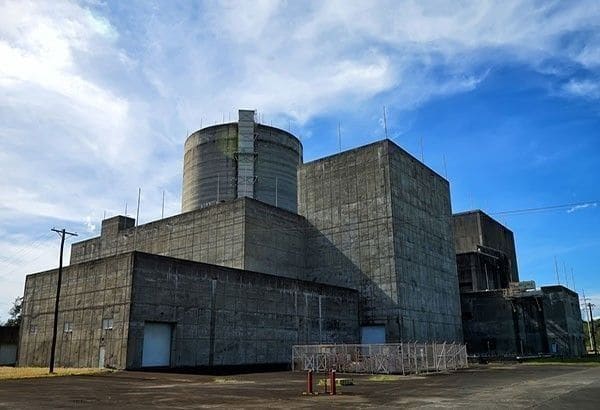
Bataan already hosts the mothballed Bataan Nuclear Power Plant, a 620-megawatt Westinghouse reactor completed in 1984 but never commissioned due to safety concerns following the Chernobyl disaster. The province's inclusion on the shortlist suggests existing transmission infrastructure and site familiarity may weigh in feasibility studies.
Institutional Build-Out Underway
According to Bacordo, the Marcos administration is systematically establishing the architecture required by the International Atomic Energy Agency's milestones approach. The country is transitioning from Phase 1, which centers on pre-commitment studies, toward Phase 2, which involves detailed site characterization, technology selection, and vendor engagement.
The official emphasized that nuclear deployment extends beyond hardware. Manila must construct a regulatory apparatus, cultivate technical expertise, secure financing structures, and build public acceptance before any reactor can be energized.
The Department of Energy has not specified which reactor technologies are under consideration. Small modular reactors and conventional light-water designs remain in global vendor portfolios targeting emerging markets, though the Philippines has not issued a formal request for proposals.
Regional Context and Energy Security
Southeast Asia's interest in nuclear power has intensified as electricity demand outpaces coal and gas capacity additions. Vietnam restarted feasibility work on the Ninh Thuan project in 2024 after abandoning it in 2016. Indonesia signed a preliminary agreement with Russia's Rosatom in 2023 to study deployment on Java. Thailand continues site surveys despite repeated delays.
The Philippines consumed roughly 108 terawatt-hours of electricity in 2025, with coal accounting for approximately 58 percent of generation and natural gas another 20 percent. Renewable energy, primarily geothermal and hydropower, contributed around 22 percent. Power costs in the Manila area remain among the highest in Asia, a persistent drag on manufacturing competitiveness.
Nuclear advocates argue that baseload atomic generation could stabilize grid costs and reduce reliance on imported liquefied natural gas, which has grown more volatile since the Ukraine conflict. Critics point to the capital intensity of nuclear projects, the absence of a domestic enrichment or fuel fabrication industry, and unresolved questions about spent fuel storage in a typhoon-prone archipelago.
Regulatory and Financing Gaps
The Philippine Nuclear Research Institute, the country's atomic energy agency, has operated a small research reactor since 1988 but lacks experience regulating commercial power reactors. Legislation to establish an independent nuclear regulatory commission has circulated in Congress intermittently but has not reached enactment.
Financing remains another hurdle. Nuclear plants typically require upfront capital exceeding two billion dollars for a single gigawatt-scale unit, with construction timelines stretching beyond a decade in many markets. Manila has not disclosed whether it will pursue vendor financing, multilateral development bank loans, or public-private partnerships.
The IAEA milestones framework, which the Philippines formally adopted in 2022, lays out 19 infrastructure issues that must be addressed across three phases before fuel loading. These span legal frameworks, radiation protection, emergency preparedness, human resource development, stakeholder engagement, and waste management.
What Comes Next
The Energy Department has indicated it will conduct more granular site assessments, including seismic studies, hydrological surveys, and population density analyses, before advancing to technology selection. Environmental impact statements and public consultations are expected to follow.
If the Philippines proceeds on schedule, the earliest a commercial reactor could begin operation would be the mid-2030s, assuming regulatory, financing, and construction milestones are met without major delays. That timeline would place Manila roughly in step with Vietnam and Indonesia, positioning Southeast Asia for a synchronized wave of first-generation nuclear capacity additions in the next decade.
RELATED STORIES

Manila's Power Chief Warns Nuclear Comes With a Hefty Price Tag
Mariel D. Santos · 3 min
Manila Secures €250 Million Development Loan to Restore Coastal Fisheries
Priyanka V. Rao · 3 min

Philippines Looks to Rebuild Nuclear Workforce After Decades of Overseas Talent Drain
Mariel D. Santos · 3 min

Philippines Senator Calls for Simpler Access to Financial Services Beyond Fee Cuts
Mariel D. Santos · 3 min
Spot something wrong? Email editor@briefasia.com. We log every correction publicly.