Sustainability · Energy
Manila's Power Chief Warns Nuclear Comes With a Hefty Price Tag
Manuel V. Pangilinan says atomic plants offer energy security but capital costs could push electricity rates higher than existing sources

KEY TAKEAWAYS
- ·Meralco chairman Manuel V. Pangilinan estimates nuclear construction at $7 million per megawatt, before transmission costs, potentially making electricity more expensive than existing sources.
- ·While nuclear fuel is cheap and can be secured decades ahead, massive upfront capital requirements and site challenges including transmission infrastructure and local government approval complicate the economics.
- ·The Philippines is advancing toward Phase 2 of the International Atomic Energy Agency framework as MGen evaluates small modular reactors with $2.8 million US government support.
The Reality Behind the Revival
The Philippines' renewed embrace of atomic power is running into economic headwinds. Manuel V. Pangilinan, who chairs Manila Electric Company (Meralco), the country's largest electricity distributor, delivered a sobering assessment this week: nuclear plants might deliver energy security, but the bill will be substantial.
Speaking to media on August 13, Pangilinan estimated construction costs at approximately $7 million per megawatt before accounting for transmission infrastructure and site complications. His comments arrive weeks after President Ferdinand Marcos Jr. championed nuclear power during his State of the Nation Address as a route to affordable, secure electricity.
Pangilinan's caution carries weight. Meralco PowerGen (MGen), the group's generation arm, is already evaluating small modular reactor technologies with support from a $2.8 million US government grant. The company has invested in nuclear capability through training programs that send Filipino engineers overseas for specialized education before they return home.
Capital Versus Fuel
The chairman outlined a fundamental tension in nuclear economics. Reactor fuel can be purchased decades in advance at low cost, delivering the energy independence Manila seeks. Construction expenses tell a different story.
Pangilinan pointed to a scenario where nuclear-generated electricity might reach 10 pesos per kilowatt-hour, potentially exceeding rates from existing generation sources. The gap stems from massive upfront capital requirements that dwarf the savings on fuel.
Site selection compounds the challenge. Earthquake-resistant locations typically sit far from population centers, requiring substantial transmission investment to connect new plants to the grid. Local government consent adds another layer of complexity.
"The LGU has got to consent," Pangilinan noted, acknowledging the political difficulty of persuading communities to host nuclear facilities.
Competing Against Coal
The Philippines burns coal for much of its electricity precisely because the fuel remains inexpensive and delivers round-the-clock power. Pangilinan observed that coal producers maintain their market position through aggressive pricing, aware that cost advantage is their primary selling point.
Any alternative must contend with that economic reality. Nuclear offers consistent, low-carbon generation, but the capital barrier is formidable. Renewable energy infrastructure often costs less to build, yet intermittency remains a constraint.
Meralco's own solar investments have faced that weather-dependent limitation. Pangilinan remarked that the sun has been conspicuously absent recently, a wry acknowledgment of renewable power's operational challenges.
The Security Premium
Pangilinan stopped short of rejecting nuclear outright. He framed the decision as a choice about priorities. If the Philippines values energy independence highly enough, accepting higher electricity costs may be justified.
"You have to condition the minds of the people," he said, suggesting that nuclear's value proposition centers on security rather than immediate savings on monthly bills.
That argument requires public acceptance of what amounts to a premium for self-sufficiency. Long-term fuel contracts insulate the country from international price volatility, but ratepayers would bear the infrastructure burden through their electricity costs.
Industry Moves Forward
Government preparations continue despite the economic questions. The Philippines is advancing through the International Atomic Energy Agency's milestone framework toward Phase 2. Officials are working on establishing an independent regulator, identifying potential sites, arranging financing, and developing a skilled workforce.
Other major Philippine power companies are also positioning themselves. AboitizPower signed an exploratory agreement with Korea Hydro & Nuclear Power to study nuclear technologies, joining MGen in evaluating reactor options.
Meralco has built institutional knowledge through its FISSION and NEST programs, creating a pipeline of nuclear-trained engineers. The company's $2.8 million US-backed study aims to identify a preferred small modular reactor technology.
Weighing the Trade-Off
Pangilinan suggested nuclear suppliers themselves have indicated that new plants would produce more expensive electricity than competing sources. He argued that for nuclear to work in the Philippines, it would require what he called "special treatment," acknowledging its cost structure differs fundamentally from conventional generation.
The implication is clear: nuclear power might find a place in the Philippine energy mix, but its justification would rest on strategic considerations rather than cost competitiveness. Energy independence carries a price, and Pangilinan believes Filipinos need to understand that calculation before committing to atomic power.
The chairman's remarks inject a dose of economic realism into the nuclear conversation. As Manila weighs its energy future, the choice appears less about whether nuclear can work technically and more about whether the country is willing to pay for the security it promises.
RELATED STORIES
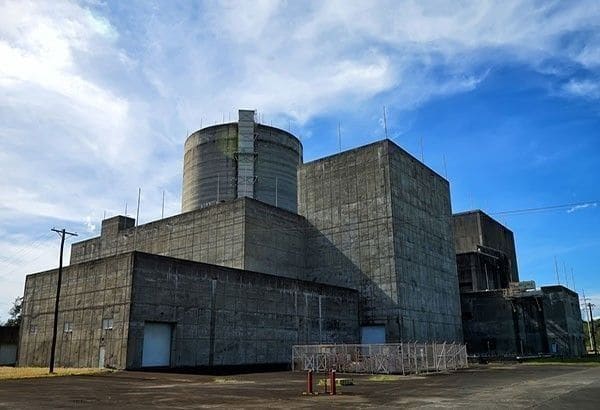
Philippines Identifies Five Luzon Sites for First Commercial Nuclear Plants
Priyanka V. Rao · 3 min

Philippines Looks to Rebuild Nuclear Workforce After Decades of Overseas Talent Drain
Mariel D. Santos · 3 min
Manila Secures €250 Million Development Loan to Restore Coastal Fisheries
Priyanka V. Rao · 3 min

Middle Eastern Oil Firms Eye Storage Deal in Philippines
Priyanka V. Rao · 3 min
Spot something wrong? Email editor@briefasia.com. We log every correction publicly.