Asia · Environment
Philippines Faces Highest El Niño Inflation Risk in Southeast Asia
Bank of America projects 6.7 percent inflation for Manila this year as weather disruptions compound food price pressures across the region's most exposed economy.
KEY TAKEAWAYS
- ·Bank of America projects the Philippines will record 6.7 percent inflation in 2026, more than double its earlier estimate and the highest among major ASEAN economies.
- ·Food prices in the Philippines have climbed faster than anywhere else in the region over the past six months, driven by emerging El Niño conditions and delayed cost pass-throughs.
- ·Bangko Sentral ng Pilipinas is expected to deliver one more 25-basis-point rate hike in August, potentially signaling the end of its tightening cycle if July inflation stays below seven percent.
Weather Shocks Meet Sticky Food Costs
The Philippines stands out as Southeast Asia's most vulnerable economy to the El Niño pattern now taking shape, according to Bank of America. The research house projects consumer price growth will reach 6.7 percent in 2026, more than double the three percent estimate it held six months earlier and the highest rate among major ASEAN economies.
That inflation figure dwarfs the outlook for neighboring markets. Indonesia is expected to see 3.3 percent price growth, Malaysia and Singapore two percent each, Thailand 2.4 percent, and Vietnam 4.8 percent, Bank of America said in its latest regional economic assessment.
The divergence reflects a confluence of pressures hitting Manila harder than its peers. Weather disruptions tied to strengthening El Niño conditions are layering onto delayed cost pass-throughs from the West Asia conflict and unfavorable base effects from the previous year. Food prices have climbed faster in the Philippines than anywhere else in the region over the past half-year, creating a stubborn inflationary base even as global oil markets ease.
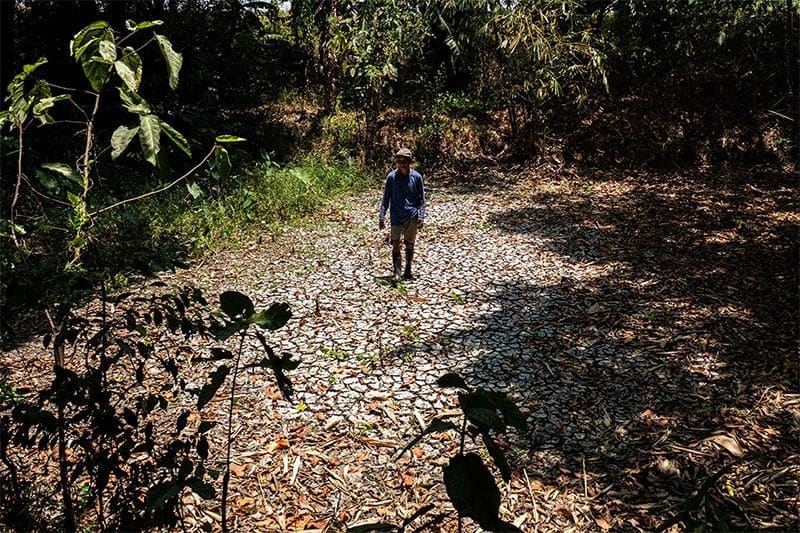
State meteorologists have flagged a high probability that El Niño will intensify between June and August, with effects potentially extending into early 2027. The phenomenon typically brings reduced rainfall and prolonged dry spells to the archipelago, stressing agricultural output and tightening supply chains for staples like rice.
Growth Stalls Below Potential
Economic expansion is forecast to slow sharply. Bank of America expects gross domestic product to grow just 2.5 percent this year before recovering to 3.5 percent in 2027. Both figures fall well short of the estimated potential growth range of 4.5 to 5.5 percent, leaving the economy with a negative output gap that may persist through next year.
Rice prices and wage pressures remain the primary upside risks to the inflation outlook, even as broader expectations have moderated from earlier worst-case scenarios. The combination of weather-driven supply constraints and rising labor costs is proving difficult for policymakers to counteract without further tightening.
Bangko Sentral ng Pilipinas has already delivered two consecutive 25-basis-point rate increases since April, lifting the benchmark overnight borrowing rate to 4.75 percent. Bank of America anticipates one additional quarter-point hike at the central bank's August policy meeting, though the move may be accompanied by signals that the tightening cycle is nearing its end.
The research house suggested that a July inflation print below seven percent year-on-year could give the monetary authority enough confidence to proceed with a final hike while indicating it has reached its terminal rate. Consumer price growth has remained above the central bank's two-to-four-percent target band for several months, complicating the policy calculus.
Regional Divergence Widens
The inflation and growth outlook underscores how unevenly climate and commodity shocks are rippling through Southeast Asia. While the Philippines grapples with entrenched food-price inflation and below-trend expansion, peers with more diversified agricultural bases or stronger fiscal buffers are navigating the same global headwinds with less strain.
Indonesia's inflation forecast of 3.3 percent, for example, reflects a broader export base and less concentrated exposure to rice. Malaysia and Singapore benefit from deeper financial markets and more flexible import channels, while Thailand's agricultural sector has proven more resilient to weather variability in recent cycles.
For Manila, the policy challenge is acute. Tightening rates too aggressively risks deepening the output gap and delaying the growth recovery. Yet failing to anchor inflation expectations could entrench price pressures and erode purchasing power, particularly for lower-income households most exposed to food-cost swings.
The central bank's August decision will offer clues on how it weighs those trade-offs. If inflation data cooperate and the July print comes in softer than feared, policymakers may opt to declare victory and hold rates steady for the remainder of the year. A hotter-than-expected reading, however, could force an extended tightening cycle and push the growth recovery further into 2027.
Weather patterns over the next quarter will be decisive. A sharper-than-anticipated El Niño could tighten rice supplies enough to keep inflation elevated well into next year, while a milder outcome might allow price pressures to ease faster than currently forecast. For now, the Philippines remains the regional economy with the most to lose.
RELATED STORIES

Five ASEAN Members Back Regional Oil Stockpile as Study Nears Completion
Tran Quoc Bao · 3 min
Philippines Cancels Coal Tender for Key Mining Site Months Before Operator Handover
Mariel D. Santos · 4 min
Filipino Workers Abroad Send Home $3.6 Billion in July
Mariel D. Santos · 3 min

Southeast Asian Firms Overlook Digital Pact Worth USD 2 Trillion
Lim Hui Ying · 4 min
Spot something wrong? Email editor@briefasia.com. We log every correction publicly.