Asia · Business
Philippines Moves to Curb Tobacco Overproduction After Five-Million-Kilo Surplus
NTA tightens contract requirements as 35,000 farmers remain outside formal agreements amid volatile global market
KEY TAKEAWAYS
- ·The National Tobacco Administration recorded a five-million-kilo Virginia tobacco surplus in Ilocos provinces, 27 percent above the 18.05-million-kilo buyer commitment for the previous season.
- ·Approximately 35,000 of the Philippines' 45,000 registered tobacco farmers remain outside formal contract growing agreements, exposing them to spot-market risk and potential harvest rejection.
- ·The agency is enforcing soil-area matching criteria and urging uncontracted growers to join the Tobacco Contract Growing System to align planting volumes with confirmed demand.
Contract System Under Pressure
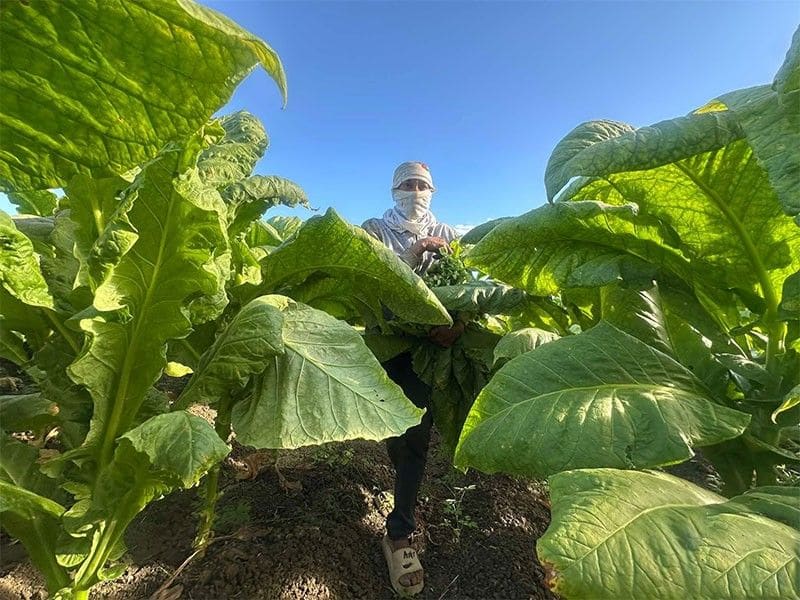
The National Tobacco Administration is imposing stricter production controls for the upcoming 2026-2027 planting season after the Philippines produced five million kilos more Virginia tobacco than buyers committed to purchase. The surplus, concentrated in Ilocos Sur, Ilocos Norte, Abra and La Union, represented a 27 percent overshoot of the 18.05-million-kilo purchase commitment from trading companies and cigarette manufacturers during the previous season.
Administrator Belinda Sanchez told stakeholders during a recent information campaign that the agency would prioritize economic stability over volume growth. The move comes as global tobacco markets face their own glut, creating downward price pressure that leaves uncontracted farmers particularly vulnerable.
Roughly 35,000 of the country's 45,000 registered tobacco farmers operate without formal contract growing agreements, according to the NTA. That gap exposes more than three-quarters of the sector to spot-market volatility and the risk that their harvest will be rejected outright if quality or quantity mismatches buyer specifications.
Soil-Area Matching and Quality Standards
The agency is rolling out its Virginia Improved Flavor Tobacco Production protocol, which maps planting areas to soil suitability. The goal is to reduce the mismatch between what farmers grow and what buyers will accept. Sanchez described compliance as "no longer just a regulatory requirement" but the sector's primary defense against market instability.
Municipal agriculturists and agricultural technicians across tobacco-producing provinces are being briefed on the global oversupply situation and urged to steer uncontracted growers toward the NTA's Tobacco Contract Growing System. Under that framework, planting volumes are coordinated with confirmed demand rather than left to individual farmer discretion.
The Strategic Tobacco Production Information Campaign targets private stakeholders alongside local government agricultural staff. The message is blunt: expansion without a buyer in place risks financial loss, and quality standards will be enforced more rigorously to meet export and domestic specifications.
Regional Implications
The Philippines sits on the periphery of a broader Southeast Asian tobacco belt that includes Indonesia and Thailand, both of which have ramped up production in recent years. Lower-cost producers and shifting consumer preferences toward vaping and heated-tobacco products have compressed traditional cigarette demand, even as leaf supply has climbed.
For Filipino growers, especially smallholders in the Ilocos region, tobacco remains a cash crop with few substitutes. The NTA's tightening of production mandates reflects a balancing act: protect farmer income without flooding a market already awash in inventory. Contract farming, long used in palm oil and sugar, offers a hedge but requires trust between growers and buyers that has historically been uneven in the sector.
Sanchez emphasized that the agency's focus on "strict market anchors and premium quality" is intended to shield farmers from both overproduction losses and the reputational damage that comes from rejected loads. Whether 35,000 uncontracted farmers will shift into formal agreements before the next planting window remains an open question, one that will determine how much discipline the sector can impose on itself.
RELATED STORIES

Philippine Water Operator Earmarks $400 Million for Southeast Asia Expansion
Mariel D. Santos · 2 min

Philippines Energy Budget Climbs 26% as Electric Vehicle Funding Surges
Priyanka V. Rao · 3 min
Philippine Nickel Miners Push for Unified Policy Framework as Critical Minerals Race Intensifies
Priyanka V. Rao · 3 min

Philippine Economic Zones Pull Record ₱216 Billion in Eight Months
Priyanka V. Rao · 3 min
Spot something wrong? Email editor@briefasia.com. We log every correction publicly.