Asia · Business
Philippines Offers 99-Year Land Leases to Chip Investors in New Clark City
Manila's Pax Silica hub targets $10 billion in initial semiconductor and AI investment, backed by extended lease terms under newly amended law
KEY TAKEAWAYS
- ·The Philippines will allow foreign investors in the Pax Silica hub to lease land for up to 99 years under Republic Act 12252, signed in September 2025.
- ·BCDA has allocated 1,620 hectares in New Clark City and set an initial investment target of $10 billion, with potential full buildout reaching $40 billion to $70 billion.
- ·Initial site development is scheduled to begin in the first quarter of 2028, with the project currently in the information exchange stage for prospective investors.
A Century-Long Bet on Semiconductors
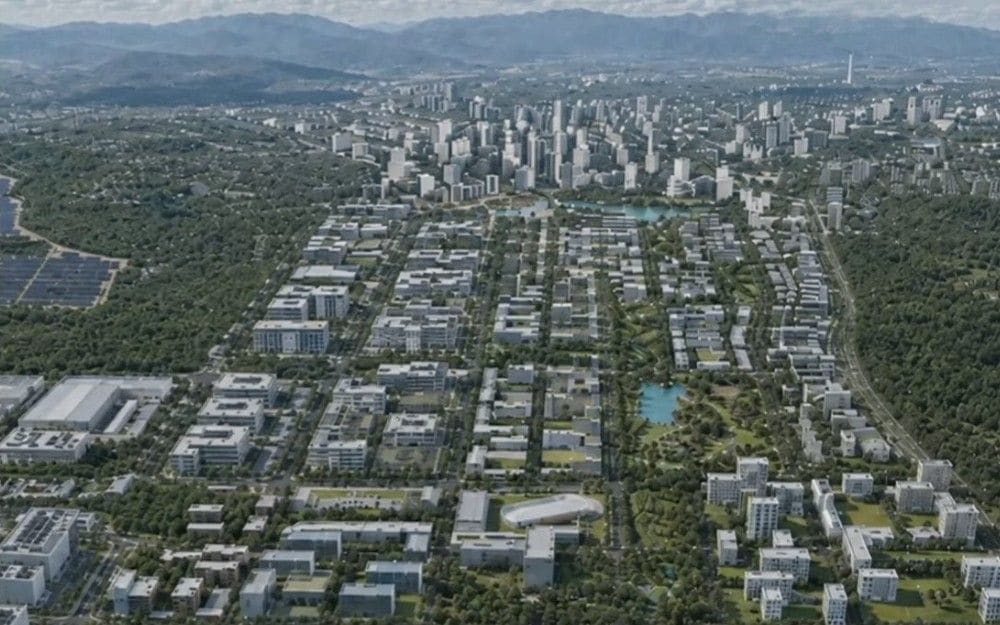
The Philippines is offering foreign investors up to 99 years of land tenure in New Clark City, a move designed to secure anchor tenants for Pax Silica, the government's planned industrial hub for semiconductors, AI infrastructure and advanced manufacturing.
Bases Conversion and Development Authority announced that 1,620 hectares in Tarlac province have been earmarked for the project. Investors will be able to lease land under Republic Act 12252, the amended Investors' Lease Act signed by President Ferdinand Marcos Jr. in September 2025, according to BCDA President and CEO Joshua Bingcang.
The law extends the previous maximum lease period from 50 years plus a 25-year extension to a single 99-year term. It covers foreign investments in industrial development, tourism, agriculture and agroforestry. Lessees can transfer lease rights, sublease the land or use the lease as collateral for financing, subject to regulatory approval.
The extended lease framework addresses a longstanding friction point for capital-intensive industries. Semiconductor fabs and data centers typically require 15 to 20 years to recoup initial outlays; a 99-year lease brings the Philippines closer to the tenure norms in Singapore, Malaysia and Vietnam, where land or land-use rights can stretch across decades.
Initial Investment Target and Job Projections
BCDA has set an initial investment target of $10 billion, with funding expected from participating countries interested in the initiative. At full buildout, potential investments could reach between $40 billion and $70 billion, Bingcang said during a Palace press briefing.
The authority estimates the project could generate 130,000 to 190,000 direct jobs and between 500,000 and 800,000 indirect and induced positions. Fewer than 10 percent of jobs are expected to go to foreign workers, primarily in senior executive roles, with the majority filled by local talent, according to BCDA.
The agency also projects P60 billion in lease income over 25 years, P68 billion to P75 billion in annual withholding tax revenue and $200 billion in export potential once the hub is fully operational. If those figures materialize, Bingcang said, Pax Silica alone could contribute roughly 10 percent of the country's gross domestic product.
Target Industries and Timeline
The hub is designed to attract industrial research and development, semiconductor processing, data centers, critical-mineral processing and manufacturing facilities. The project is currently in the information exchange stage, with prospective investors evaluating the site. Bingcang said this phase may last two to three months.
Initial site development is scheduled to begin in the first quarter of 2028. BCDA has previously stated that over 30 firms have expressed interest, though no anchor tenants have been publicly confirmed.
Land Tenure and Regional Competition
The 99-year lease mechanism marks a shift in how Manila competes for foreign direct investment in high-tech manufacturing. Southeast Asian peers have long offered comparable or superior land arrangements. Singapore grants 60-year industrial leases renewable up to 99 years. Vietnam allows 50-year land-use rights extendable to 70 years for large projects. Malaysia offers freehold industrial land in select zones.
The Philippines had lagged on tenure length, a gap that mattered less when the country competed primarily on labor costs but became a liability as it sought to move up the value chain into semiconductors and precision manufacturing.
Republic Act 12252 narrows that gap. The law also permits original lessees to transfer or sublease, a feature that facilitates secondary-market liquidity and makes long-term industrial sites more attractive to institutional investors and multinational corporations rotating assets across regions.
Pushback and Displacement Concerns
The Pax Silica plan has drawn criticism from advocacy groups. Kilusang Magbubukid ng Pilipinas, a national farmers' federation, has warned that extended leases heighten the risk of land consolidation and displacement. The group argues that 99-year terms effectively transfer control of agricultural or ancestral land to foreign entities, locking out smallholders and indigenous communities for generations.
BCDA has not disclosed detailed resettlement plans or compensation frameworks for communities currently occupying portions of the 1,620-hectare site. The authority has said the majority of jobs will go to Filipinos, but local groups have questioned whether semiconductor and AI roles will be accessible to displaced farmers without significant retraining investment.
What Comes Next
The government expects to finalize a framework agreement with the United States by November, according to earlier statements from officials. That deal would clarify investment commitments, technology-transfer terms and security arrangements for the hub, which is seen as part of Washington's broader strategy to diversify semiconductor supply chains away from Taiwan and mainland China.
For now, Pax Silica remains a pitch deck backed by legal infrastructure. The 99-year lease is the carrot; the question is whether Manila can deliver the roads, power, water and customs efficiency that make a greenfield site viable at scale. The first quarter of 2028 will be the earliest test of whether investors treat New Clark City as a serious alternative to established nodes in Penang, Saigon or Bangalore, or as another aspirational industrial zone in a region already crowded with them.
RELATED STORIES

Philippine Economic Zones Pull Record ₱216 Billion in Eight Months
Priyanka V. Rao · 3 min
Manila's Chip Industry Still Stalled in Assembly While Taipei Built Fabs
Priyanka V. Rao · 4 min

Philippine Water Operator Earmarks $400 Million for Southeast Asia Expansion
Mariel D. Santos · 2 min

Philippines Energy Budget Climbs 26% as Electric Vehicle Funding Surges
Priyanka V. Rao · 3 min
Spot something wrong? Email editor@briefasia.com. We log every correction publicly.