Asia · Business
Philippine Factories Post Fastest Growth in Five Months
Manufacturing PMI climbs to 51.8 in July as domestic demand strengthens, though hiring remains cautious amid persistent supply-chain strain
KEY TAKEAWAYS
- ·Philippine manufacturing PMI climbed to 51.8 in July from 50.9 in June, the fastest expansion in five months driven by stronger new orders and output.
- ·Staffing levels declined moderately despite higher production, with firms citing voluntary resignations and difficulty filling vacancies as they await sustained demand.
- ·Economists view manufacturing recovery as critical to lifting full-year GDP growth above three percent after the economy expanded just 2.8 percent in the first quarter.
Demand Lifts Output
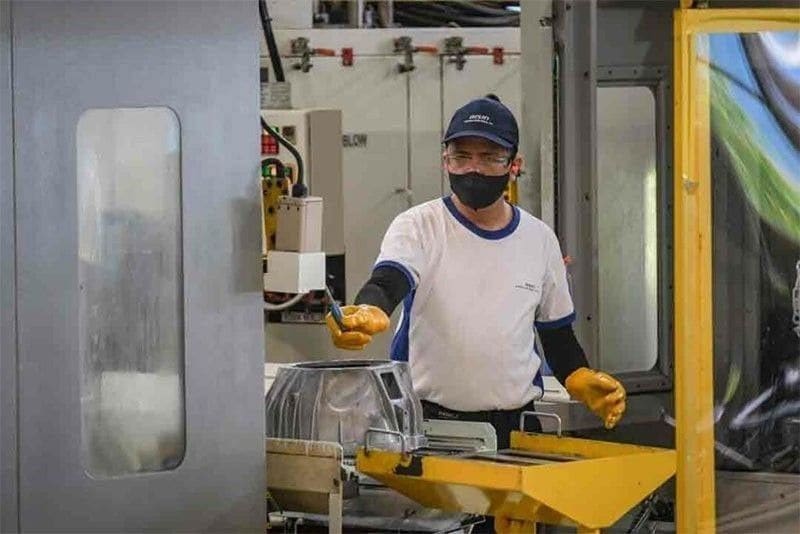
Philippine factories accelerated production in July, posting their strongest expansion in five months as order books thickened and demand recovered from a weak second quarter. The manufacturing purchasing managers' index rose to 51.8 last month, up from 50.9 in June, according to S&P Global. The reading marks the third consecutive month above the 50 threshold that separates growth from contraction.
The survey, which tracks 400 manufacturers across new orders, output, employment, supplier delivery times, and inventory holdings, captures a sector regaining momentum after months of tepid activity. Both new orders and production logged their fastest gains since early this year, before Middle East conflict disrupted global trade flows and dampened sentiment across Southeast Asia.
Manufacturers responded by ramping up purchasing activity to meet higher production requirements. Yet the rebound came with friction: stretched supply chains and a fresh uptick in input costs put inventories under pressure, even as backlogs of unfinished work shrank.
Hiring Lags Behind
Despite the upturn in orders, staffing levels fell moderately in July. Firms attributed the decline to voluntary resignations and persistent difficulty filling vacancies. S&P Global Market Intelligence economist Maryam Baluch noted that payroll numbers suggest companies are waiting for clearer evidence of sustained recovery before committing to new hires.
Business confidence remains muted by historical standards. The gap between rising output and stagnant employment underscores the caution that has defined corporate sentiment since geopolitical tensions flared earlier this year. Manufacturers appear reluctant to expand headcount until demand stabilizes over multiple quarters.
Broader Economic Implications
The manufacturing uptick arrives as the Philippines seeks to rebound from its weakest quarterly growth in five years. The economy expanded just 2.8 percent in the first three months of 2026, weighed down by soft consumer spending and subdued investment. Bank of the Philippine Islands lead economist Emilio Neri Jr. said a sustained recovery in manufacturing would be critical to lifting overall economic performance in the second half of the year.
Neri expressed hope that the first half represents a trough, with manufacturing gains and stabilizing geopolitics combining to push full-year growth above three percent. The Philippine Statistics Authority is scheduled to release second-quarter GDP data on August 7, a reading that will clarify whether the recovery has taken hold or remains fragile.
Supply-Chain Strain Persists
While demand improved, manufacturers continued to grapple with supply-chain bottlenecks and rising costs. The combination squeezed inventory management, forcing firms to balance higher purchasing volumes against stretched logistics networks. Input price pressures, which had eased earlier in the year, picked up again in July as global commodity markets tightened and freight costs edged higher.
The divergence between stronger demand and persistent supply friction reflects the uneven nature of the region's recovery. Factories are selling more but struggling to source materials efficiently, a dynamic that could limit margin expansion even as top-line growth accelerates.
What Comes Next
The July PMI reading offers a tentative signal that Philippine manufacturing is emerging from its mid-year slump. Yet the sector's trajectory remains contingent on external factors, from Middle East stability to currency volatility and global trade policy. Domestically, the pace of hiring will be a key indicator: if firms begin adding workers in the coming months, it would confirm that businesses see the recovery as durable rather than cyclical noise.
For now, factories are running faster, but the boardroom mood remains wait-and-see. The next few months will determine whether July's acceleration marks the start of a sustained upturn or a brief interlude before conditions soften again.
RELATED STORIES
Filipino Workers Abroad Send Home $3.6 Billion in July
Mariel D. Santos · 3 min
Philippines Cancels Coal Tender for Key Mining Site Months Before Operator Handover
Mariel D. Santos · 4 min

Five ASEAN Members Back Regional Oil Stockpile as Study Nears Completion
Tran Quoc Bao · 3 min

Philippine Capital Inflows Slide as Foreign Firms Curtail Local Lending
Tran Quoc Bao · 3 min
Spot something wrong? Email editor@briefasia.com. We log every correction publicly.