Asia · Business
Philippine Coconut Authority Requests $22 Million to Close Planting Gap
Agency needs 8.5 million additional seedlings to meet its 25.4 million tree target for 2026 and stay on track for 100 million by 2028
KEY TAKEAWAYS
- ·The Philippine Coconut Authority is seeking P1.26 billion to plant 8.5 million additional coconut seedlings in 2026, closing the gap to its 25.4 million annual target.
- ·Current budget covers only 16.85 million trees, threatening the agency's goal to plant 100 million coconuts by 2028 and modernize the sector.
- ·New coconut trees require several years to generate income for farmers, prompting the PCA to track survival rates and long-term productivity as key performance indicators.
Funding Shortfall Threatens Replanting Schedule
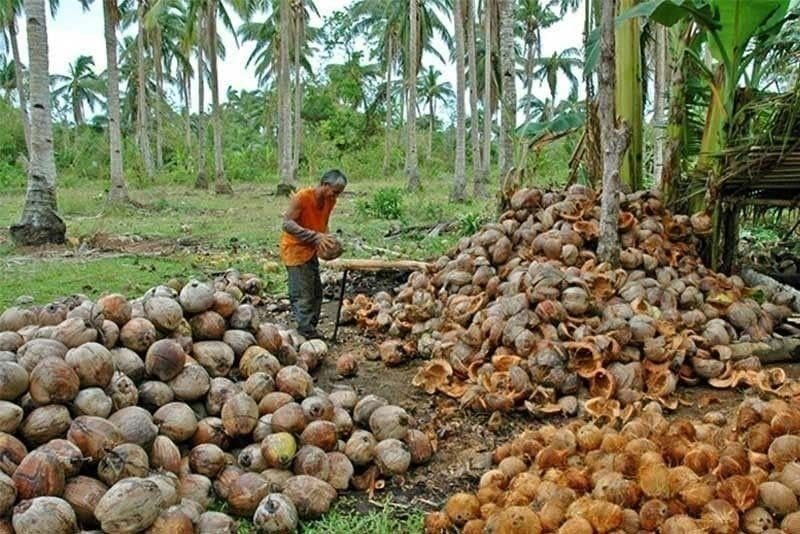
The Philippine Coconut Authority faces an 8.5 million seedling gap in its 2026 replanting program, prompting the agency to request P1.26 billion ($22 million) in additional budget. Current allocations cover only 16.85 million of the targeted 25.4 million coconut trees scheduled for planting this year, according to PCA administrator Dexter Buted.
The shortfall arrives at a critical juncture for the Philippines' coconut sector. The archipelago nation remains one of the world's largest coconut producers, but aging plantations and declining yields have eroded competitiveness. The PCA's broader ambition calls for planting 100 million coconut trees by 2028, a timeline that depends on meeting annual milestones.
"It is an investment in the future of our coconut farmers and the entire industry," Buted said. "Every palm planted means higher incomes, stronger rural communities and a more competitive Philippine coconut sector."
Long Payback Period Shapes Strategy
Coconut replanting presents a unique challenge in agricultural finance. New trees require several years before generating meaningful income for farmers, a lag that complicates cost-benefit calculations and farmer adoption. The PCA has adjusted its performance metrics accordingly, tracking survival rates, growth patterns and long-term productivity rather than immediate output.
Agriculture Secretary Francisco Tiu Laurel Jr. framed the request in terms of structural investment. "Higher productivity means higher incomes, while a stronger coconut industry supports jobs, exports and food security," he said. "Every peso invested today helps build a more resilient agricultural economy for tomorrow."
The agency has maintained momentum despite budget constraints through participatory planting projects, coconut hybridization research, partnerships with local government units and community-led initiatives. Seedlings are being cultivated in nurseries to ensure supply for the next planting cycle, even as funding discussions continue.
Regional Context
The Philippines competes in a Southeast Asian coconut market dominated by Indonesia, which has scaled production through large estates. Philippine output, by contrast, relies heavily on smallholder farms with trees often decades past peak productivity. Replanting at scale offers a path to narrow the yield gap, but requires sustained capital outlays that smallholders typically cannot shoulder alone.
Manila's coconut sector supports an estimated three million farming families, many in provinces with limited alternative livelihoods. The crop underpins rural economies in regions including Mindanao, the Visayas and parts of Luzon, where copra, coconut oil and derivative products form a major export category.
The 100-million-tree target represents roughly 10 percent of the nation's total coconut area, a figure the PCA views as a minimum threshold to reverse productivity decline. Full execution would position the Philippines to reclaim market share in virgin coconut oil, desiccated coconut and other higher-margin segments where it has ceded ground to rivals.
Budget Deliberations Ahead
The supplemental funding request now moves through budget deliberations in Manila. Approval would allow the PCA to procure seedlings, distribute them to farmer cooperatives and provide technical support through the remainder of the planting season. Rejection or delay would push the shortfall into 2027, compressing the timeline to reach the 2028 goal.
The agency has not disclosed contingency plans if the request stalls, though its existing nursery network and local partnerships suggest incremental progress would continue at a reduced pace. The question is whether partial implementation suffices to meet the broader industry restructuring objectives that underpin the replanting drive.
For Philippine coconut farmers, the outcome will shape income prospects for the next generation. Coconut palms planted today will not reach full bearing capacity until the early 2030s, underscoring the long horizon inherent in tree crop renewal and the importance of getting the investment cycle right.
RELATED STORIES

Philippine Water Operator Earmarks $400 Million for Southeast Asia Expansion
Mariel D. Santos · 2 min

Philippines Energy Budget Climbs 26% as Electric Vehicle Funding Surges
Priyanka V. Rao · 3 min
Philippine Manufacturing Expands at Fastest Pace Since 2016
Priyanka V. Rao · 3 min

Filipino Household Income Rose 16% but Spending Outpaced Gains
Mariel D. Santos · 3 min
Spot something wrong? Email editor@briefasia.com. We log every correction publicly.