Asia · Politics
Philippine Central Bank Official Calls Out Dollar Account Loophole in Corruption Probes
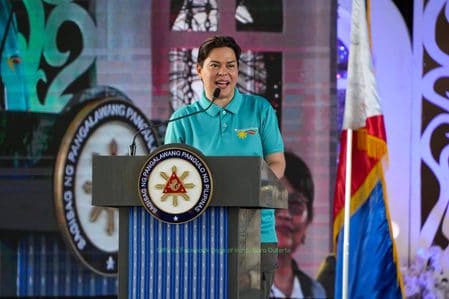
Foreign currency deposits remain shielded even as impeachment court approves subpoenas for Vice President Sara Duterte's financial records
KEY TAKEAWAYS
- ·A senior Philippine central bank official criticized laws that shield foreign currency accounts from impeachment court subpoenas targeting Vice President Sara Duterte's financial records.
- ·The Foreign Currency Deposit Act requires written consent from account holders, blocking examination even when peso accounts can be opened under the Bank Secrecy Law.
- ·A new anti-scam statute grants designated central bank officers authority to inspect dollar deposits in fraud cases, an authority the impeachment court does not possess.
Legal Shield Blocks Full Financial Picture
A top official at Bangko Sentral ng Pilipinas has criticized the legal framework protecting foreign currency accounts from scrutiny, calling it a tool that enables concealment of illicit funds. The issue came into sharp focus after the Senate impeachment court approved subpoenas targeting financial records linked to Vice President Sara Duterte but was forced to carve out dollar-denominated accounts from the order.
Deputy Governor Elmore Capule voiced his frustration publicly on Wednesday, pointing to the contradiction: impeachment judges can compel disclosure of peso accounts but not foreign currency deposit unit holdings. The latter remain walled off by a separate statute that demands written consent from the account holder before examination.
"We are talking of bank secrecy being used to hide illegal activities," Capule said during a signing ceremony for an information-sharing pact between the central bank and the Department of Justice.
Decades-Old Statutes Create Two-Tier System
The Philippines operates under two distinct confidentiality regimes. The Bank Secrecy Law, enacted in the 1950s, explicitly permits inquiries into peso accounts during impeachment proceedings. The Foreign Currency Deposit Act, passed later to attract offshore capital, contains no such carve-out and requires depositor permission for any inspection.
That structural gap means prosecutors pursuing the impeachment case against Duterte can obtain records of local currency holdings but not dollar accounts, even with the Senate court's backing. The subpoenas, issued on July 20, target accounts held by Duterte, her husband Manases Carpio, and several associated entities as part of an article alleging unexplained wealth accumulation.
Capule, who previously served as the central bank's general counsel, drew on personal experience to illustrate the cost of these restrictions. Early in his government career, he worked on a case involving a state-owned enterprise that moved public funds into a private account during the 1986 EDSA uprising. By the time a court authorized examination of the account, the money had vanished.
"It took about a year to secure a favorable ruling. Lo and behold, the fund was transferred one year before," he recounted. "So essentially, it's dead."
New Anti-Scam Law Offers Narrow Exception
Capule noted an irony: a recently enacted statute gives certain central bank officials broader access to foreign currency accounts than impeachment courts possess. The Anti-Financial Account Scamming Act, which Capule helped draft, allows a designated BSP officer to examine dollar deposits when investigating financial fraud and money-muling schemes.
That authority applies only within the scope of scam investigations and does not extend to impeachment or other criminal probes. Capule made no allegation that Duterte holds undisclosed foreign currency deposits or that any account contains illicit proceeds. His remarks focused on systemic flaws that he said have hampered enforcement for 35 years.
He also criticized the treatment of confidentiality provisions in the Anti-Money Laundering Act, which he said foreign counterparts find baffling. "Whenever other jurisdictions see that, they are telling me, 'Are you joking? Bank secrecy and then money laundering in one statute?'"
Central Bank Stays Out of Subpoena Process
BSP General Counsel Roberto Figueroa clarified that the central bank has received no subpoenas and will not instruct commercial banks on how to respond to orders from the impeachment court. Individual lenders must rely on their own legal teams to decide whether to comply, object, or seek further guidance from the Senate.
Figueroa also distinguished between the BSP and the Anti-Money Laundering Council, which was separately ordered to submit financial records in the Duterte case. Although BSP Governor Eli Remolona chairs the AMLC, the council operates as a standalone agency with its own statutory mandate and confidentiality rules.
The subpoenas are part of a broader effort by impeachment prosecutors to establish a financial baseline for Duterte and her husband, allowing comparison with declared income, assets, liabilities, and business interests. Without access to foreign currency accounts, that baseline remains incomplete.
Asia's Secrecy Puzzle
The Philippine predicament reflects a broader tension across Asia between financial confidentiality and enforcement. Singapore, Hong Kong, and other regional hubs have faced similar pressure to balance investor protection with anti-money laundering obligations. Unlike Manila, however, most jurisdictions have amended their statutes to permit judicial access to dollar accounts in criminal and corruption cases.
Capule's public criticism signals mounting frustration within the central bank over a legal architecture that has resisted modernization. His remarks also underscore the political sensitivity of any reform: loosening protections for foreign currency deposits could spark capital flight, yet maintaining the status quo leaves enforcement agencies with partial visibility into cross-border flows.
For now, the impeachment court and prosecutors must work within the existing framework, relying on peso account records and whatever cooperation they can secure from account holders. The dollar accounts remain beyond reach unless Duterte and Carpio provide written permission.
RELATED STORIES

Philippine Water Operator Earmarks $400 Million for Southeast Asia Expansion
Mariel D. Santos · 2 min
Philippine Economic Zones Pull Record ₱216 Billion in Eight Months
Priyanka V. Rao · 3 min

Philippines Energy Budget Climbs 26% as Electric Vehicle Funding Surges
Priyanka V. Rao · 3 min
Philippine Nickel Miners Push for Unified Policy Framework as Critical Minerals Race Intensifies
Priyanka V. Rao · 3 min
Spot something wrong? Email editor@briefasia.com. We log every correction publicly.