Travel & Dining · Trends
Philippine Airlines Orders 20 Boeing Dreamliners in $7 Billion Fleet Push
The Lucio Tan-controlled carrier returns to Boeing after two decades, betting on long-haul growth as Southeast Asian aviation demand accelerates
KEY TAKEAWAYS
- ·Philippine Airlines has ordered up to 20 Boeing 787-10 Dreamliners in a deal potentially worth $7.1 billion, with deliveries between 2031 and 2034.
- ·The order follows a $300 million bond offering and marks the carrier's first Boeing purchase in nearly two decades after emerging from U.S. bankruptcy in 2021.
- ·The aircraft will strengthen Philippine Airlines' long-haul network as Southeast Asian carriers compete for trans-Pacific and Middle Eastern routes with rising demand.
Return to Boeing After Twenty Years
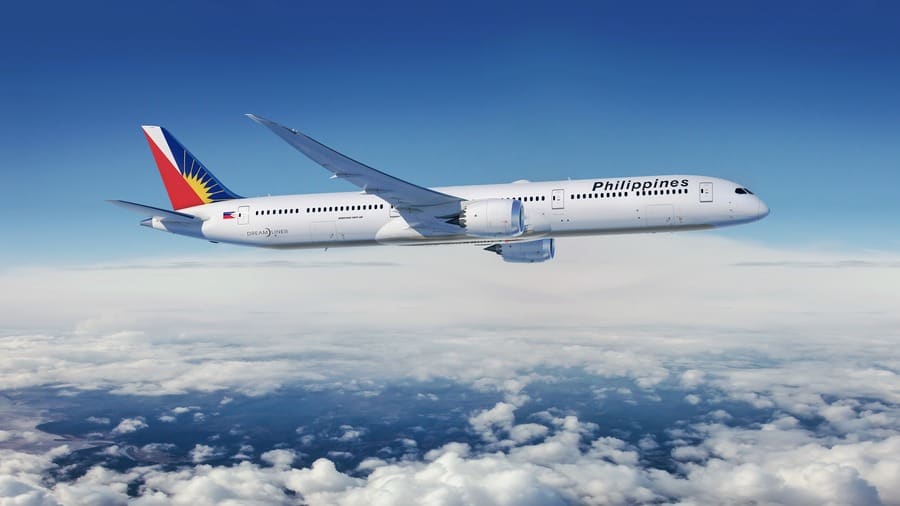
Philippine Airlines has signed a preliminary agreement to acquire up to 20 Boeing 787-10 Dreamliner aircraft, the flag carrier's first order from the American manufacturer in nearly two decades. The deal includes a firm commitment for 15 jets with options for five additional units, according to the airline.
Deliveries are scheduled to begin in 2031 and continue through 2034. While the carrier has not disclosed financial terms, the transaction could reach $7.1 billion at list prices. Industry data suggests airlines typically negotiate substantial discounts, with actual per-unit costs for Dreamliners ranging between $150 million and $200 million rather than the $355 million sticker price.
The aircraft will be equipped with GE Aerospace's GEnx-1B engines and will join Philippine Airlines' existing fleet of more than 80 planes serving domestic routes and 40 international destinations across Asia, North America, Australia and the Middle East.
Post-Bankruptcy Expansion
The order follows a $300 million bond offering completed earlier this year, Philippine Airlines' first debt issuance since exiting U.S. Chapter 11 bankruptcy protection in December 2021. That restructuring allowed the 85-year-old airline to shed legacy obligations and position itself for growth as pandemic-era travel restrictions lifted.
The carrier reported record profits in 2023 as regional air traffic rebounded sharply. That performance has underwritten an aggressive fleet renewal strategy launched in 2024. In December, the airline also placed an order for five additional Airbus A320 narrowbody jets to complement its short-haul operations.
"This investment manifests our confidence in the future of Philippine Airlines and the continued growth of air travel," said Lucio Tan III, president of PAL Holdings, the airline's parent company. "The Boeing 787-10 will strengthen our medium and long-haul fleet, allowing us to provide an even better travel experience for our customers while improving operational efficiency."
Strategic Bet on Long-Haul Routes
The 787-10 variant is Boeing's longest Dreamliner model, optimized for high-density routes between major cities. Its range and fuel efficiency make it particularly suited to Southeast Asian carriers eyeing North American and Middle Eastern markets, where demand for direct flights has outpaced seat capacity in recent quarters.
Philippine Airlines operates in a competitive regional environment. Carriers across Southeast Asia have been adding wide-body capacity to capture premium travel and cargo revenue, particularly on trans-Pacific routes where corporate and diaspora travel drive consistent demand.
The Dreamliner order positions the airline to compete more directly with Singapore Airlines, Cathay Pacific and emerging Gulf carriers on long-haul segments. It also reflects a broader industry pivot toward newer, more fuel-efficient aircraft as environmental regulations tighten and fuel hedging becomes more complex.
The Tan Empire
Lucio Tan controls Philippine Airlines through PAL Holdings, part of a diversified conglomerate spanning banking, beer, spirits, tobacco and real estate under the publicly listed LT Group. Forbes estimates his net worth at $2.9 billion, built over decades through a combination of acquisitions and government privatizations in the Philippines.
Aviation remains a core asset. The airline's performance has direct implications for the group's valuation, and the Dreamliner commitment signals the family's long-term confidence in the sector despite cyclical volatility and regulatory headwinds.
Boeing's Order Book Momentum
The Philippine Airlines deal adds to a recent string of orders for Boeing, which has faced production delays and regulatory scrutiny in other markets. The manufacturer recently secured commitments for 100 aircraft from SMBC Aviation Capital, a major leasing company, and 28 jets from Saudi Arabia's Riyadh Air.
For Boeing, the Southeast Asian market represents a critical growth frontier. The region's expanding middle class, rising disposable incomes and under-served secondary cities create demand for both narrow-body and wide-body capacity. Securing a flagship carrier like Philippine Airlines reinforces Boeing's competitive position against Airbus in a market where both manufacturers are vying for long-term partnerships.
The 2031 delivery timeline also provides Boeing breathing room to stabilize production and address quality-control issues that have plagued recent programs. For Philippine Airlines, the delay allows time to integrate the new aircraft into route planning and crew training without disrupting current operations.
What Comes Next
The Dreamliner order is part of a broader fleet modernization effort that will likely include additional narrowbody and regional jet acquisitions as the airline expands domestic connectivity. Philippine Airlines has indicated it will continue evaluating both Boeing and Airbus platforms depending on route economics and delivery schedules.
Industry observers will watch how the carrier deploys the 787-10s. Potential candidates include Manila to New York, Los Angeles, London and Sydney, routes where current equipment limits frequency or payload. The airline may also explore new nonstop services to secondary North American cities with large Filipino communities, a segment underserved by competitors.
Financing the fleet expansion will require careful balance-sheet management. The $300 million bond offering provides a cushion, but the airline will need to sustain strong load factors and yields to support debt service and lease obligations as deliveries ramp up in the 2030s.
For now, the deal underscores a broader narrative across Southeast Asian aviation: carriers are betting that demand will continue to grow, borders will remain open and fuel prices will stabilize. Whether that optimism proves justified will depend on macroeconomic conditions, regulatory frameworks and the ability of airlines to execute on ambitious expansion plans without overextending their balance sheets.
RELATED STORIES
Philippine Carriers Face Fuel and Currency Headwinds Amid Fleet Growth
Mariel D. Santos · 3 min

PhilWeb Trading Halted After P4.2 Billion JKS Tech Bet
Tran Quoc Bao · 3 min

GCash IPO Could Turn Users Into Shareholders
Mariel D. Santos · 3 min

Manila Halts Approvals for Digital Payment Operators Pending Fraud Review
Jun-ho Seo · 4 min
Spot something wrong? Email editor@briefasia.com. We log every correction publicly.