Asia · Business
Over 30 Companies Eye Investment in Philippines' Pax Silica AI Hub
The US-backed semiconductor and AI project in New Clark City targets $10 billion initial investment, with potential to generate 190,000 jobs and $200 billion in exports at full capacity.
KEY TAKEAWAYS
- ·More than 30 firms in manufacturing, technology, and energy have submitted letters of interest for the Pax Silica AI and semiconductor hub in New Clark City, with a framework agreement expected in November.
- ·The project targets $10 billion in initial investment and up to $70 billion at full buildout, with potential to create 190,000 direct jobs and generate P68 billion in annual tax revenues.
- ·Construction could begin in 2028 if the framework is finalized this year, with full development spanning 10 to 15 years across a 1,620-hectare site integrating chip packaging, AI computing, and mineral processing.
Interest Surges Ahead of Framework Deal
More than 30 companies have submitted letters of interest to invest in Pax Silica, the US-backed artificial intelligence and semiconductor hub under development in New Clark City, according to the Bases Conversion and Development Authority. The firms span manufacturing, technology, and energy sectors, though formal engagement remains on hold until the project's framework agreement is finalized.
Joshua Bingcang, president and CEO of BCDA, told reporters the agency expects to sign the framework agreement in November. Companies interested in the initiative cannot proceed with full investment discussions until governance structures are locked in. The project represents one of the most ambitious technology infrastructure plays in Southeast Asia, aiming to secure supply chains for critical minerals, advanced manufacturing, and AI-driven industries.
Pax Silica is a US State Department initiative focused on AI and supply chain security, designed to rally allies and trusted partners around resilient technology ecosystems. Fourteen countries have joined the effort, with the Philippines signing on in April. The project seeks to integrate semiconductor packaging, electronics, AI computing, research and development, and mineral processing on a single 1,620-hectare site in Tarlac province.
Investment Scale and Economic Impact
BCDA estimates the project requires an initial investment of approximately $10 billion. At full buildout, total capital deployed could reach between $40 billion and $70 billion. The authority projects the hub will create 130,000 to 190,000 direct jobs and between 500,000 and 800,000 indirect or induced positions across the broader economy.
The fiscal impact is equally significant. BCDA forecasts the project will generate P68 billion in annual tax revenues once operational, alongside P60 billion in lease income over a 25-year period. Export potential at full capacity is pegged at $200 billion, positioning the Philippines as a critical node in global AI and semiconductor supply chains.
If the November signing timeline holds, construction could begin in 2028. Bingcang outlined a phased approach, with site development, contracting, and initial construction spanning three to five years. Full development, however, is expected to extend beyond a decade, likely 10 to 15 years given the scale and complexity of the infrastructure.
Policy Stability and Contract Security
Foreign investors have pressed BCDA on the predictability of investment policies beyond the current administration's tenure. Bingcang emphasized that contracts will include provisions designed to transcend political cycles. BCDA agreements typically run for more than 30 years and undergo review by multiple government agencies to ensure enforceability across administrations.
The authority is structuring deals as commercial business contracts, with language intended to insulate investments from regulatory shifts and environmental risks. Bingcang noted that recent BCDA contracts have been subjected to multiple layers of government scrutiny to ensure they withstand changes in political leadership.
Regional Context and Strategic Positioning
Pax Silica arrives as Southeast Asian governments compete to attract semiconductor and AI investments amid ongoing US-China technology decoupling. Vietnam, Malaysia, and Thailand have all announced incentives for chip packaging and assembly operations in the past two years. The Philippines, traditionally a hub for electronics assembly, is positioning New Clark City as a higher-value-add site integrating upstream mineral processing with downstream AI computing.
The project's emphasis on critical minerals reflects US strategy to diversify supply chains away from China-dominated rare earth and processing networks. The Philippines holds significant nickel and copper reserves, materials essential for semiconductor and battery production. Integrating mineral processing with advanced manufacturing on a single site could reduce logistics costs and supply chain vulnerabilities.
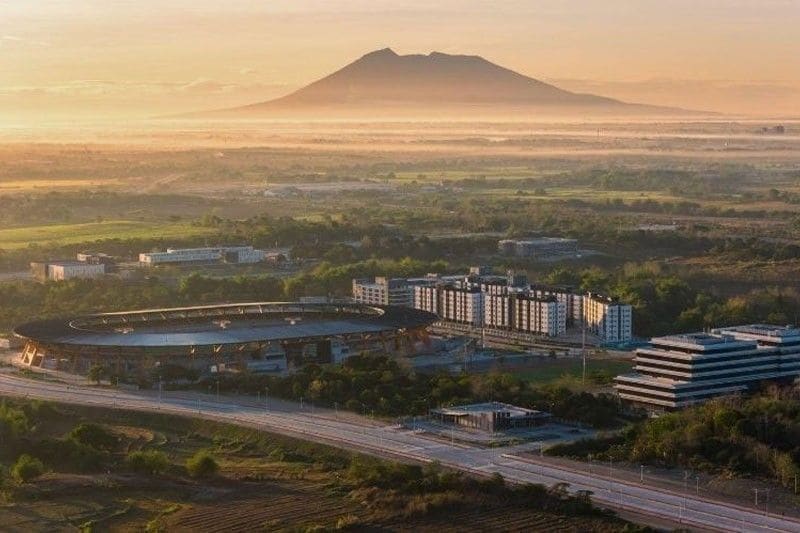
New Clark City, a greenfield development north of Manila, already hosts government offices and sports facilities. The Pax Silica district would occupy a significant portion of the broader New Clark City master plan, which spans 9,450 hectares. BCDA has positioned the site as offering reliable power, connectivity, and proximity to Manila without the congestion and infrastructure constraints of the capital region.
Next Steps and Timeline
BCDA is working with US and Philippine government counterparts to finalize governance frameworks for the hub. The November target for the framework agreement is critical to maintaining momentum, as interested companies are awaiting clarity on fiscal incentives, land lease terms, and regulatory structures before committing capital.
If construction begins in 2028, the first phase of operations could come online by the early 2030s. The timeline depends on infrastructure readiness, including power generation capacity, water supply, and transportation links. BCDA has not disclosed which companies have submitted letters of interest, citing confidentiality until the framework is signed.
The success of Pax Silica will hinge on execution speed, policy consistency, and the Philippines' ability to compete with regional peers offering aggressive tax holidays and streamlined permitting. For Manila, the project represents a chance to climb the technology value chain and anchor a new generation of high-wage jobs outside the traditional outsourcing and electronics assembly sectors.
RELATED STORIES
Philippine Manufacturing Expands at Fastest Pace Since 2016
Priyanka V. Rao · 3 min

Philippine Economic Zones Pull Record ₱216 Billion in Eight Months
Priyanka V. Rao · 3 min

Philippine Water Operator Earmarks $400 Million for Southeast Asia Expansion
Mariel D. Santos · 2 min

Philippines Energy Budget Climbs 26% as Electric Vehicle Funding Surges
Priyanka V. Rao · 3 min
Spot something wrong? Email editor@briefasia.com. We log every correction publicly.