Finance · Deals
NSE Lays Out Expansion Blueprint as India's Biggest Exchange Prepares for Public Listing
The exchange targets new products, global partnerships, and data monetisation while betting on structural trends in Asia's third-largest economy
KEY TAKEAWAYS
- ·National Stock Exchange detailed a post-listing strategy focused on product diversification, GIFT City expansion, and data monetisation in its July 2026 investor presentation
- ·Unique PANs registered with NSE surged from 40 million in fiscal 2021 to 129 million in fiscal 2026, while financial assets rose to 47 percent of household savings
- ·The exchange plans international partnerships and offshore presence to capture global opportunities as it advances toward its long-awaited public offering
Growth Strategy Unveiled
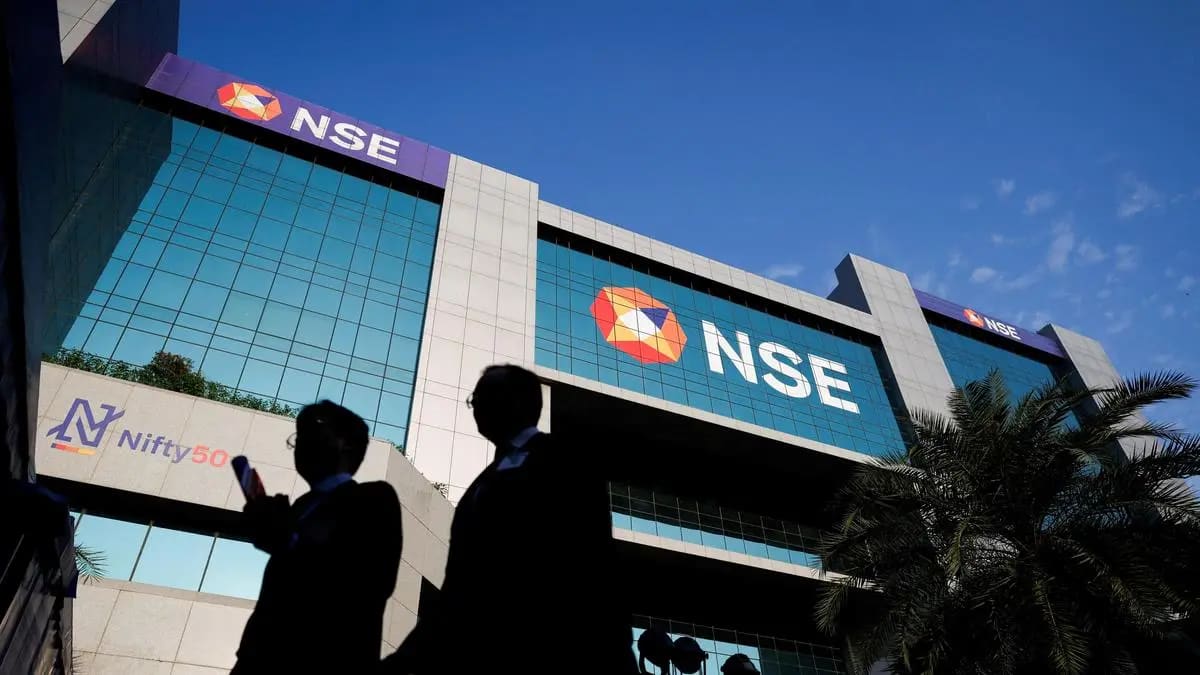
The National Stock Exchange has outlined a post-listing expansion roadmap focused on product innovation, international reach, and technology modernisation as India's largest bourse positions itself to capture long-term capital market opportunities. The strategy was detailed in a July 2026 investor presentation as part of the exchange's roadshow ahead of its initial public offering.
According to NSE, the plan centres on business diversification, automation of large markets through new product launches, and enhanced data monetisation through its market data ecosystem. The exchange said it will continue driving market innovation while organising and automating segments of India's financial infrastructure.
International Ambitions
NSE signalled a push beyond domestic borders, with plans to build presence in GIFT City, the International Financial Services Centre positioned as a gateway to global markets. The exchange outlined intentions to forge international partnerships and establish a strategic offshore footprint to capture opportunities beyond India's borders.
The global expansion aligns with the exchange's broader aim to strengthen its position across multiple asset classes and geographies. GIFT City, located in Gujarat, serves as India's first operational smart city and international financial services hub, offering tax advantages and regulatory flexibility for financial institutions.
Technology and Capital Formation
Alongside geographic expansion, NSE emphasised continued investment in technology infrastructure and modernisation. The exchange said it will act as a catalyst for new capital formation across asset classes in India, working to attract fresh issuers and investors to the market.
The technology push comes as exchanges globally compete on latency, reliability, and capacity. NSE's focus on automation and infrastructure upgrades reflects the operational demands of handling India's growing trading volumes and expanding participant base.
Structural Tailwinds
The investor presentation frames these initiatives against favourable structural shifts in India's economy and financial markets. NSE pointed to rapid economic growth, an expanding middle class, rising financialisation of household savings, increasing digital adoption, and a broadening investor base as multi-year drivers of capital market expansion.
Financial assets have risen from 40 percent to 47 percent of gross household savings between fiscal 2012 and fiscal 2024, according to NSE. Unique Permanent Account Numbers registered with the exchange have surged from 40 million in fiscal 2021 to 129 million in fiscal 2026, a more than threefold increase in five years.
Mutual fund assets under management have more than doubled during the same period, supported by growing systematic investment plan contributions. SIP flows have become a significant source of retail equity participation in India, providing steady inflows even during market volatility.
Integrated Model as Competitive Edge
NSE described itself as a vertically integrated, multi-asset class exchange with operations spanning listing, trading, clearing and settlement, and data and analytics. The exchange argued that this model creates strong network effects, where growing participant numbers, higher transaction volumes, and continued innovation reinforce one another through self-reinforcing flywheels.
The integrated structure allows NSE to capture revenue across the transaction lifecycle, from initial listing fees through trading commissions, clearing charges, and data subscriptions. This diversification provides multiple revenue streams and reduces dependence on any single business line.
Market Context
The roadshow presentation forms part of NSE's investor outreach as it advances toward public listing. The IPO has been anticipated for years, with previous attempts delayed by regulatory scrutiny and governance issues. The exchange's eventual listing will be closely watched given its dominant position in Indian equities and derivatives trading.
NSE handles the majority of equity trading volume in India and is a global leader in derivatives turnover. Its listing will provide a benchmark valuation for exchange operators in Asia and test investor appetite for financial market infrastructure plays in the region.
The exchange's growth strategy reflects broader trends among Asian bourses seeking to expand beyond traditional cash equities into derivatives, data, technology services, and international partnerships. Exchanges from Singapore to Hong Kong have pursued similar diversification efforts as competition intensifies and trading margins face pressure.
NSE's emphasis on GIFT City and offshore presence also aligns with India's ambition to position itself as a regional financial hub, competing with established centres like Singapore and Hong Kong for capital flows, listings, and trading activity.
RELATED STORIES

Navi Secures $100 Million From Prosus Ahead of India IPO Push
Priyanka V. Rao · 2 min
Sembcorp Pours Cold Water on Indian Green Energy IPO Reports
Priyanka V. Rao · 3 min
Lenskart Founder Peyush Bansal Joins Billionaire Ranks on India Eyewear Boom
Priyanka V. Rao · 4 min
Temasek Defends SIA's Air India Stake as Loss-Making Carrier Seeks $1.5 Billion
Priyanka V. Rao · 3 min
Spot something wrong? Email editor@briefasia.com. We log every correction publicly.