Technology · AI
Mitsubishi Electric and Sony Form Joint Venture for AI-Powered Factory Automation
The partnership will develop image sensor technology and physical AI systems for manufacturing sites, with operations beginning later this year
KEY TAKEAWAYS
- ·Mitsubishi Electric and Sony Semiconductor Solutions have formed a joint venture with 60-40 ownership to develop AI-powered factory automation systems using image sensors.
- ·The partnership combines Mitsubishi's industrial automation platforms with Sony's CMOS sensor technology to target quality inspection, robotic guidance, and predictive maintenance applications.
- ·Asia-Pacific factory automation spending is projected to surpass USD 80 billion by 2028, with vision-based AI systems growing above 15% annually as manufacturers shift from manual to automated quality control.
Industrial Giants Pool Resources
Mitsubishi Electric and Sony Semiconductor Solutions announced a partnership agreement on July 22, 2026, to establish a joint venture targeting AI-enabled automation in manufacturing environments. The new entity will combine Mitsubishi Electric's industrial automation heritage with Sony's imaging sensor capabilities to develop physical AI systems for factory floors.
Under the ownership structure, Mitsubishi Electric will hold a 60% stake while Sony Semiconductor Solutions, a subsidiary of Sony Group, will control the remaining 40%. The arrangement positions the venture as a Mitsubishi-led operation while securing access to Sony's sensor technology portfolio.
Convergence of Vision and Automation
The joint venture will center on deploying image sensor systems to automate production lines and warehouse operations across Asia's manufacturing hubs. Physical AI refers to artificial intelligence systems that interact with the physical world through sensors, cameras, and robotics rather than purely digital environments.
Japan's electronics conglomerates have faced mounting pressure to accelerate automation as labor shortages intensify and regional competitors in South Korea and China expand their smart factory capabilities. Mitsubishi Electric operates factory automation divisions serving automotive, semiconductor, and consumer electronics manufacturers throughout East and Southeast Asia.
Sony Semiconductor Solutions produces CMOS image sensors used in smartphones, automotive applications, and industrial equipment. The unit has been expanding beyond consumer markets into industrial vision systems, competing with players like Omnivision and Samsung in the machine vision segment.
Technology Stack and Market Positioning
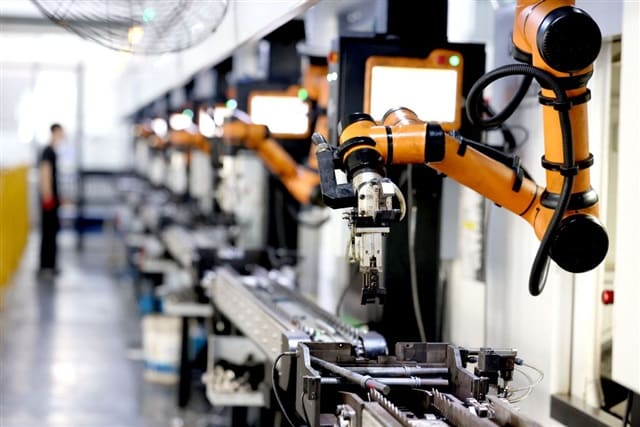
The venture will develop integrated systems pairing Sony's high-resolution sensors with Mitsubishi's programmable logic controllers, servo motors, and factory management software. Image sensors enable AI systems to perform quality inspection, defect detection, robotic guidance, and predictive maintenance by analyzing visual data in real time.
Asia accounts for roughly 65% of global electronics manufacturing output, with China, Japan, South Korea, Taiwan, and Vietnam operating dense clusters of component and assembly plants. Factory automation demand in the region has grown as wage inflation and supply chain resilience concerns drive investment in lights-out manufacturing and flexible production systems.
The partnership follows similar moves by regional rivals. Omron and Keyence have both expanded AI-powered vision inspection products, while Fanuc and Yaskawa Electric have integrated machine learning into industrial robotics. Siemens and Rockwell Automation, the dominant Western players, have also intensified their push into Asian markets.
Operational Timeline and Strategic Rationale
Neither company disclosed financial terms, production targets, or a formal launch date for the joint venture. Mitsubishi Electric has been restructuring its automation business to focus on software and AI integration after divesting lower-margin hardware lines. Sony Semiconductor Solutions has prioritized recurring revenue from industrial and automotive customers to offset volatility in smartphone sensor demand.
The collaboration reflects a broader trend of vertical integration in Asia's industrial technology sector. Japanese manufacturers are increasingly forming alliances to compete with vertically integrated Chinese rivals like Huawei and Midea, which control both hardware and software layers in smart manufacturing systems.
Factory automation spending in Asia-Pacific is projected to exceed USD 80 billion by 2028, driven by electronics, automotive, and logistics sectors. Image sensor-based inspection and robotic vision represent the fastest-growing subsegments, with compound annual growth rates above 15% as manufacturers replace manual quality control with AI-driven systems.
What Comes Next
The joint venture will need to demonstrate differentiation in a crowded market where incumbents already offer integrated vision and control systems. Success will depend on the speed of product development, pricing competitiveness, and the ability to secure early design wins at major manufacturing accounts across Japan, China, and Southeast Asia.
Investors will watch whether the partnership can achieve scale quickly enough to offset the capital intensity of sensor production and AI software development. The 60-40 ownership split suggests Mitsubishi Electric will drive go-to-market strategy while Sony supplies core technology, a structure that has produced mixed results in past Japanese joint ventures.
RELATED STORIES

Fujitsu to Exit Commodity Hardware as AI Shifts Production Strategy
Aiko Nakamura · 4 min

Preferred Networks Eyes Public Listing to Scale AI Chip Production
Aiko Nakamura · 2 min
Honda and Nissan Form Alliance to Develop Software-Defined Vehicle Platforms
Aiko Nakamura · 3 min
Honda and Nissan Align on Software-Defined Vehicle Development
Cheng Wei-Lun · 2 min
Spot something wrong? Email editor@briefasia.com. We log every correction publicly.