Technology · Dev
Micron Launches $9 Billion Expansion at Western Japan Memory Plant
U.S. chipmaker breaks ground on facility expansion in Hiroshima Prefecture amid escalating global competition for advanced memory production
KEY TAKEAWAYS
- ·Micron Technology began construction on a $9 billion expansion at its Higashihiroshima memory chip facility in Hiroshima Prefecture, Japan.
- ·The investment represents one of the largest foreign semiconductor projects in western Japan and supports Tokyo's strategy to rebuild domestic chip manufacturing capacity.
- ·The expansion aligns with global efforts to diversify memory production beyond South Korea and Taiwan amid supply chain and geopolitical concerns.
Major Commitment to Japanese Manufacturing
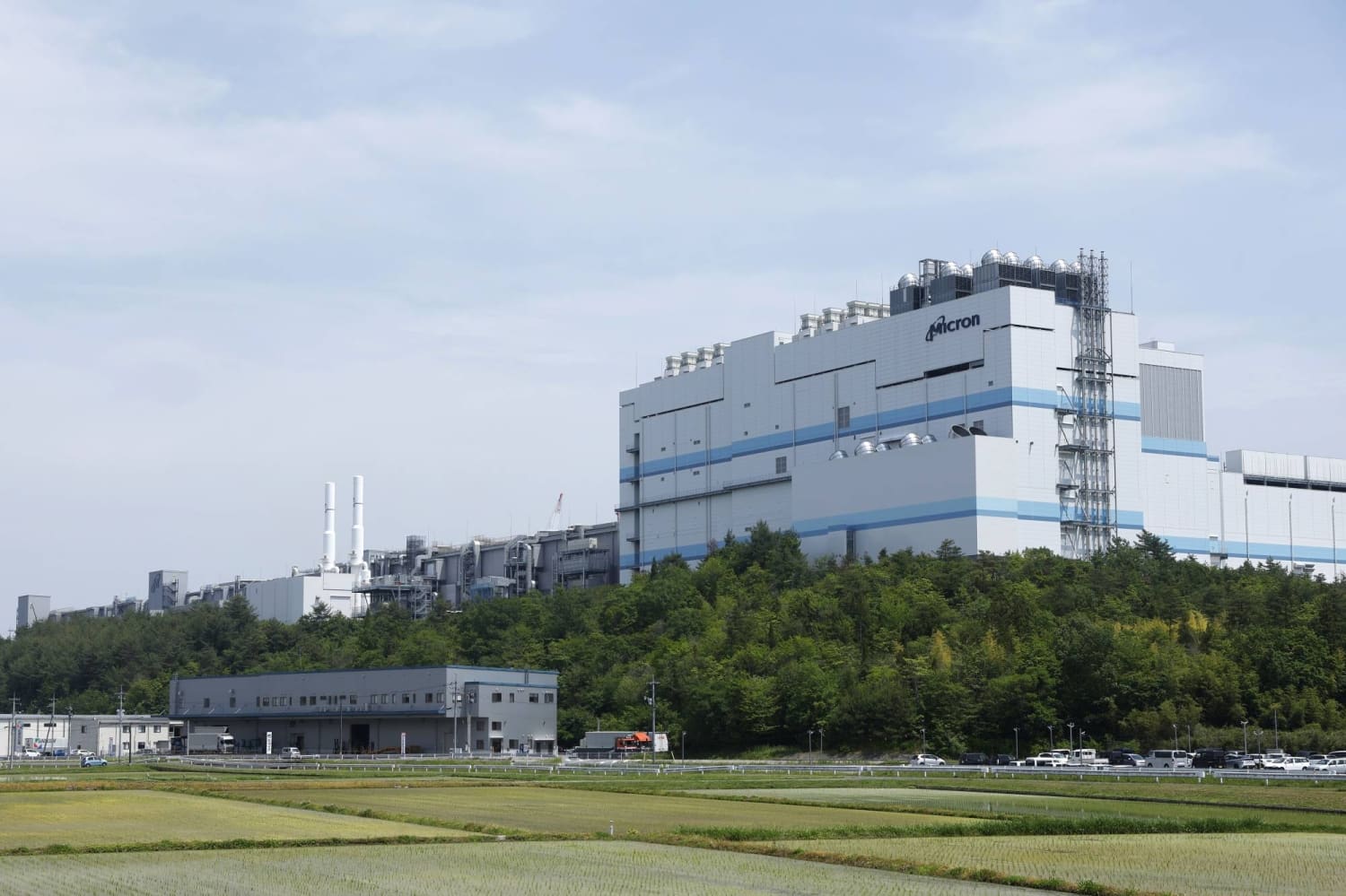
Micron Technology broke ground on a $9 billion expansion of its memory chip facility in Higashihiroshima, Hiroshima Prefecture, according to the company. The investment represents one of the largest foreign semiconductor projects in western Japan and underscores the strategic importance of the region in global memory supply chains.
The Higashihiroshima site, located in Japan's western industrial belt, has been a key production hub for Micron's DRAM operations. The expansion will significantly increase the facility's capacity for advanced memory chips, which are critical components in everything from smartphones to data center servers.
Geopolitical Context
The timing of Micron's investment aligns with broader efforts by the United States and its allies to diversify semiconductor manufacturing away from concentrated geographic clusters. Japan has emerged as a preferred destination for memory and logic chip production, supported by government subsidies and a stable regulatory environment.
Tokyo has allocated substantial funding to attract semiconductor manufacturers, viewing chip production as a matter of economic security. The country's Ministry of Economy, Trade and Industry has prioritized partnerships with U.S. and European chipmakers to rebuild domestic capacity that eroded over the past two decades.
Micron's decision also reflects the company's strategy to reduce exposure to single-country risk while maintaining proximity to major Asian electronics manufacturers. South Korea and Taiwan currently dominate global memory production, but recent supply chain disruptions have prompted buyers to seek alternative sources.
Regional Economic Impact
The Higashihiroshima expansion is expected to create several thousand construction jobs over the next three years, with permanent manufacturing positions to follow once production begins. Local officials have welcomed the investment as a catalyst for regional development, particularly for Hiroshima Prefecture's technology sector.
The facility will require a sophisticated supply chain ecosystem, likely attracting suppliers of specialty gases, chemicals, and precision equipment to the area. This clustering effect has historically transformed semiconductor manufacturing regions into high-value industrial zones.
Japan's existing strengths in materials science and equipment manufacturing make it a natural partner for memory chip production. Domestic firms supply critical inputs such as photoresists, silicon wafers, and deposition tools that are essential for advanced memory fabrication.
Technology and Market Dynamics
Micron competes primarily with South Korea's Samsung Electronics and SK Hynix in the DRAM market, where technological leadership and manufacturing scale determine profitability. The company has been investing heavily in next-generation memory architectures, including high-bandwidth memory used in artificial intelligence accelerators.
Global demand for memory chips has proven volatile, with sharp cyclical swings driven by inventory adjustments in the PC and smartphone markets. However, emerging applications in AI, autonomous vehicles, and edge computing are expected to provide more stable long-term demand growth.
The Higashihiroshima expansion will likely focus on advanced node production, where manufacturing complexity creates barriers to entry and supports higher margins. Leading-edge DRAM production requires extreme ultraviolet lithography and other cutting-edge processes that only a handful of companies can execute at scale.
Strategic Calculus
For Micron, the Japan investment balances several strategic objectives. It diversifies manufacturing footprint, secures access to government incentives, and positions the company closer to key customers in the automotive and industrial electronics sectors.
The project also strengthens Micron's relationship with Tokyo at a time when semiconductor policy has become intertwined with national security considerations. U.S. chipmakers have faced pressure to align manufacturing decisions with government priorities regarding supply chain resilience.
Hiroshima Prefecture's infrastructure and skilled workforce provide operational advantages. The region has a history of precision manufacturing and benefits from proximity to ports that facilitate the import of raw materials and export of finished products.
Construction Timeline
Groundbreaking marks the start of a multi-year construction phase that will involve building cleanroom facilities, installing advanced fabrication equipment, and establishing utility infrastructure capable of supporting 24-hour manufacturing operations. Memory fabs require extraordinary levels of environmental control, with air purity and vibration management critical to production yields.
Micron has not disclosed a specific timeline for production startup, but industry observers expect initial output within three to four years. Ramping a new memory fab to full production typically takes additional quarters as engineers optimize processes and yields.
The scale of the investment suggests Micron is planning for multiple technology generations at the site, rather than a single-node facility. This approach spreads capital costs over a longer period and provides flexibility to adjust production mix as market conditions evolve.
Broader Industry Trends
The Higashihiroshima expansion fits within a global wave of semiconductor capital spending that has seen governments and companies commit hundreds of billions of dollars to new capacity. The United States, European Union, Japan, and South Korea have all launched subsidy programs to attract chip manufacturing.
This investment cycle differs from previous expansions in its explicit geopolitical dimension. Chips are now viewed as strategic assets, with governments willing to subsidize domestic production even when purely economic logic might favor other locations.
For Japan, the return of major semiconductor manufacturing represents a partial reversal of decades of decline. The country once led global chip production but lost ground to South Korean and Taiwanese competitors. Recent policy shifts aim to recapture a meaningful share of advanced manufacturing.
Micron's commitment provides validation for Tokyo's strategy and may encourage additional foreign investment in Japan's semiconductor sector. The success of this expansion will be closely watched by industry executives evaluating their own geographic footprints.
RELATED STORIES
Honda and Nissan Align on Software-Defined Vehicle Development
Cheng Wei-Lun · 2 min
Preferred Networks Eyes Public Listing to Scale AI Chip Production
Aiko Nakamura · 2 min

Kioxia Pushes Flash Memory to Replace DRAM Amid Market Squeeze
Jun-ho Seo · 3 min

Fujitsu to Exit Commodity Hardware as AI Shifts Production Strategy
Aiko Nakamura · 4 min
Spot something wrong? Email editor@briefasia.com. We log every correction publicly.