Finance · Deals
MetaOptics Shelves Nasdaq Plans as Tech Volatility Rattles Dual-Listing Ambitions
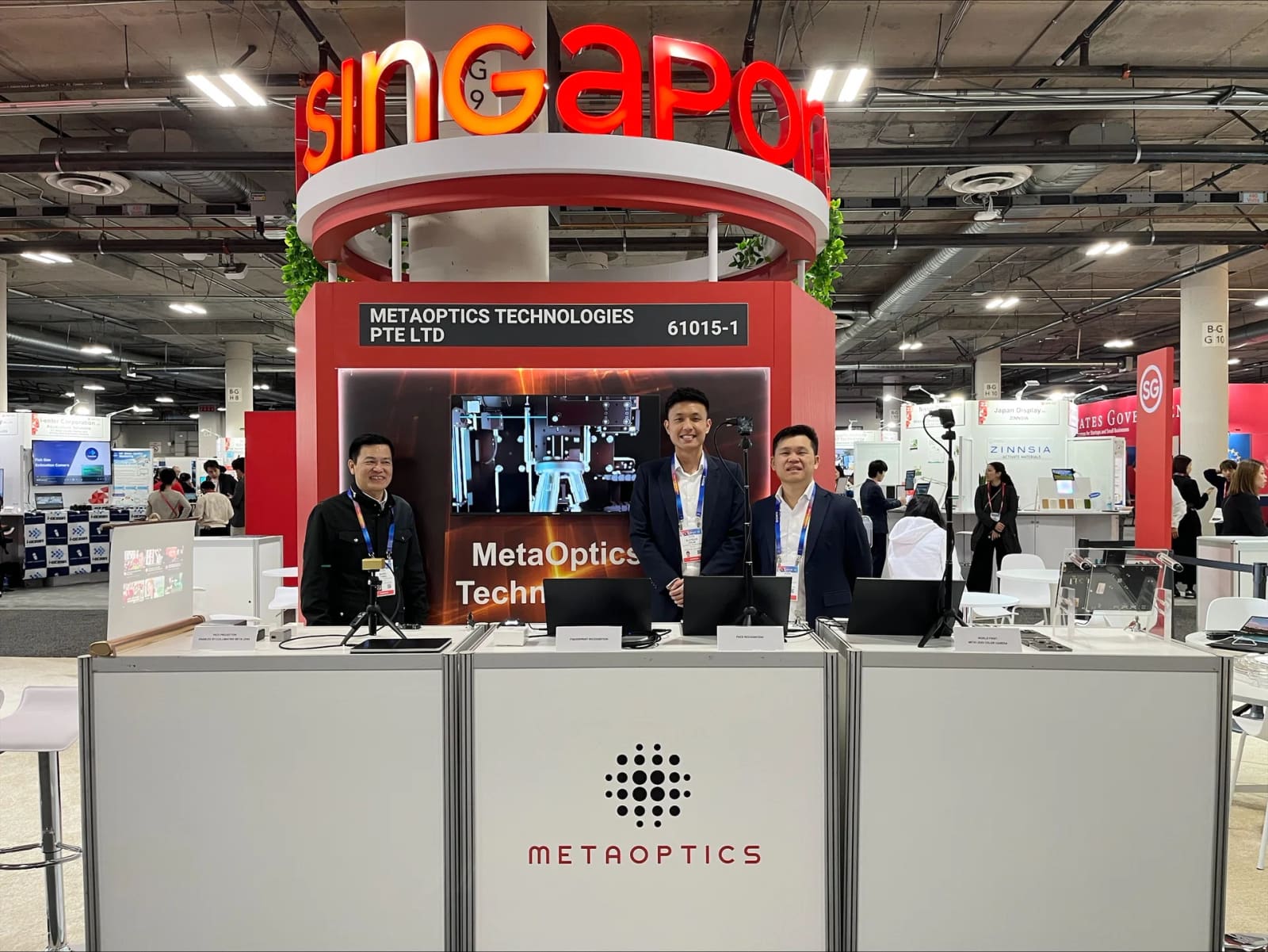
The Singapore-listed metalens developer saw shares drop over 10% after pulling its US exchange application, citing geopolitical uncertainty and market turbulence
KEY TAKEAWAYS
- ·MetaOptics shares closed 10.4% lower at S$0.475 after the company withdrew its Nasdaq listing application, citing geopolitical uncertainty and technology-sector volatility.
- ·The Singapore-based metalens developer priced its IPO at S$0.20 in September 2025 and remains the only local firm producing single-layer glass lenses for camera modules.
- ·Executive chairman Thng Chong Kim said dual listing remains part of the strategic plan and aligns with the company's focus on US customers and capital markets.
Sharp Market Reaction
Investors reacted swiftly when MetaOptics confirmed it would postpone cross-border listing ambitions. Trading opened Tuesday with the stock plummeting to S$0.40, a 24.5% decline from its previous close of S$0.53. By the final bell, the Catalist-listed optical technology company had shed S$0.055, settling at S$0.475 and marking a 10.4% single-day loss.
The sell-off followed Friday's disclosure that the firm had withdrawn its application to list on the US technology exchange. Executive chairman Thng Chong Kim emphasized that the decision reflects current market conditions rather than a strategic retreat, noting that a second listing remains aligned with the company's long-term orientation toward American customers and capital.
Timing and Market Headwinds
MetaOptics cited three overlapping forces behind the deferral: geopolitical uncertainty, sharp swings in technology stock valuations, and rapid shifts in the competitive landscape driven by technological disruption. Each factor has intensified over recent quarters, complicating the calculus for any Asia-based technology firm seeking to tap US capital markets.
Geopolitical friction between Washington and Beijing has widened export-control regimes and tightened scrutiny of technology transfers, particularly in semiconductor tooling, optics, and advanced materials. While MetaOptics develops consumer-facing camera components rather than defense-grade systems, the broader climate of regulatory unpredictability has made cross-border listings riskier for companies with supply chains or customer bases straddling both regions.
Volatility in technology equity markets has been equally pronounced. Major indices tracking software, hardware, and semiconductor stocks have swung by double-digit percentages within weeks, driven by shifting interest-rate expectations, earnings disappointments, and valuation resets following the artificial-intelligence investment surge. For a small-cap issuer pricing a secondary offering, that volatility translates directly into execution risk and potential underpricing.
Technological disruption adds a third layer of complexity. The optical-component sector is undergoing rapid change as smartphone makers experiment with computational photography, foldable form factors, and integrated sensor arrays. Companies that fail to keep pace with design cycles or secure early partnerships risk being sidelined, and investors have grown cautious about backing firms without demonstrated production scale or tier-one customer commitments.
Metalens Technology and Market Position
MetaOptics holds a distinctive position as the sole Singapore-based developer of single-layer glass metalenses. Traditional smartphone camera modules stack multiple plastic elements to correct aberrations and focus light, adding bulk and weight. Metalenses use nanoscale surface structures etched into a single glass substrate to manipulate light paths, achieving comparable optical performance with a fraction of the thickness.
The technology promises lighter, more durable camera modules with improved color fidelity. As smartphone manufacturers push toward slimmer devices without sacrificing imaging quality, metalens architectures offer a path to reduce module height by several millimeters while maintaining or enhancing resolution and dynamic range.
Despite this technical advantage, MetaOptics faces the classic challenge of hardware startups: converting laboratory prototypes into high-volume production at consumer price points. Smartphone camera modules operate on razor-thin margins, and any new optical technology must demonstrate cost parity with incumbent multi-element plastic lenses while meeting stringent yield and reliability standards.
IPO Trajectory and US Strategy
The company completed its Singapore initial public offering in September 2025, pricing shares at S$0.20 and raising capital to fund pilot production lines and customer qualification programs. Within two months, management announced plans to pursue a Nasdaq listing, citing the need for a broader investor base and improved liquidity.
A dual listing would have offered several strategic benefits. US exchanges provide access to deep pools of technology-focused institutional capital, including venture funds, crossover investors, and sector-specialist hedge funds that typically allocate limited resources to small-cap Asian issuers. Enhanced liquidity would also support employee equity compensation and potential acquisition currency as the company scales.
Equally important, a Nasdaq presence would signal credibility to American smartphone original equipment manufacturers and tier-one camera-module suppliers, many of whom prefer to work with vendors that maintain a US reporting and governance footprint. For a company targeting the world's largest consumer electronics market, listing proximity matters.
Regional Context and Capital-Market Dynamics
MetaOptics is not alone in reassessing US listing plans. A handful of Singapore and Hong Kong technology firms have postponed or withdrawn Nasdaq and New York Stock Exchange applications over the past year, citing similar concerns about valuation volatility and regulatory complexity. The trend reflects a broader recalibration in Asia-Pacific capital markets as issuers weigh the benefits of US access against execution risk and compliance costs.
Singapore's Catalist market, designed for emerging and mid-sized growth companies, has seen mixed performance. While the exchange offers a streamlined listing process and lower ongoing compliance burdens than mainboard venues, liquidity remains thin for many counters, and institutional participation is limited. Companies that achieve initial success on Catalist often look to secondary listings in larger markets to unlock valuation multiples and trading volumes.
The optical-component and semiconductor sectors have been particularly affected by the intersection of geopolitical and market forces. Export controls on advanced lithography equipment, restrictions on chip sales to certain Chinese entities, and heightened scrutiny of cross-border technology partnerships have introduced new friction into supply chains and capital flows. For companies like MetaOptics, which must navigate both manufacturing partnerships in Asia and customer relationships in North America, the risk calculus has shifted materially.
Path Forward
Executive chairman Thng Chong Kim stressed that the deferral is tactical rather than strategic. The company continues to view a US listing as a key milestone and expects to revisit the application when market conditions stabilize. In the interim, MetaOptics will focus on advancing customer engagements, scaling production capacity, and strengthening its balance sheet through operations and selective fundraising.
Investor sentiment will likely hinge on the company's ability to announce commercial partnerships with recognizable smartphone brands or camera-module suppliers. Metalens technology remains early-stage in terms of mass adoption, and proving that single-layer glass optics can meet the cost, yield, and performance requirements of high-volume consumer electronics will be essential to rebuilding confidence.
Market observers will also watch whether other Singapore technology firms follow suit. If MetaOptics' deferral signals the start of a broader retreat from cross-border listings, it could dampen enthusiasm for Catalist as a springboard to larger exchanges and prompt issuers to pursue alternative paths such as private growth funding or direct listings in regional hubs like Tokyo or Seoul.
For now, the company's shares reflect the uncertainty. Trading at more than double the IPO price despite Tuesday's decline, MetaOptics retains a valuation that anticipates future growth. Whether that growth materializes through US market access or alternative channels will determine whether the Nasdaq deferral proves a temporary setback or a strategic misstep.
RELATED STORIES
MetaOptics Drops 24.5% After Deferring Nasdaq Dual Listing
Cheng Wei-Lun · 3 min
Singapore IPOs Sink After Debut as Small Caps Struggle for Investor Attention
Priyanka V. Rao · 3 min

OCBC Brings Platinum and Palladium Trading to Retail Clients in Singapore
Priyanka V. Rao · 3 min

China's New Offshore Trust Tax Rules Send Ripples Through Singapore Wealth Industry
Cheng Wei-Lun · 2 min
Spot something wrong? Email editor@briefasia.com. We log every correction publicly.