Technology · Products
Memory Chip Shortage Drives Consumer Tech Prices Up Fivefold
Chipmakers' pivot to high-bandwidth memory for AI data centers has created a supply crunch that Samsung expects to worsen through 2028, forcing consumers to delay purchases or downgrade specifications.
KEY TAKEAWAYS
- ·Memory chip prices for PCs and smartphones have risen five to six times year-over-year as manufacturers shift production to high-bandwidth memory for AI data centers.
- ·Samsung Electronics projects the shortage will deepen in 2027 and remain constrained through 2028, with 16GB RAM modules in Hong Kong jumping from $49 to $193.
- ·Retailers report consumer purchases have halved since September, with buyers either delaying purchases, choosing refurbished equipment, or accepting lower-specification components.
The Price Shock at Retail
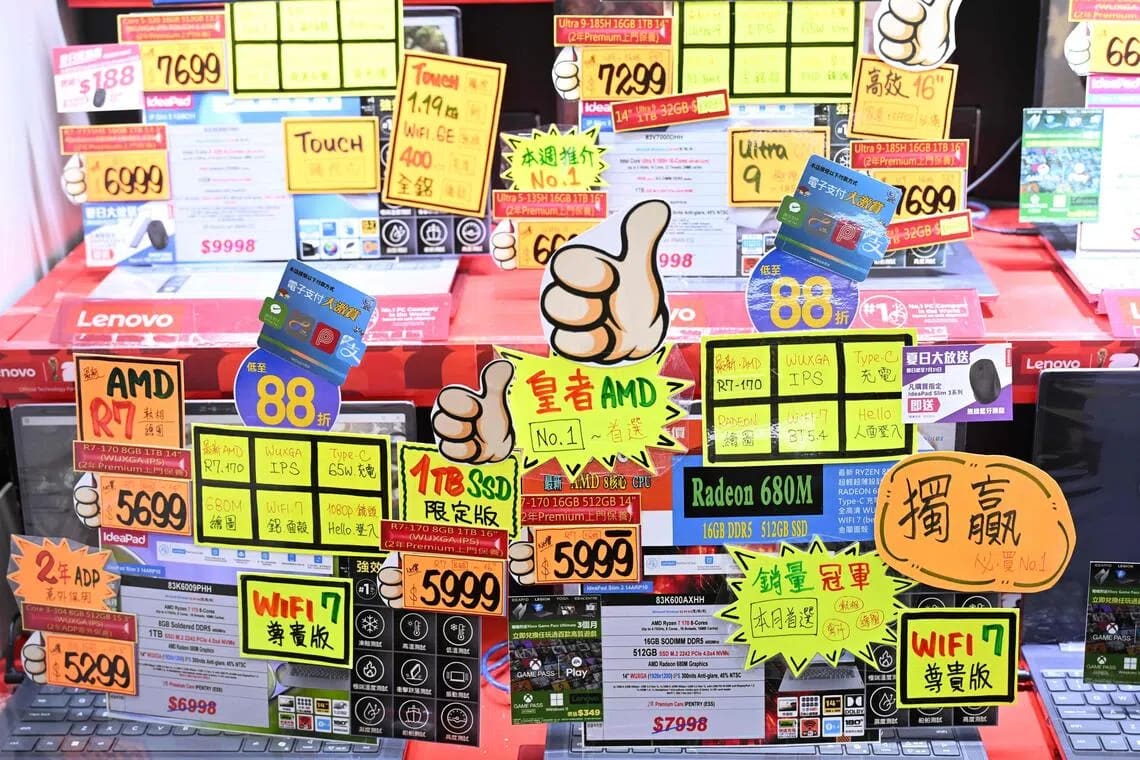
At In-Technology Services in Hong Kong's Wan Chai Computer Centre, printouts explaining the global memory chip shortage hang beside the price list. Manager Wade Lam installed them to preempt questions from customers bewildered by the sticker shock.
The reason is straightforward: manufacturers have redirected production capacity toward high-bandwidth memory, the specialized chips required for AI data center operations. That shift has strangled supply of conventional memory components used in laptops, smartphones, and desktop computers.
Samsung Electronics' CFO said the shortage will likely intensify in 2027 and remain tight through 2028. The crunch has earned the nickname "RAMaggedon" among industry watchers, a reference to the random-access memory chips at the heart of the squeeze.
The Numbers Behind the Crunch
Prices for RAM used in PCs and smartphones have climbed five to six times compared to a year earlier, according to Ellie Wang at TrendForce, a Taiwan-based market research firm. In Hong Kong retail outlets, 16GB RAM modules that sold for HK$300 to HK$400 ($49 to $65) now command HK$1,500.
Ken Tam, who manages Videocom Computer and specializes in custom-built PCs, said his business volume has dropped by half since price increases began in September. Customers either wait for prices to stabilize or purchase lower-specification memory to stay within budget.
The supply constraint stems from a deliberate production pivot. High-bandwidth memory delivers significantly higher profit margins than conventional DRAM chips, and demand from data center operators building AI infrastructure has been relentless. The world's top three memory manufacturers have reaped the rewards: Samsung Electronics, SK hynix, and Micron have all posted substantial profit gains and share price increases.
China's Entry and Market Dynamics
ChangXin Memory Technologies made its Shanghai market debut on July 27 and immediately became mainland China's most valuable company by market capitalization. The fourth-largest memory chip producer globally, CXMT remains behind in advanced high-bandwidth memory technology, according to James Zhao, senior principal analyst at Omdia.
But the current supply-constrained environment may work in CXMT's favor for conventional DRAM production. As established players chase higher-margin AI components, CXMT can capture market share in the consumer segment that Samsung and SK hynix are effectively abandoning.
The ripple effects extend beyond personal computing. Automakers have flagged rising costs for in-vehicle computer systems, and industry observers expect those increases to flow through to new vehicle pricing in the coming quarters.
Consumer Response and Workarounds
Henry Wong, an investment banker in Hong Kong, chose to upgrade the RAM in an existing laptop rather than purchase a new machine. The upgrade delivered sufficient performance improvement to eliminate his desire for a newer model, effectively extending the device's useful life.
In Tokyo's Akihabara electronics district, Charles Brousse runs a custom PC assembly service. The 30-year-old graphic designer from Belgium no longer pre-purchases components because inventory costs have become prohibitive. Instead, he requires clients to buy their own parts, which he then assembles.
Brousse noted that the shortage is pushing consumers toward laptops instead of desktops, despite desktops' longer functional lifespan of up to a decade. He views this shift as environmentally counterproductive, driving a faster consumption cycle of devices with shorter useful lives.
The Path Forward
High-bandwidth memory production requires different manufacturing processes and equipment than conventional DRAM. Converting fabrication capacity is neither quick nor cheap, which explains why Samsung expects the shortage to persist for at least two more years.
For consumers, the calculus has shifted. Those with immediate needs are paying the premium. Others are deferring purchases, buying refurbished equipment, or accepting lower performance specifications. Retailers in Hong Kong's computer centers report that customers now routinely ask whether prices might fall soon, a question that rarely came up during previous market cycles.
The memory chip market has experienced boom-and-bust cycles before, but this episode differs in one key respect: the supply constraint is not driven by unexpected demand or production disruptions, but by a calculated reallocation of manufacturing capacity toward a more profitable product category. That makes the timeline for normalization dependent on when AI infrastructure buildout moderates or when new fabrication capacity comes online at scale.
RELATED STORIES

Hong Kong Debuts Robot-Run Convenience Store in Commercial Automation Push
Cheng Wei-Lun · 3 min
Hong Kong Claims Top Asia Spot for High-Growth Startup Ecosystems
Cheng Wei-Lun · 4 min
CaoCao Mobility Bets on Autonomous Taxis as Revenue Tops RMB 10 Billion
Cheng Wei-Lun · 3 min

Nio Sets 40,000-Unit Monthly Delivery Target for Q4
Anand Sundaram · 3 min
Spot something wrong? Email editor@briefasia.com. We log every correction publicly.