Asia · Politics
Manila Workers Challenge Court Order Blocking Wage Increase
Labor federations ask Pasig trial court to lift restraining order that froze an 85-peso daily pay rise for over a million minimum-wage earners in the capital region
KEY TAKEAWAYS
- ·Labor federations filed an urgent motion on August 3 to overturn a restraining order that blocked an 85-peso daily wage increase for more than a million Metro Manila workers.
- ·The groups argue the Pasig trial court lacks jurisdiction under Article 126 of the Labor Code, which bars courts from halting wage board proceedings.
- ·Employers facing financial hardship may apply for administrative exemptions rather than seek court orders to freeze wage increases, according to the labor organizations.
Legal Battle Over Wage Order
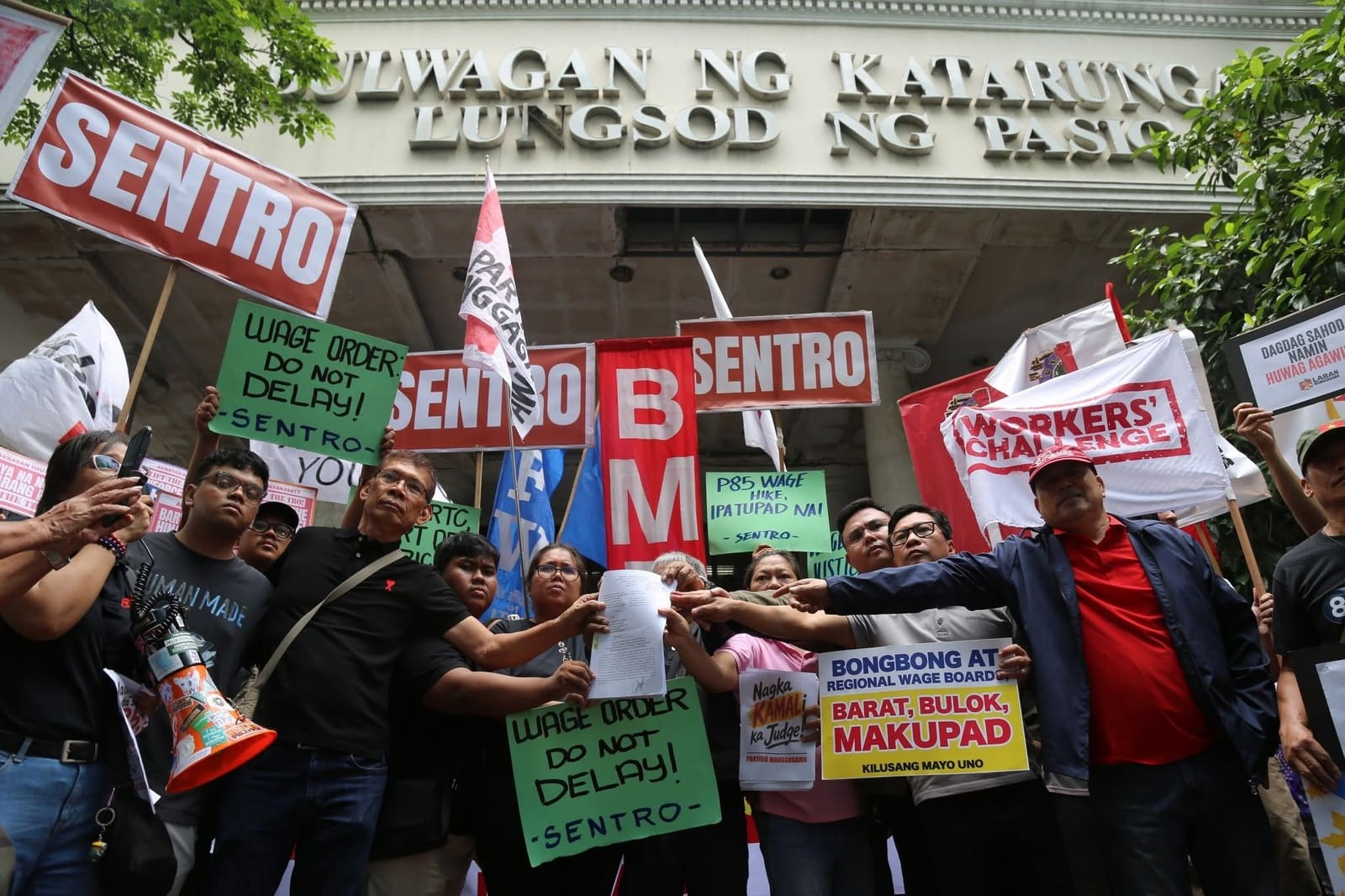
Three major labor federations asked a Pasig trial court on August 3 to lift a temporary restraining order that blocked a scheduled wage increase for minimum-wage workers across Metro Manila. The Federation of Free Workers, SENTRO, and Partido Manggagawa filed an urgent motion for leave to intervene before Branch 152 of the Pasig Regional Trial Court, calling the halt a form of "legal snatching" that strips over a million workers of income they were meant to receive under National Capital Region Wage Order No. 27.
The wage order, issued by the Regional Tripartite Wages and Productivity Board, mandated an 85-peso daily increase to be rolled out in two tranches. The first tranche of 60 pesos took effect July 25, raising the daily minimum from 695 pesos to 755 pesos. A second tranche of 25 pesos was scheduled for January 20, 2027, bringing the rate to 780 pesos.
That implementation was frozen after two construction firms, Readycon Trading and Construction Corp. and R-II Builders Inc., filed a petition for declaratory relief on July 23. Following a summary hearing on July 28, the court issued an order suspending the wage increase pending further proceedings.
Jurisdictional Challenge
Labor groups contend the trial court lacked authority to intervene. They cited Article 126 of the Labor Code, which bars courts and tribunals from issuing injunctions or restraining orders against proceedings before the National Wages and Productivity Commission or its regional wage boards. The statute was designed to insulate wage-setting mechanisms from judicial interference that could delay or deny workers' income during administrative review.
The groups also pointed to Article 123, which provides an administrative remedy for parties aggrieved by a wage order. Under that provision, an affected employer may appeal to the wage commission within ten days of the order's publication. The labor organizations argued that the construction companies bypassed this statutory process and instead sought direct court relief, undermining protections built into the labor code.
"The statutory design is deliberate," the motion stated, according to the groups. "Congress allowed review but protected workers against the loss of wages during review."
Financial Hardship and Exemptions
The labor federations rejected the argument that employers facing financial difficulties have the right to halt wage orders through the courts. They noted that the Regional Tripartite Wages and Productivity Board already administers an exemption process for distressed establishments, new business enterprises, small retail and service establishments, and businesses affected by natural calamities.
Employers claiming they cannot afford the wage increase may apply for such exemptions under existing wage commission rules, the groups said. They argued that invoking alleged financial incapacity as grounds for a restraining order circumvents the administrative remedy and denies workers their statutory entitlement without due process.
The motion emphasized that the employers have no "clear and unmistakable right" to continue paying the previous minimum wage once a new wage order takes effect. The groups said the restraining order effectively forces workers to subsidize business operations during what should be a limited administrative review period.
Impact on Metro Manila Workforce
More than a million minimum-wage earners in Metro Manila stand to lose income for each day the restraining order remains in force. The labor groups described the situation as a daily repetition of wage theft sanctioned by judicial process.
The case has drawn attention to the tension between employers' access to judicial review and workers' statutory protections during wage disputes. While businesses argue they need recourse when wage orders threaten their viability, labor advocates warn that allowing courts to freeze wage increases pending litigation could set a precedent that erodes the effectiveness of regional wage boards.
The National Wages and Productivity Commission and regional wage boards were established to balance labor and business interests through tripartite consultations involving government, employer, and worker representatives. Labor groups argue that permitting direct court challenges to wage orders undermines this carefully constructed system.
The Pasig court has not yet ruled on the motion to lift the restraining order. Meanwhile, the daily minimum wage in Metro Manila remains at 695 pesos, pending resolution of the legal dispute.
RELATED STORIES

Filipino Workers Abroad Send Home $3.6 Billion in July
Mariel D. Santos · 3 min

PhilWeb Trading Halted After P4.2 Billion JKS Tech Bet
Tran Quoc Bao · 3 min

Megaworld REIT Secures Approval for P27 Billion Asset Infusion
Priyanka V. Rao · 4 min

Five ASEAN Members Back Regional Oil Stockpile as Study Nears Completion
Tran Quoc Bao · 3 min
Spot something wrong? Email editor@briefasia.com. We log every correction publicly.