Asia · Trade
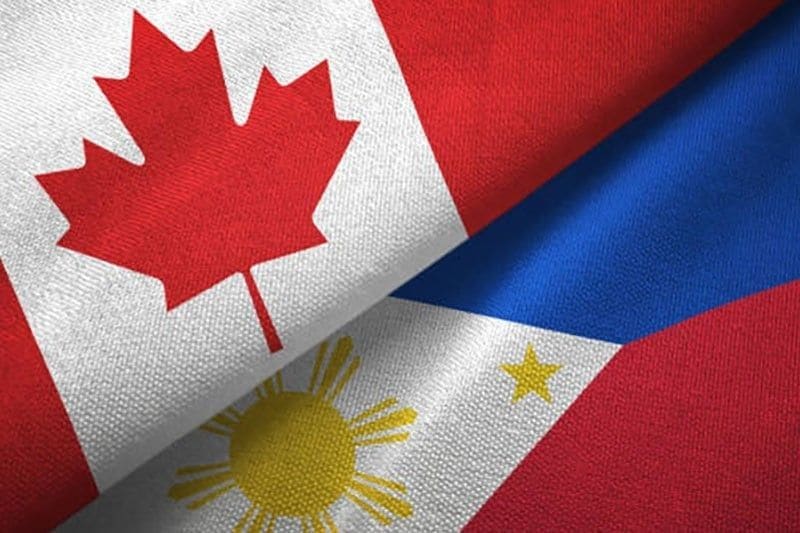
Manila Targets November Finish for Canada Free Trade Deal
The Philippines aims to wrap up negotiations by year-end, with the third round of talks set for Ottawa later this month as bilateral trade reached $2.15 billion in 2025.
KEY TAKEAWAYS
- ·The Philippines is targeting November to conclude free trade agreement negotiations with Canada, with the third round of talks scheduled for late July in Ottawa focusing on market access for goods.
- ·Bilateral trade between the two countries reached $2.15 billion in 2025, with the Philippines holding a $470 million trade surplus driven by copper and refined copper exports.
- ·The agreement is expected to open opportunities for Philippine firms in Canadian retail distribution and financial services while attracting investment into infrastructure and technology sectors.
Third Round Scheduled for Ottawa
The Philippines is working to complete free trade agreement negotiations with Canada by November, according to the Department of Trade and Industry. Trade Undersecretary Allan Gepty told stakeholders during a public consultation that the directive is to finalize the deal within the year.
The third negotiating round is scheduled for late July in Ottawa, where market access for goods will take center stage. Discussions will build on two earlier sessions held in February in Pasay City and April in Mandaluyong, following the formal launch of talks in October 2025 by President Ferdinand Marcos Jr. and Prime Minister Mark Carney.
The timeline reflects Manila's broader push to diversify trade partnerships across developed markets as Southeast Asian economies navigate shifting supply chains and export controls affecting semiconductor and electronics sectors.
Trade Surplus Opens Room for Growth
Canada ranks as the Philippines' 16th-largest trading partner among 229 countries, with bilateral trade totaling $2.15 billion in 2025, according to government data. Philippine exports to Canada reached $1.31 billion, led by copper and refined copper products, while imports stood at $840 million, leaving the Philippines with a trade surplus of $470 million.
Gepty noted that the surplus signals untapped potential. Preferential market access under a formal FTA framework is expected to boost export volumes by reducing tariff barriers and creating stable conditions for Philippine manufacturers and commodity exporters. The current trade balance suggests room for expansion in sectors where the Philippines holds competitive advantages, particularly in minerals and processed goods.
Services and Investment in Focus
Beyond goods, the agreement is expected to open opportunities in services trade. Philippine firms are eyeing retail distribution and financial services sectors in Canada, areas where regulatory frameworks have historically limited entry for foreign players. A comprehensive FTA would establish clearer pathways for service providers and set rules on licensing, cross-border data flows, and professional qualifications.
Investment provisions are also on the table. The Philippines sees the agreement as a tool to attract Canadian capital into infrastructure, renewable energy, and technology sectors. With the country's investment-grade credit rating reaffirmed by multiple agencies in recent quarters, the government is positioning the FTA as part of a broader effort to lock in long-term foreign direct investment commitments.
Regional Context and Timing
The push for a Canada deal comes as the Philippines accelerates FTA negotiations with multiple partners. Manila is already part of the Regional Comprehensive Economic Partnership and is exploring deeper integration with the European Union and the United Kingdom. The Canada talks represent a strategic bet on North American markets as the United States reviews its own trade policies and tariff structures.
For Canada, the Philippines offers a gateway to Southeast Asian supply chains and a growing consumer market of over 115 million people. Ottawa has signaled interest in expanding its Asia-Pacific trade footprint beyond existing agreements with South Korea and the CPTPP bloc, and the Philippines fits into that strategy as a manufacturing and services hub with strong English-language capabilities.
The November deadline is ambitious. Trade negotiations typically extend beyond initial timelines as negotiators work through sensitive issues like rules of origin, intellectual property protections, and dispute resolution mechanisms. Whether both sides can reconcile their positions on market access and regulatory alignment in the remaining months will determine if the target holds or slips into 2027.
RELATED STORIES

Philippine Water Operator Earmarks $400 Million for Southeast Asia Expansion
Mariel D. Santos · 2 min
Philippine Manufacturing Expands at Fastest Pace Since 2016
Priyanka V. Rao · 3 min
Philippine Economic Zones Pull Record ₱216 Billion in Eight Months
Priyanka V. Rao · 3 min

Philippines Energy Budget Climbs 26% as Electric Vehicle Funding Surges
Priyanka V. Rao · 3 min
Spot something wrong? Email editor@briefasia.com. We log every correction publicly.