Asia · Politics
Manila Sprints to Secure Cheap Loans Before Development Aid Tapers Off
Philippines has three years to approve priority infrastructure and social projects as upper-middle-income status triggers gradual loss of concessional financing
KEY TAKEAWAYS
- ·The Philippines has a three-year window to secure concessional loans after crossing the $4,850 gross national income per capita threshold for upper-middle-income status in 2025.
- ·Manila plans to approve 20 to 30 infrastructure and social sector projects with multilateral lenders before cheaper development financing gradually ends.
- ·The government is prioritizing new social sector projects while slowing approval of new infrastructure, though ongoing infrastructure spending will be expedited.
The Countdown Begins
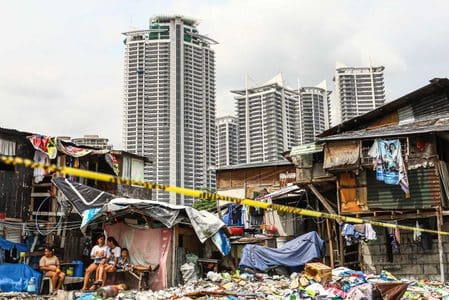
Manila is racing against a policy clock. After the World Bank reclassified the Philippines as an upper-middle-income economy in 2025, the government now has roughly three years to approve and secure financing for priority projects before concessional loans and grants begin to disappear.
The reclassification followed the country's gross national income per capita reaching $4,850 last year, crossing the $4,636 threshold for upper-middle-income status. While the milestone signals economic progress and may improve the country's credit profile, it also means Manila will gradually lose access to the cheaper development financing typically reserved for lower-income nations.
Arsenio Balisacan, secretary of the Department of Economy, Planning, and Development, said the transition will not be abrupt. The country retains eligibility for concessional loans through the next three years, though some development partners may continue offering favorable terms on a project-by-project basis for high-impact initiatives.
Pipeline Push
The government's strategy centers on maximizing the transition window. Joseph Capuno, undersecretary at DEPDev, said officials are working to approve between 20 and 30 infrastructure and social sector projects already in the pipeline before the three-year period closes. These involve multilateral lenders including the World Bank, Asian Development Bank, and Japan International Cooperation Agency.
A recent recalibration exercise aimed to firm up investment commitments through the end of the current administration. Capuno said the income upgrade has injected fresh urgency into approvals for quality infrastructure and social investments.
The shift in financing access comes as the Philippine economy faces headwinds. First-quarter growth in 2026 fell below forecasts, inflation persists, and public infrastructure spending has weakened due to disbursement delays. Balisacan outlined priorities for the second half of the year: restoring confidence and growth, shielding households from inflation and external shocks, raising productivity, and strengthening institutions.
Social Spending Takes Priority
With fiscal space described as "very limited" for next year, the government is adjusting its project approval strategy. Capuno said implementing agencies have been instructed to prioritize new social sector projects while slowing the approval of new infrastructure initiatives.
The shift does not mean a blanket slowdown in infrastructure spending. Ongoing projects will continue to be pushed forward, with the government aiming to expedite disbursements on work already underway. The focus is on approving fewer new infrastructure projects while accelerating execution of existing commitments.
Balisacan said the income upgrade reflects improvements in governance, investment climate, institutional quality, and public infrastructure. Those gains should be visible in financial markets, making it easier for private firms to access capital and attracting more foreign investment.
What Comes Next
The three-year transition period offers Manila a narrow but critical window. Development partners may still extend concessional financing for select projects deemed strategically important, but the overall trend points toward tighter access to cheap capital.
For a country where infrastructure gaps remain wide and social services unevenly distributed, the challenge is to make upper-middle-income status tangible for ordinary citizens. That means not only locking in favorable financing terms while they remain available, but also ensuring that approved projects translate into schools, hospitals, roads, and services that reach beyond Metro Manila.
The clock is ticking, and the government's ability to navigate this transition will shape whether the income milestone becomes a launchpad for sustained development or a policy bottleneck that slows momentum.
RELATED STORIES
Philippine Manufacturing Expands at Fastest Pace Since 2016
Priyanka V. Rao · 3 min
Filipino Household Income Rose 16% but Spending Outpaced Gains
Mariel D. Santos · 3 min

Philippine Water Operator Earmarks $400 Million for Southeast Asia Expansion
Mariel D. Santos · 2 min
Philippine Economic Zones Pull Record ₱216 Billion in Eight Months
Priyanka V. Rao · 3 min
Spot something wrong? Email editor@briefasia.com. We log every correction publicly.