Asia · Politics
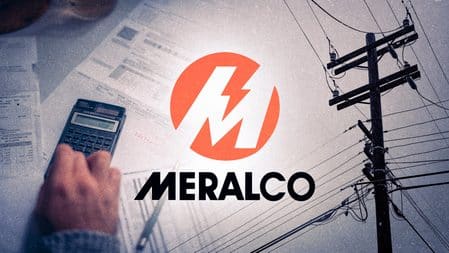
Manila Regulator Considers Shifting Power Loss Costs to Utilities
ERC chairman Francis Juan weighs multiple options for system loss recovery as government balances consumer relief against infrastructure investment needs
KEY TAKEAWAYS
- ·The Energy Regulatory Commission is reviewing options to require Philippine distribution utilities to absorb electricity loss costs currently billed to consumers, with scenarios ranging from full elimination to phased caps.
- ·National Electrification Administration warns 62 to 89 of the country's 121 electric cooperatives could operate at a loss depending on how much nontechnical loss recovery is removed, proposing up to 10 billion pesos in loan facilities.
- ·Any shift away from pass-through billing would likely trigger adjustments to rate formulas to recognize capital expenditures for metering and anti-theft infrastructure, with final policy decisions expected after September consultations.
Regulatory Review Underway
The Energy Regulatory Commission is examining whether the Philippines' distribution utilities should bear the cost of electricity that vanishes between generation and delivery, a shift that would move billions of pesos in charges off household bills. Francis Juan, who chairs the commission, told reporters his office is weighing scenarios ranging from complete elimination of pass-through recovery to graduated phase-outs or caps on what companies can bill consumers.
The review puts Manila Electric Company and more than 120 electric cooperatives in the crosshairs of a policy debate that pits consumer relief against the financial health of infrastructure operators. Juan acknowledged the commission must evaluate whether distributors can remain viable if they lose the ability to recover losses through customer charges.
Any transition away from pass-through billing would likely trigger adjustments to the formulas regulators use to set base rates. Utilities would need recognition of capital expenditures for metering upgrades, transformer replacements, and enforcement measures designed to reduce theft and technical inefficiencies. Juan framed the challenge as ensuring companies can "adequately confront this cost and be able to operate more efficiently" if the burden shifts.
Two Types of Disappearing Electrons
Industry officials distinguish between losses that stem from physics and those caused by human behavior. Technical losses occur naturally as electricity flows through conductors and equipment, dissipating as heat according to resistance equations that no policy can rewrite. Nontechnical losses, by contrast, include theft, meter tampering, and billing errors that better enforcement could theoretically eliminate.
Energy Secretary Sharon Garin has instructed distribution companies to submit plans detailing how they would minimize or eliminate both categories in their service territories. Garin made clear her view that paying customers should not subsidize avoidable waste. The secretary's directive comes as the government seeks to address longstanding complaints about electricity costs in a country where industrial users pay some of Southeast Asia's highest tariffs.
The commission has separately proposed removing the 12 percent value-added tax applied to system loss charges, a measure Juan said could be finalized by early September pending public consultation and coordination with tax authorities. That change would deliver immediate bill reductions while the broader policy review continues.
Cooperative Sector Faces Steepest Impact
The National Electrification Administration has warned that rural electric cooperatives would suffer the most severe financial consequences under scenarios that eliminate loss recovery. The agency estimates 62 of the country's 121 cooperatives would operate at a loss if required to absorb just one-quarter of their nontechnical losses without compensation through adjusted rates.
A halfway elimination would push 71 cooperatives into the red, while complete removal could leave 89 financially underwater, according to NEA projections. The agency is proposing loan facilities totaling between 3.5 billion and 10 billion pesos, depending on the policy chosen, to finance metering improvements and anti-theft measures. Officials emphasized the funds would constitute financing rather than subsidies, with cooperatives expected to repay principal and interest.
Zamboanga City Electric Cooperative offers a template for what investment can achieve. The utility reduced its loss rate from approximately 20 percent in January to roughly 13 percent by July through better metering and collections enforcement. NEA is studying whether that model can be replicated across cooperatives serving remote islands and mountainous provinces where theft has historically been harder to combat.
Rate Reset Complicates Timeline
Manila Electric Company is awaiting a periodic rate reset in which the commission determines the revenue and tariff structure the utility may charge. Juan said his staff is still evaluating the company's submissions, with deliberations likely extending into September. Any rate adjustments stemming from the system loss policy shift would not be incorporated into this reset, he clarified, meaning distributors face uncertainty about how their revenue models might change in the medium term.
When pressed on whether he agreed with Manila Electric's assertion that absorbing all losses would render operations unprofitable, Juan declined to state a position. The chairman said he continues meeting with utility representatives to develop an approach that maintains service reliability while addressing public frustration over bills.
The Philippines generates most of its electricity from imported coal and liquefied natural gas, leaving little room in the supply chain to absorb additional costs without either cutting utility margins or raising base rates. Industry observers note that shifting loss recovery from a line item to a rate-base calculation may ultimately prove an accounting exercise rather than a genuine reduction in what households pay, unless enforcement improvements materially shrink the volume of electricity that goes unaccounted for between power plants and meters.
RELATED STORIES
Meralco Expects Sales Growth to Rebound as El Niño Drives Philippine Power Demand
Priyanka V. Rao · 3 min
Philippine Foreign Investment Falls 65% to Lowest Since 2015
Priyanka V. Rao · 4 min

San Miguel's Ramon Ang Takes 25.7% Stake in Lopez Group Holding Company
Priyanka V. Rao · 3 min

Ramon Ang Secures Quarter Stake in Lopez Inc. for $11.6 Billion Economic Reach
Priyanka V. Rao · 4 min
Spot something wrong? Email editor@briefasia.com. We log every correction publicly.