Finance · Deals
Malaysia's Tabung Haji Faces Uphill Battle in RM980 Million Saudi Hotel Dispute
Academic warns that recovering the outstanding arbitration award from Al-Rawda may prove nearly impossible despite legal victory, as only 1.7% has been paid to date
KEY TAKEAWAYS
- ·Tabung Haji is owed 899 million Saudi riyals from Al-Rawda but has recovered only 14.9 million, or 1.7%, with the Saudi developer reportedly unable to pay the balance.
- ·The fund paid RM1.55 billion upfront for hotel leases lacking bank guarantees, exposing governance failures in risk assessment and due diligence.
- ·Experts call for independent review mechanisms and staged disbursement tied to performance milestones to safeguard large overseas investments by government-linked entities.
A Legal Win Without Financial Relief
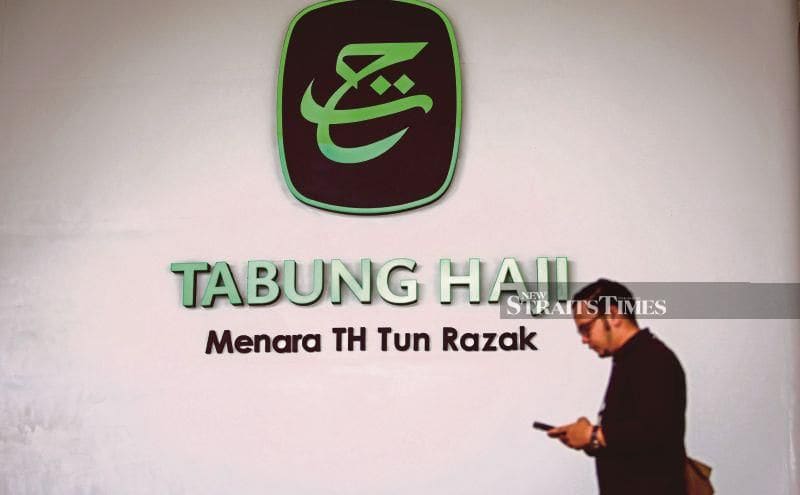
Lembaga Tabung Haji, Malaysia's pilgrimage savings institution, confronts a stark reality: winning an arbitration case does not guarantee getting paid. The fund is owed 899 million Saudi riyals, approximately RM980 million, from Al-Rawda Real Estates Development & Project Management Co Ltd following a dispute over hotel leases in Makkah and Madinah. So far, only 14.9 million riyals have materialized, roughly 1.7% of the total award.
Dr Mohd Iqbal Mohd Noor, senior lecturer at Universiti Teknologi MARA's Faculty of Management and Business, told Bernama that recovery hinges entirely on tracing and enforcing assets held by the company or its personal guarantors. Al-Rawda reportedly lacks the financial capacity to settle the full sum, leaving Tabung Haji in a position where a legal victory may translate into minimal actual recovery.
The origins of the dispute trace back to 2015 through 2017, when Tabung Haji signed lease agreements for four hotels near Islam's holiest sites. The fund paid roughly RM1.55 billion upfront for lease terms spanning 10 to 18 years, with the total rental value reaching 2.49 billion Saudi riyals. Tabung Haji also contracted Al-Rawda to manage and operate the properties under separate agreements. As security, the fund obtained a promissory note backed by a personal guarantee from Al-Rawda owner Dr Mashhor Ali Omar Al-Madudi.
Governance Gaps in High-Value Deals
The structure of the transaction raises questions about risk management protocols. For deals of this scale, investors typically insist on asset collateral and bank guarantees as primary safeguards. Promissory notes and personal guarantees serve as supplementary measures, not substitutes. The absence of a bank guarantee and an incomplete due diligence process point to what Mohd Iqbal described as a significant governance failure.
He emphasized that the core issue in financial governance is not whether an investment profits or loses, but whether risks were identified, assessed and weighed before approval. When risks are flagged yet control mechanisms fail to halt or adjust the decision, the system itself has broken down.
Standard operating procedures for overseas investments by government-linked entities should mandate staged assessments before funds leave the door. Risk, legal and commercial reviews must conclude before disbursement. Recipient companies should provide guarantees from financially sound institutions or collateral backed by equivalent-value assets. Funds should flow in tranches tied to performance milestones, allowing early intervention if targets slip. Any deviation from these requirements should escalate to higher approval levels with documented justification.
Conservative Accounting, Persistent Pursuit
In 2024, Tabung Haji booked a full RM1 billion impairment on the Al-Rawda investment, signaling a conservative stance that acknowledges the likelihood of loss. Yet impairment does not mean abandonment. Mohd Iqbal noted that as long as assets remain traceable and enforceable, the fund should continue recovery efforts. Tabung Haji's approach treats the award as uncertain while maintaining pressure through asset tracing and enforcement actions.
The fund's predicament underscores the gap between arbitration awards and actual cash recovery in cross-border disputes. Legal victories in international arbitration often falter at the enforcement stage, particularly when counterparties operate in jurisdictions with opaque corporate structures or limited asset visibility.
Calls for Independent Review Mechanisms
Mohd Iqbal argued that Malaysia's increasingly complex investment landscape demands a transparent and robust independent review mechanism. Such a system need not require a new agency; instead, it should embed independent, integrity-driven risk assessment into existing frameworks. Assessors must bring expertise in finance, international law and the relevant industry to evaluate large-value overseas transactions before they proceed.
The Tabung Haji case illustrates the cost of governance lapses in sovereign and quasi-sovereign investment. The fund manages the savings of millions of Malaysian Muslims saving for the Hajj pilgrimage, making prudent stewardship a matter of public trust. As regional governments and state-linked investors expand their footprints across Asia and the Middle East, the lessons from this dispute, both procedural and financial, will resonate beyond Kuala Lumpur.
RELATED STORIES
Malaysia's Provident Fund Adds 442,000 Members as Labour Market Holds Steady
Priyanka V. Rao · 3 min
Malaysia's Money Supply Growth Hits Pandemic-Era Pace as Producer Prices Surge
Priyanka V. Rao · 3 min
Malaysian Ringgit Gains Ground on 6% GDP Growth in Second Quarter
Priyanka V. Rao · 3 min

Ringgit Gains Ground on Softer US Rate Expectations
Priyanka V. Rao · 3 min
Spot something wrong? Email editor@briefasia.com. We log every correction publicly.