Finance · Deals
JustCo Posts First Profit After IPO as Workspace Operator Expands Beyond Traditional Model
Singapore flex-space firm narrows half-year loss while pivoting into co-living, as cash position strengthens to US$169 million following mainboard debut
KEY TAKEAWAYS
- ·JustCo reduced its first-half net loss by 52 per cent to US$839,000, with adjusted profit of US$100,000 excluding one-time costs, three months after its Singapore Exchange debut.
- ·The company expanded to 57 centers and 37,350 workstations by June 2026, with revenue per workstation rising 11 per cent to US$468.45 per month and cash position strengthening to US$169.4 million.
- ·JustCo is launching JustCo Place in Singapore's Orchard district, entering co-living with Deloitte as anchor tenant, and plans 50 per cent dividend payout from 2027 if profitability sustains.
A Turning Point for Asia's Flex-Space Sector
JustCo, the flexible workspace operator backed by Singapore sovereign wealth fund GIC, reported Thursday that its net loss for the first six months of 2026 fell to US$839,000, down from US$1.7 million in the same period last year. The 52 per cent reduction in losses comes three months after the company's mainboard listing on the Singapore Exchange, marking its first financial disclosure as a publicly traded entity.
Stripping out one-time costs, the company would have recorded a net profit of approximately US$100,000 for the half, signaling an inflection point for a sector that has struggled with profitability across Asia. The workspace provider debuted on May 22 at S$0.94 per share, though shares have since retreated to S$0.63, reflecting broader investor caution toward flexible workspace models in the region.
The company's top line expanded 24 per cent to reach US$80.8 million, compared with US$65.1 million in the first half of 2025. That growth came from two sources: higher revenue per desk and a larger network footprint. Average revenue per workstation climbed 11 per cent year-on-year to US$468.45 per month, a metric that suggests pricing power is returning to premium co-working operators in key Asian cities.
Network Scale and Pipeline Momentum
JustCo operated 57 centers with 37,350 workstations as of June 30, up from 50 centers and 35,067 workstations at the end of December 2025. The expansion reflects a deliberate push into second-tier cities and suburban business districts, where landlords are offering more favorable lease terms than prime central business districts.
The company disclosed a committed pipeline of 21 additional centers, which would bring its total network to 78 locations once operational. That pipeline includes sites in Jakarta, Bangkok, and Kuala Lumpur, where demand for flexible workspace has accelerated as multinational corporations adopt hybrid work policies and local startups seek capital-efficient office solutions.
Free cash flow rose sharply to US$3.2 million from roughly US$900,000 in the first half of 2025, driven by cash earnings before interest, taxes, depreciation, and amortization that exceeded capital expenditure on new centers. The company emphasized that its cash position strengthened to US$169.4 million as of June 30, up US$65.4 million from the end of 2025, bolstered by proceeds from the initial public offering.
Management stated the company is positioned to pursue expansion without additional fundraising, a claim that will be tested as it rolls out its pipeline and ventures into new business lines.
The Co-Living Pivot
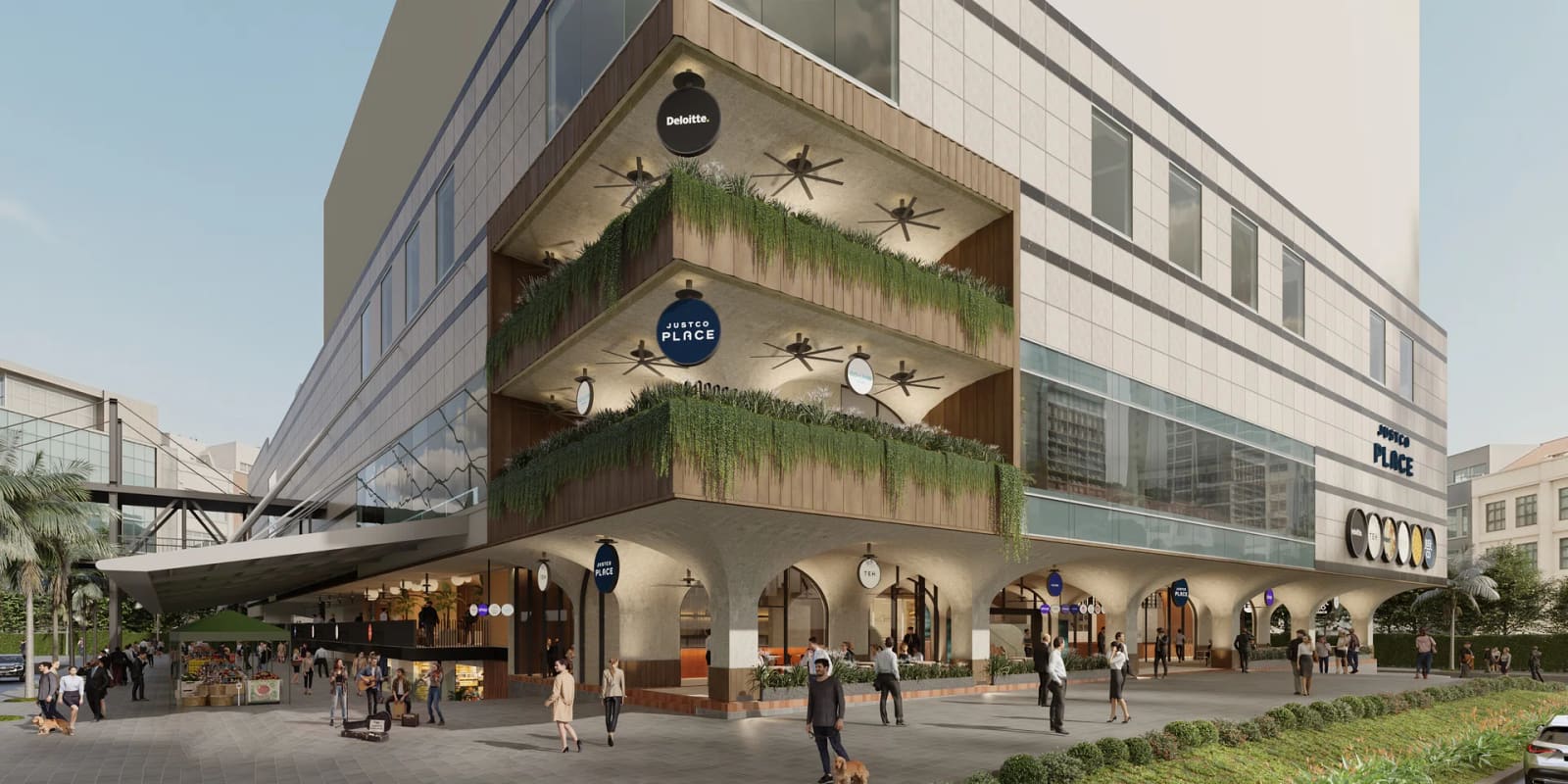
In July, JustCo announced it would take over the former Taste Orchard mall in Singapore's prime shopping belt, rebranding the property as JustCo Place. The project marks the operator's entry into co-living, blending residential units with flexible workspace and shared amenities. The move reflects a broader trend among Asian workspace operators seeking to diversify revenue streams and capture demand from expatriates and digital nomads who prize live-work integration.
Deloitte Singapore will anchor the co-working component of JustCo Place, committing to occupy the entire workspace allocation. The consulting firm is relocating from its long-standing Shenton Way headquarters to Orchard Central in 2027, a shift that underscores the migration of professional services firms toward mixed-use precincts with retail and lifestyle amenities.
The co-living bet carries execution risk. Asian cities from Singapore to Hong Kong have seen co-living ventures struggle with regulatory hurdles, high fit-out costs, and tenant churn. JustCo's ability to cross-sell services between workspace and residential tenants, and to maintain occupancy rates in a market where remote work has reduced demand for city-center housing, will determine whether the model scales.
Regional Context and Competitive Dynamics
Southeast Asia's flexible workspace market has consolidated rapidly since the pandemic. Operators that survived have benefited from landlords' willingness to negotiate master leases at discounted rates, while weaker players exited or were absorbed. JustCo's IPO proceeds give it a capital advantage over privately held competitors, enabling it to lock in favorable lease terms and invest in technology that improves space utilization and tenant experience.
The company's revenue per workstation metric, now approaching US$470 per month, compares favorably with regional peers. That pricing reflects a focus on enterprise clients and professional services firms rather than freelancers or early-stage startups, a strategic choice that trades volume for margin stability.
Singapore remains JustCo's largest market, but the growth trajectory increasingly depends on Indonesia, Thailand, and Malaysia, where a rising middle class and expanding tech sectors are driving demand for flexible office solutions. In Jakarta, for example, developers are repurposing underutilized retail space into co-working centers, creating opportunities for operators with strong brand recognition and operational expertise.
Dividend Signal and Valuation Gap
JustCo's board indicated it plans to distribute dividends equal to 50 per cent of net profit starting in the 2027 financial year, assuming conditions remain favorable. That commitment is unusual for a recently listed growth company and suggests management confidence in sustained profitability. It may also serve to attract income-focused institutional investors in Singapore, where dividend-paying stocks command premium valuations.
The gap between JustCo's current share price of S$0.63 and its IPO price of S$0.94 reflects skepticism about the workspace sector's long-term economics. DBS Group initiated coverage in July with a buy rating and a 12-month target price of S$1.06, citing the company's expanding pipeline and improving unit economics. Whether the market converges toward that view will depend on occupancy trends, lease renewal rates, and the success of the co-living experiment.
For now, JustCo's first post-IPO results offer evidence that disciplined operators can navigate the structural shifts reshaping how Asia works, even as the sector's valuation multiples remain compressed.
RELATED STORIES
Singapore Banks Hit Record Highs on Wealth Management Surge
Priyanka V. Rao · 2 min
Allianz Acquires HSBC Singapore Insurance Operations in $2.3 Billion Deal
Priyanka V. Rao · 3 min

Singapore Expands Bank Network for Financial Crime Intelligence Platform
Priyanka V. Rao · 3 min
Singapore Approves 37 Crypto Firms From Nearly 300 License Applications
Priyanka V. Rao · 2 min
Spot something wrong? Email editor@briefasia.com. We log every correction publicly.