Finance · Markets
Japan's Yen Hits Four-Decade Low as Dollar Breaks Through 164
Currency weakens to levels not seen since 1986, but analysts caution that intervention timing remains critical for effectiveness
KEY TAKEAWAYS
- ·The yen fell to 164 per dollar Thursday, its weakest level in forty years, driven by the persistent interest rate gap between Japan and the United States.
- ·Analysts caution that Tokyo must time any currency intervention carefully to maximize effectiveness, as premature action could drain reserves without stabilizing the exchange rate.
- ·The weak yen benefits exporters through improved competitiveness but squeezes households and small businesses facing surging import costs for energy and food.
Currency Slide Accelerates
The Japanese yen slumped to its lowest level in four decades against the US dollar Thursday night, marking a fresh milestone in the currency's prolonged decline. The yen breached 164 per dollar, a threshold not seen since 1986, as the wide interest rate differential between Japan and the United States continues to weigh on the currency.
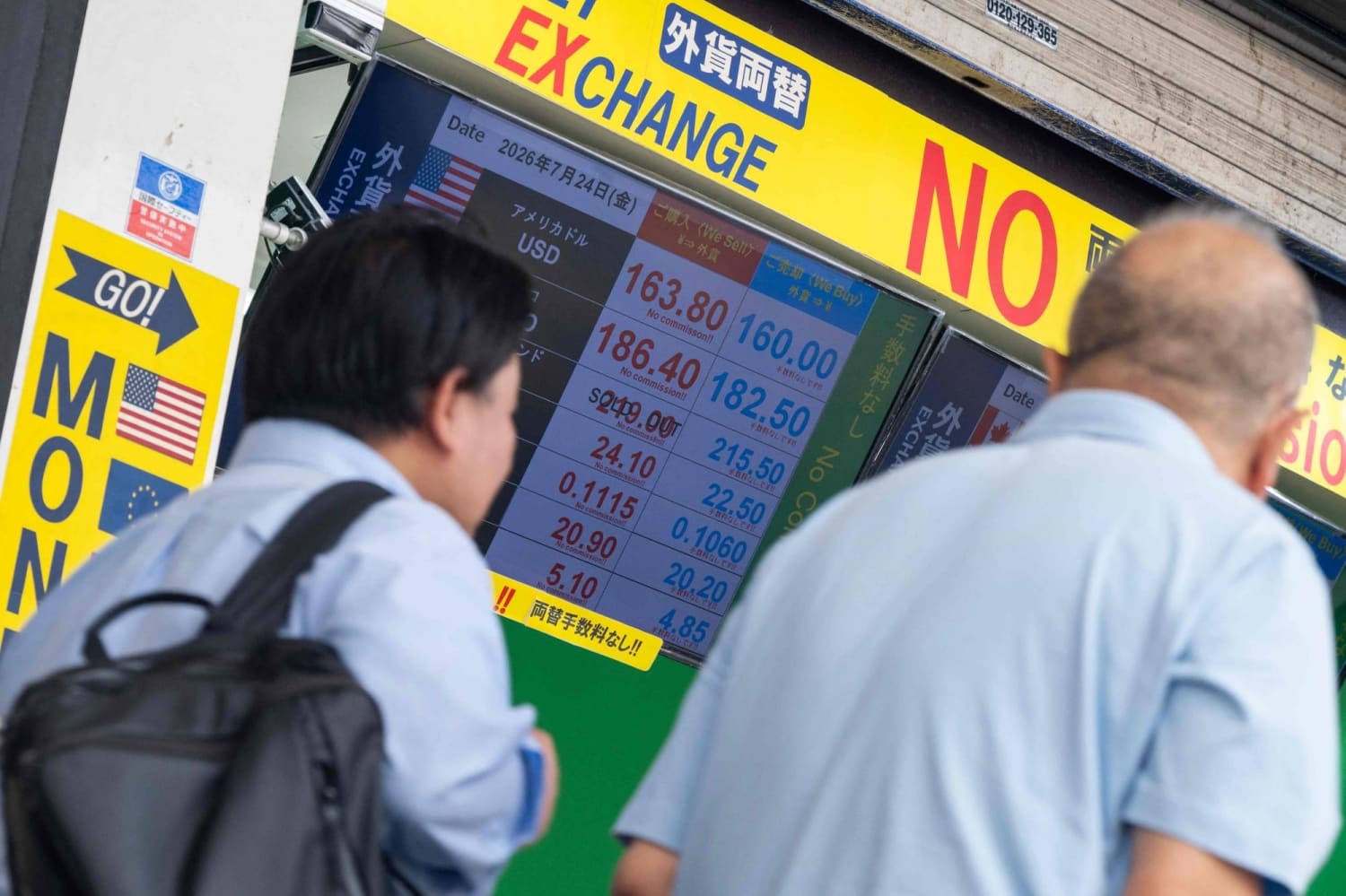
Currency exchange displays across Tokyo reflected the deteriorating value Friday morning, with the Shinjuku district's electronic boards showing rates that underscore the mounting pressure on Japanese monetary authorities. The slide represents a 12 percent depreciation year-to-date and has intensified scrutiny on the Bank of Japan's ultra-loose monetary stance.
Intervention Calculus
Despite the accelerating weakness, analysts suggest that Tokyo may need to exercise patience before deploying currency intervention measures. The effectiveness of such action depends heavily on market conditions and coordination with international partners, factors that remain in flux as global central banks navigate divergent policy paths.
Japan's Ministry of Finance has historically intervened in foreign exchange markets during periods of excessive volatility, but the timing of such moves can determine whether they succeed in stabilizing the currency or merely drain reserves without lasting impact. Previous interventions in 2022 provided only temporary relief before the yen resumed its downward trajectory.
The current environment presents a particularly complex challenge. US interest rates remain elevated as the Federal Reserve maintains its restrictive policy stance, while the Bank of Japan has kept rates near zero despite mounting inflation pressures. This gap creates a powerful incentive for carry trades, where investors borrow yen at low rates to invest in higher-yielding dollar assets.
Export Competitiveness versus Import Costs
The weak yen delivers mixed consequences for Japan's economy. Exporters gain pricing advantages in overseas markets, as their products become more competitive when converted from dollar revenues. Major manufacturers have reported improved profit margins on international sales, particularly in automotive and electronics sectors where Japan maintains strong global market positions.
However, the currency depreciation simultaneously inflates import costs, squeezing households and businesses that rely on foreign goods and commodities. Energy imports, which Japan depends on heavily following the reduction of nuclear power capacity, have become significantly more expensive in yen terms. Food prices have climbed as well, eroding purchasing power for consumers already grappling with wage growth that lags inflation.
Small and medium-sized enterprises face particularly acute pressure, as many lack the pricing power to pass increased costs to customers. The Bank of Japan has acknowledged these trade-offs in recent policy statements, though it has stopped short of signaling an imminent shift in its accommodative stance.
Regional Ripple Effects
The yen's weakness reverberates across Asian currency markets, where several central banks monitor movements closely to assess implications for their own export competitiveness. A persistently weak yen can trigger competitive pressures, as regional manufacturers find themselves at a disadvantage relative to Japanese rivals in third-country markets.
South Korean exporters, who compete directly with Japanese firms in semiconductors, automobiles, and consumer electronics, have expressed concern about the currency gap. The won has also weakened against the dollar this year, though not to the same extent as the yen, leaving Korean manufacturers in a complex position as they balance domestic inflation concerns against external competitiveness.
China's renminbi has remained relatively stable in comparison, supported by capital controls and active management by the People's Bank of China. However, Beijing watches Japanese currency movements carefully, as any significant intervention by Tokyo could influence broader regional dynamics and potentially complicate China's own exchange rate management.
What Comes Next
Market participants are now watching for signals from Japanese officials on tolerance levels for further depreciation. Finance Minister statements in coming days will be scrutinized for language suggesting imminent action, though authorities typically avoid telegraphing intervention plans to maintain tactical advantage.
The Bank of Japan's next policy meeting, scheduled for late August, will provide additional clarity on whether policymakers see the currency weakness as manageable or a threat requiring monetary policy adjustment. Any hint of a hawkish shift could trigger sharp yen appreciation, though most economists expect the central bank to maintain its patient approach given ongoing concerns about economic growth and the fragility of inflation expectations.
For now, the yen remains vulnerable to further weakness as long as the interest rate differential persists. Whether Tokyo chooses to act, and when, will depend on a calculation that weighs market conditions, international coordination prospects, and the broader economic impact of a currency that has now reached levels unseen in a generation.
RELATED STORIES
Yen Climbs to Eight-Month High as Rate Hike Expectations Shift Sentiment
Jun-ho Seo · 3 min

Japan Deploys $96.5 Billion in Currency Intervention to Halt Yen's Slide
Aiko Nakamura · 3 min

Japan Deploys Record ¥15.39 Trillion to Defend Yen in Two-Month Intervention
Cheng Wei-Lun · 3 min

Japan Wage Growth Hits 29-Year High, Reinforcing Central Bank Rate Path
Aiko Nakamura · 3 min
Spot something wrong? Email editor@briefasia.com. We log every correction publicly.