Finance · Markets
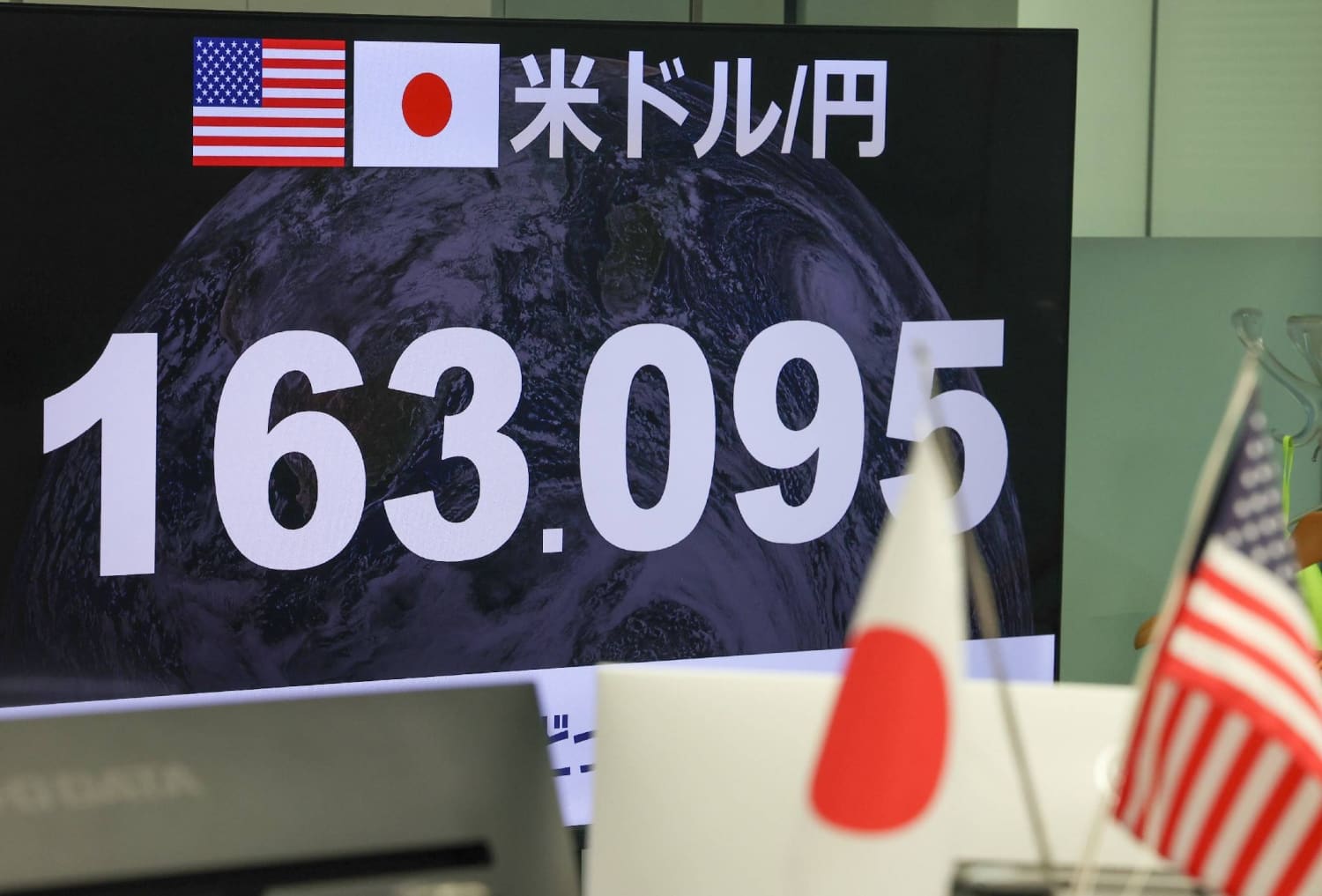
Japan's Yen Hovers Beyond 163 as Markets Brace for Intervention
Tokyo's signals remain opaque while the currency tests levels last seen during previous government action
KEY TAKEAWAYS
- ·The Japanese yen has moved beyond 163 per dollar and settled at those levels, raising market expectations for potential government intervention.
- ·Tokyo officials have provided little clarity on thresholds, maintaining vague warnings about volatility while the yen tests historically sensitive levels.
- ·Traders are monitoring official statements and coordination signals for hints of imminent action, though intervention timing remains deliberately unpredictable.
Currency Under Pressure
The Japanese yen has moved beyond the 163 mark against the dollar and remains at those levels, placing markets on high alert for potential government intervention. The threshold carries symbolic weight in Tokyo, where officials have previously acted to stem sharp currency declines that threaten import costs and household budgets.
Yet authorities have offered few clear signals about their next steps. Finance Ministry officials have maintained their standard warnings about excessive volatility, but the precise trigger points for action remain deliberately vague. That ambiguity is tactical: telegraphing intervention levels invites speculative positioning that can undermine the very support measures Tokyo might deploy.
Reading the Signals
Parsing Japanese intervention signals has become an exercise in reading tea leaves. Officials rarely announce thresholds in advance, preferring instead to speak in generalities about monitoring markets closely and standing ready to take appropriate action. The language has barely shifted even as the yen has weakened steadily through the year.
What traders watch for are subtle shifts in tone, the frequency of official comments, and whether statements come from senior figures like the finance minister or vice minister for international affairs. Increased commentary often precedes action, but not always. In past episodes, intervention has come with little warning, designed to catch markets off guard and maximize impact.
The current situation is complicated by diverging monetary policies. The Bank of Japan has maintained ultra-loose settings while other major central banks, particularly the Federal Reserve, have kept rates elevated to manage inflation. That interest rate differential continues to pull capital toward dollar assets, creating persistent downward pressure on the yen.
The Intervention Toolkit
When Tokyo does act, it typically does so through direct market purchases of yen using foreign exchange reserves. Japan holds substantial dollar reserves, giving it firepower for such operations. Past interventions have ranged from single-day actions to sustained campaigns over several weeks, depending on market conditions and policy goals.
The effectiveness of intervention without coordinated monetary policy shifts remains debated. Unilateral currency operations can provide temporary relief and signal official resolve, but unless underlying rate differentials narrow, the pressure tends to reassert itself. Japan's experience in previous intervention episodes has shown mixed results: sharp initial moves that fade as fundamental drivers reassert themselves.
Some analysts argue that intervention serves more as a speed bump than a turning point, slowing the pace of depreciation rather than reversing it outright. Others contend that even temporary relief matters when import inflation is squeezing households and small businesses lack hedging tools available to large exporters.
Broader Market Implications
The yen's weakness ripples through Asian currency markets, where regional peers often move in loose correlation with the Japanese unit. A sustained slide in the yen can complicate monetary policy decisions elsewhere in the region, particularly for economies that compete with Japan in manufacturing exports or that face their own capital outflow pressures.
For Japanese corporations, the weak yen is a double-edged outcome. Exporters benefit from improved price competitiveness and translation gains on overseas earnings. Importers and domestic-focused firms face rising costs for energy, raw materials, and components sourced abroad. The net effect on corporate Japan depends on the composition of the economy and how quickly firms can pass through higher costs.
Tokyo's challenge is navigating these cross-currents without appearing to target a specific exchange rate level, which would invite criticism from trading partners and potentially violate international commitments against competitive devaluation. Official statements consistently frame any intervention as aimed at smoothing excessive volatility rather than defending a particular number.
What Comes Next
Markets will continue parsing every official comment for hints of imminent action. The Ministry of Finance's daily fixing rates, the tone of parliamentary testimony, and coordination signals with the Bank of Japan all serve as inputs to traders' calculus. Meanwhile, the yen sits at levels that have historically prompted responses, but in an environment where the government's tolerance threshold remains deliberately unclear.
Whether intervention materializes in the coming days or weeks will depend on how quickly the currency moves, whether volatility spikes, and how political pressure builds domestically as households feel the pinch of higher import prices. For now, the market waits, knowing that Tokyo could act at any moment but unable to predict precisely when.
RELATED STORIES

Bank of Japan Eyes Rate Increase as Inflation Risks Mount
Cheng Wei-Lun · 4 min

Japan Deploys $96.5 Billion in Currency Intervention to Halt Yen's Slide
Aiko Nakamura · 3 min

Japan Spent $96.5 Billion in Record Single-Round Currency Intervention
Cheng Wei-Lun · 3 min

Japan Wage Growth Hits 29-Year High, Reinforcing Central Bank Rate Path
Aiko Nakamura · 3 min
Spot something wrong? Email editor@briefasia.com. We log every correction publicly.