Technology · AI
Japan Commits $2.3 Trillion to AI and Chip Manufacturing Push
Tokyo abandons decades of fiscal restraint to mobilize public and private capital through 2040, signaling a new era of industrial policy in Asia's third-largest economy.
KEY TAKEAWAYS
- ·Japan approved a JPY370 trillion investment strategy spanning public and private capital in AI and semiconductors through fiscal 2040, loosening decades of fiscal discipline.
- ·The commitment intensifies regional competition with South Korea, Taiwan, and China for chip manufacturing dominance and supply chain control across Asia.
- ·Implementation challenges include coordinating government and corporate actors, navigating export controls, and rebuilding a semiconductor workforce that declined over thirty years.
A Strategic Pivot
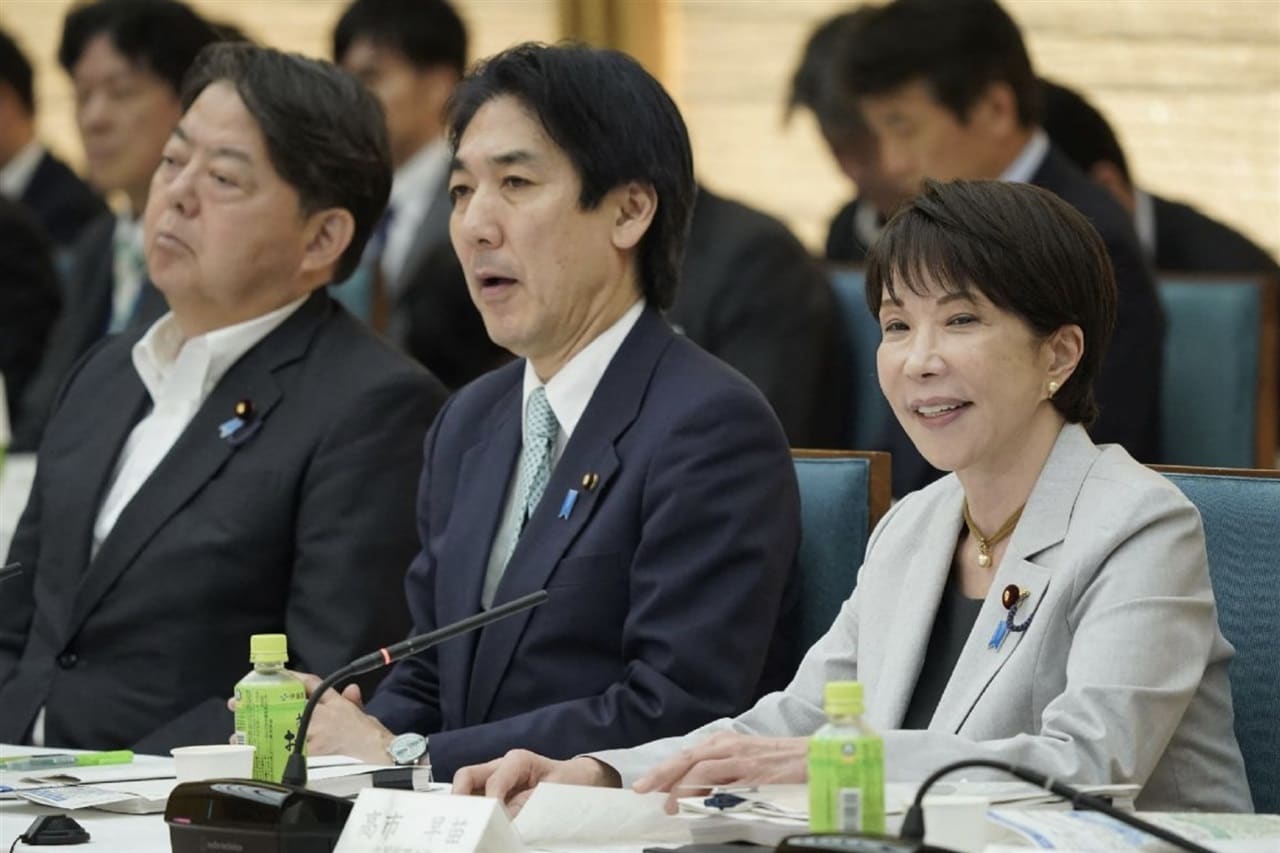
Japan has committed JPY370 trillion, equivalent to approximately $2.3 trillion, to accelerate development in artificial intelligence and semiconductor manufacturing over the next fifteen years. Prime Minister Sanae Takaichi's administration approved the economic strategy, which represents one of the largest industrial policy commitments in the nation's post-war history.
The plan fundamentally alters Tokyo's approach to fiscal management. For decades, Japan maintained strict budgetary discipline even as its public debt climbed past 260 percent of GDP. The new framework loosens those constraints to channel both government spending and private capital into sectors the administration considers critical for economic security.
The timeline extends through fiscal 2040, giving the initiative a multi-decade horizon uncommon in Japanese policymaking. This long runway reflects the capital intensity and lead times inherent in semiconductor fabrication and AI infrastructure. Building advanced fabs can require five years and tens of billions of dollars; training foundation models demands similar scale.
Asia's Semiconductor Race
Japan's move intensifies regional competition for dominance in chip production. South Korea has already pledged support for Samsung and SK Hynix to expand capacity in high-bandwidth memory and advanced logic. Taiwan continues to pour resources into TSMC, which controls more than half of global foundry revenue. China, constrained by export controls, has redirected investment toward mature nodes and domestic equipment.
Tokyo's strategy targets multiple points in the value chain. Upstream, it aims to strengthen materials and equipment suppliers, areas where Japanese firms like Tokyo Electron and Shin-Etsu Chemical hold significant market share. Downstream, it seeks to rebuild domestic fabrication capacity, a capability that eroded as production migrated to Taiwan and South Korea over the past three decades.
The AI component addresses both hardware and software. Japan trails the United States and China in large language model development, but its robotics expertise and manufacturing data offer differentiation opportunities. The government has signaled interest in industrial AI applications, edge computing, and automation systems that integrate with existing factory infrastructure.
Fiscal Mechanics and Market Implications
The JPY370 trillion figure combines direct government expenditure, subsidies, tax incentives, and leveraged private investment. The exact ratio remains unclear, but similar programs in South Korea and the European Union typically see public money catalyze two to three times that amount in corporate commitments.
Relaxing fiscal constraints in a country with the highest debt-to-GDP ratio among major economies carries risk. Bond markets have so far tolerated Japan's borrowing because most debt is domestically held and the yen remains a reserve currency. Shifting to growth-oriented spending could test that tolerance, especially if inflation persists above the Bank of Japan's two percent target.
For multinational corporations, the policy creates new incentives to site operations in Japan. TSMC has already announced a second fab in Kumamoto with government backing. Intel, Samsung, and emerging players may now weigh similar commitments, particularly if subsidies cover a meaningful share of capital expenditure.
The strategy also affects supply chain calculus across Asia. Companies hedging geopolitical risk by diversifying production away from Taiwan and China now have another subsidized option. Japan offers political stability, strong intellectual property protection, and proximity to key markets in South Korea and Southeast Asia.
What Comes Next
Implementation will determine whether the initiative achieves its goals or joins the ranks of ambitious industrial policies that failed to deliver. Japan has launched semiconductor revival efforts before, most recently in the 2010s, with mixed results. Success this time depends on sustained political will, efficient capital allocation, and coordination between ministries, prefectures, and private firms.
The administration must also navigate trade tensions. The United States has pressed allies to restrict technology transfers to China, and Japan's participation in export control regimes will shape which markets its revitalized chip industry can serve. Balancing economic ambition with security commitments will require careful diplomacy.
Talent remains a bottleneck. Japan's semiconductor workforce shrank as the industry declined, and universities produce fewer chip engineers than a generation ago. The strategy includes funding for research and training, but rebuilding expertise takes years. Attracting foreign engineers may prove necessary, challenging a labor market historically resistant to immigration.
Regional partners are watching closely. If Japan successfully scales production and secures supply chains, it shifts leverage in negotiations over technology standards, export controls, and trade agreements. For now, the commitment itself sends a signal that Tokyo views technology leadership as essential to national security and is willing to spend accordingly.
RELATED STORIES

Honda and Nissan Align on Software-Defined Vehicle Development
Cheng Wei-Lun · 2 min

Preferred Networks Eyes Public Listing to Scale AI Chip Production
Aiko Nakamura · 2 min

Fujitsu to Exit Commodity Hardware as AI Shifts Production Strategy
Aiko Nakamura · 4 min
Honda and Nissan Form Alliance to Develop Software-Defined Vehicle Platforms
Aiko Nakamura · 3 min
Spot something wrong? Email editor@briefasia.com. We log every correction publicly.