Technology · Dev
Intel Cuts Data Center Jobs as AI Boom Fails to Lift Legacy Business
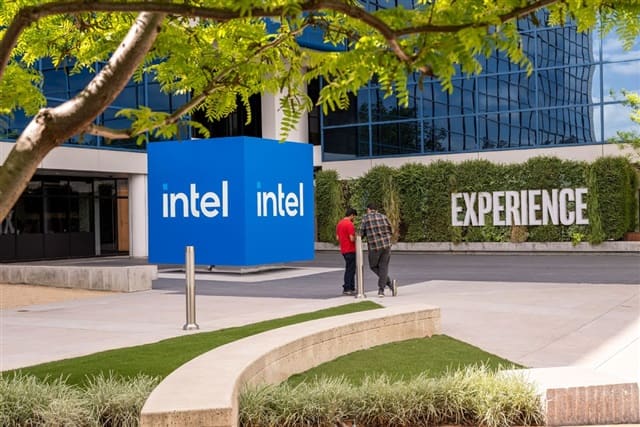
Fresh layoffs in Data Center Group signal continued restructuring under CEO Lip-Bu Tan, even as hyperscalers expand AI infrastructure across Asia-Pacific
KEY TAKEAWAYS
- ·Intel initiated new job cuts in its Data Center Group without disclosing the number of positions or timeline, continuing restructuring under CEO Lip-Bu Tan.
- ·The layoffs come as hyperscalers expand AI infrastructure across Asia, but Intel's Xeon CPUs and Gaudi accelerators capture only a small share of AI server spending dominated by Nvidia and AMD.
- ·Intel's upcoming Sierra Forest and Granite Rapids Xeon chips, plus Gaudi 3 accelerators, will determine whether the company can stabilize revenue and reclaim lost market share in 2027.
Latest Round of Reductions
Intel has initiated another wave of job cuts within its Data Center Group, the division responsible for server processors and data-center silicon. The company declined to specify how many positions will be eliminated or when the reductions will take place, maintaining the opacity that has characterized its workforce adjustments over the past year.
The announcement arrives at an awkward moment: hyperscale cloud operators and enterprise customers across Asia are placing record orders for AI-optimized servers, yet Intel's share of that spending remains stubbornly low. Taiwan-based server ODMs, which assemble machines for Amazon Web Services, Microsoft Azure, and Google Cloud, report that Nvidia GPU accelerators paired with AMD or Arm-based CPUs dominate their AI server bill-of-materials. Intel's Xeon processors, once the default choice for data-center compute, now compete in a market where inference workloads and training clusters prioritize architectures the company was slow to embrace.
Tan's Efficiency Drive
Chief executive Lip-Bu Tan, who took over earlier this year, has made operational discipline his signature theme. Before joining Intel he spent two decades running Cadence Design Systems, where he earned a reputation for tight cost control and margin expansion in a cyclical semiconductor-tools market. Since his arrival, Intel has exited non-core projects, consolidated overlapping engineering teams, and imposed stricter return-on-investment hurdles for new product programs.
The Data Center Group cuts fit that pattern. The division has seen revenue decline in six of the past eight quarters, pressured by market-share losses to AMD in traditional server CPUs and by the shift of AI budgets toward GPU-centric architectures. Tan has signaled he will not subsidize underperforming units indefinitely; businesses that cannot demonstrate a path to sustainable margins face restructuring or divestment.
Asia's AI Build-Out and Intel's Position
Across the region, the contrast between macro demand and Intel's fortunes is stark. Singapore's sovereign wealth fund GIC and Malaysia's Khazanah Nasional have committed a combined USD 2.3 billion to new data-center developments in Johor and Batam, facilities designed primarily for AI inference and large-language-model hosting. Japan's NTT and South Korea's SK Telecom are each deploying thousands of GPU servers this year to support generative-AI services for enterprise customers.
Yet Intel's Gaudi accelerators, the company's answer to Nvidia's H100 and H200 chips, have secured only a handful of design wins in the region. Most orders flow to Nvidia, with a smaller but growing share going to AMD's Instinct line and to custom Arm chips from Amazon and Google. Server vendors in Taipei say Intel's Xeon CPUs still anchor general-purpose compute racks, but AI workloads now account for more than half of new data-center capacity, and those racks run different silicon.
What Comes Next
Intel's ability to stabilize the Data Center Group will depend on two product cycles. The company's Sierra Forest and Granite Rapids Xeon chips, both due to ramp in volume production later this year, promise better power efficiency and higher core counts. If they deliver, Intel could reclaim some of the CPU share it lost to AMD's Genoa and Bergamo processors.
On the accelerator side, the Gaudi 3 chip is sampling now, with production shipments expected early next year. Intel has positioned Gaudi as a lower-cost alternative to Nvidia for inference workloads, particularly in markets where price sensitivity and software flexibility matter more than raw training performance. Whether that pitch resonates with Asian cloud operators, many of whom have already standardized on CUDA, remains an open question.
For now, the job cuts underscore a reality that Tan has acknowledged in earnings calls: Intel cannot afford to staff for the data-center business it once had. It must size the organization for the business it can realistically win, then execute well enough to grow from that smaller base. The restructuring is painful, but in a market where capital efficiency and speed matter as much as scale, it may be the only path back to competitiveness.
RELATED STORIES
Intel Posts Revenue Surge as Data Center Boom Fuels Turnaround
Cheng Wei-Lun · 3 min
Intel Posts Fastest Growth in Fifteen Years on AI Server Surge
Cheng Wei-Lun · 3 min
Intel Unveils EMIB-T Packaging to Challenge TSMC's CoWoS Dominance
Cheng Wei-Lun · 3 min

China Builds AI Infrastructure in Rural West to Power Coastal Tech Ambitions
Cheng Wei-Lun · 3 min
Spot something wrong? Email editor@briefasia.com. We log every correction publicly.