Asia · Business
Honda Locks in GAC Partnership Through 2038
Japanese automaker secures decade-long extension with Chinese joint venture partner amid shifting EV landscape
KEY TAKEAWAYS
- ·Honda extended its joint venture agreement with Guangzhou Automobile Group through 2038, adding 10 years to the partnership originally set to expire in 2028.
- ·The renewal comes as Japanese automakers face declining sales in China, where domestic EV brands have captured market share with competitively priced electric models.
- ·The extension provides Honda with long-term stability to retool factories and integrate Chinese EV technology through its southern China manufacturing base.
A Decade-Long Bet on China
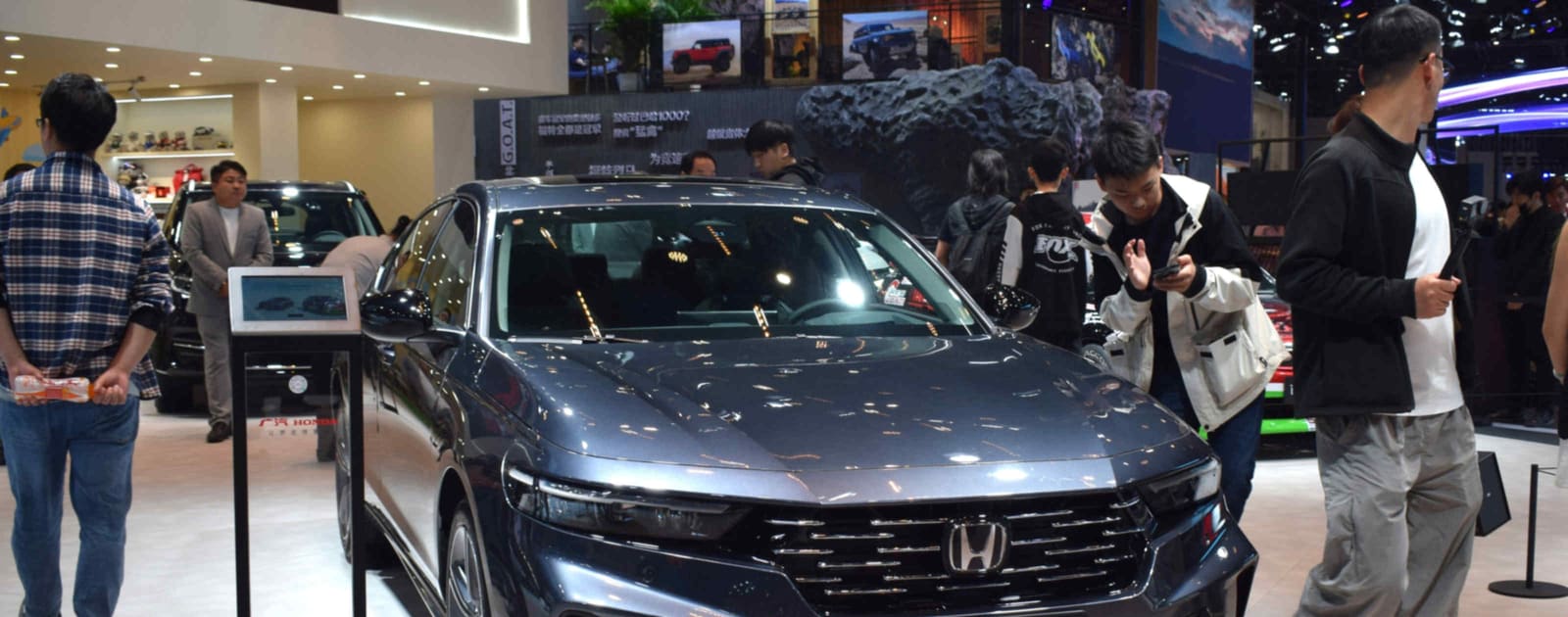
Honda announced Monday it has extended its joint venture agreement with Guangzhou Automobile Group by 10 years, locking in the partnership through 2038. The Tokyo-based carmaker's renewal comes at a pivotal moment for foreign automakers in China, where the original agreement was approaching its 2028 expiration.
The extension reflects Honda's commitment to maintaining manufacturing and distribution infrastructure in the world's largest automotive market, even as Japanese brands face mounting pressure from domestic electric vehicle makers. GAC Honda, the joint venture entity, operates multiple production facilities in southern China and has been a cornerstone of Honda's regional strategy since its establishment.
Market Headwinds for Japanese Brands
The renewal arrives against a backdrop of declining market share for Japanese automakers in China. Honda and Toyota both reported sales drops in the first half of recent reporting periods as Chinese consumers increasingly favor domestically produced electric vehicles from brands like BYD, NIO, and XPeng.
Chinese automakers have rapidly scaled EV production and captured price-sensitive segments with feature-rich electric models, often priced below comparable gasoline or hybrid offerings from foreign brands. This shift has forced legacy automakers to reassess their China strategies, with some reducing production capacity while others, like Honda, are doubling down on local partnerships to accelerate electrification efforts.
The joint venture structure remains essential for foreign automakers operating in China, providing access to local supply chains, regulatory knowledge, and distribution networks that would be difficult to replicate independently.
Strategic Continuity in a Transitional Market
By extending the GAC agreement now, four years ahead of the original 2028 deadline, Honda signals confidence in its ability to adapt product lineups and manufacturing processes to meet evolving Chinese consumer preferences. The early renewal also provides stability for long-term investment planning in factory retooling, supplier contracts, and workforce development.
Joint ventures in China's automotive sector typically operate on fixed-term agreements that require periodic renewal. The 10-year extension is a standard duration that aligns with capital investment cycles for new vehicle platforms and powertrain technologies.
Honda has been working to integrate Chinese EV technology into its product development, a strategy shared by Toyota and other Japanese manufacturers seeking to close the gap with domestic competitors in battery electric and software-defined vehicle architectures. The GAC partnership will likely serve as a testbed for localized electric models tailored to Chinese market demands.
The extension also positions Honda to navigate China's evolving regulatory environment, which continues to favor new energy vehicles through subsidies, favorable licensing policies, and urban access privileges. Foreign automakers without strong local partnerships risk being sidelined as policy support increasingly flows toward domestic champions.
For GAC, the renewed agreement secures continued access to Honda's hybrid technology, quality control processes, and global supply chain networks. Chinese automakers have leveraged joint ventures not only for market access but also as channels for technology transfer and manufacturing expertise that can be applied to their own branded vehicle lines.
The path forward for Honda in China will depend on how quickly it can electrify its GAC joint venture portfolio and whether it can differentiate its offerings in a market where brand loyalty is eroding and product cycles are shortening. The 2038 horizon provides a long runway, but the competitive landscape is shifting faster than traditional automotive planning cycles.
RELATED STORIES
Honda Demands 30% Price Cuts From Suppliers in $9.4 Billion Cost Plan
Cheng Wei-Lun · 3 min
Malaysia's Rare Earth Deposits Draw Foreign Interest Ahead of China Export Controls
Priyanka V. Rao · 3 min
Volkswagen Probes Chinese Supplier After Hundreds of New Graduates Dismissed
Cheng Wei-Lun · 3 min

Beijing Warns Domestic EV Makers Against Overseas Price Wars
Cheng Wei-Lun · 3 min
Spot something wrong? Email editor@briefasia.com. We log every correction publicly.