Technology · Products
Gigabyte's Industrial PC Unit Eyes High-Single-Digit Growth on Hospitality and AI Demand
GIGAIPC has secured orders representing 90 percent of last year's revenue, driven by restaurant automation projects in North America and rising edge AI adoption in semiconductor manufacturing
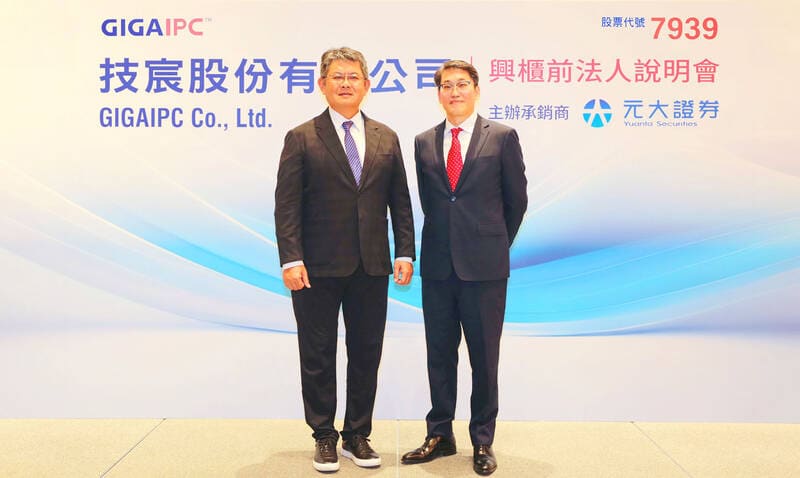
KEY TAKEAWAYS
- ·GIGAIPC has secured orders equivalent to 90 percent of last year's NT$1.86 billion revenue, targeting high-single-digit growth this year.
- ·Hospitality automation accounts for 30 percent of revenue, with contracts from top-ten global restaurant brands focused on US deployments expanding to Europe and Asia.
- ·AI-related revenue is expected to rise from 10-15 percent last year to 15-20 percent this year, driven by semiconductor fabs adopting agentic AI and edge inference systems.
Strong Order Pipeline Anchors Growth Forecast
GIGAIPC, the industrial computing subsidiary of Gigabyte Technology, expects to deliver high-single-digit revenue growth this year, with orders already locked in for roughly 90 percent of 2025's total sales. General manager Arthur Chuang outlined the forecast at a business presentation in Taipei, pointing to sustained momentum in hospitality automation, point-of-sale systems, and factory edge computing.
The company closed last year with NT$1.86 billion in revenue (approximately US$57.45 million), a 33 percent year-on-year increase. Net profit doubled, climbing 101 percent to NT$158 million, while earnings per share rose to NT$9.69 from NT$5.94 the prior year.
Hospitality Automation Commands Largest Revenue Share
The hospitality segment accounted for 30 percent of GIGAIPC's revenue, the largest single vertical. Chuang said the subsidiary has won contracts from several brands ranked among the world's ten largest restaurant operators. These deployments center on the United States market initially, with rollouts planned for Europe and Asia in subsequent phases.
GIGAIPC supplies industrial motherboards, embedded computing modules, and edge AI hardware for these projects. System integrators then incorporate those components into complete restaurant automation platforms, handling tasks from kitchen display systems to self-service kiosks and inventory management.
Semiconductor Fabs Drive Edge AI Adoption
Factory automation contributed 14 percent of last year's revenue, a segment Chuang described as expanding steadily on the back of AI application demand. Semiconductor manufacturers are increasingly deploying agentic AI systems that monitor equipment in real time, adjust process parameters autonomously, and trigger corrective actions without human intervention.
Some customers first procure AI training infrastructure from Gigabyte's data center division, then deploy inference workloads on production lines using GIGAIPC's ruggedized edge servers. This hand-off model allows chipmakers to train models in centralized facilities before pushing them to the factory floor, where latency and environmental constraints favor local compute.
AI-related revenue represented between 10 and 15 percent of the company's total sales last year. Chuang expects that figure to reach 15 to 20 percent this year as semiconductor customers accelerate edge deployments and quick-service restaurant chains integrate vision AI for drive-through and kitchen automation.
Geographic Mix Tilts Toward North America
North America is projected to remain GIGAIPC's largest geographic market, accounting for roughly 40 percent of total revenue this year. Taiwan and Europe follow as the second and third largest markets, respectively, though Chuang did not disclose precise percentages for those regions.
The company posted a compound annual revenue growth rate of 23.4 percent from 2021 through last year. Management expects that trajectory to hold over the next three to five years, underpinned by broadening AI adoption across industrial verticals.
Component Costs Contained Through Inventory Build
Chairman Etay Lee said rising prices for memory, central processing units, and other critical components would have limited impact on this year's orders, because GIGAIPC built up inventory during the fourth quarter of last year. That buffer insulates the company from near-term cost pressure, even as tight memory supply persists.
Lee cautioned that memory availability is expected to remain constrained through the first half of next year, a dynamic that could affect order fulfillment schedules and gross margins if inventory runs low before supply conditions ease.
What Comes Next
GIGAIPC's growth hinges on two parallel trends: the continued digitization of hospitality operations in mature markets and the expansion of edge AI inference in precision manufacturing. Restaurant chains are deploying more sensors, cameras, and connected devices per location, creating pull for ruggedized compute at the edge. Meanwhile, semiconductor fabs are moving from proof-of-concept AI pilots to production-scale deployments, a shift that favors vendors with both data center and edge portfolios.
The company's ability to cross-sell between Gigabyte's server business and its own edge hardware gives it an advantage in accounts that want a single vendor for training and inference infrastructure. As AI models grow larger and inference moves closer to the data source, that integration may prove more valuable than standalone edge hardware alone.
RELATED STORIES

Taiwan's Neousys Bets on Edge AI Expansion Across Defense and Manufacturing
Cheng Wei-Lun · 3 min
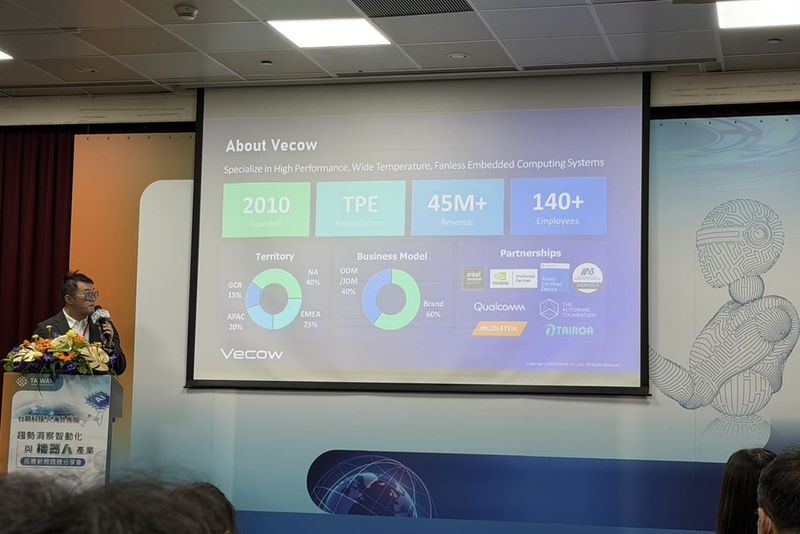
Taiwan's Vecow Sees Western Markets Drive Robotics Push
Cheng Wei-Lun · 3 min
Hon Hai Posts Record August Revenue on AI Server Demand
Jun-ho Seo · 3 min
Integrated Systems Will Drive Next Wave of AI Growth, Says TSMC
Cheng Wei-Lun · 4 min
Spot something wrong? Email editor@briefasia.com. We log every correction publicly.