Asia · Business
Germany Commits $256M to Electrify Surabaya's First Regional Rail Line
Construction of the 34-kilometer double-track commuter corridor connecting Surabaya and Sidoarjo begins in 2027, backed by KfW concessional financing and EU infrastructure strategy.
KEY TAKEAWAYS
- ·Germany is financing Indonesia's Surabaya Regional Railway Line with 236 million euros through KfW, covering electrification and double-tracking of the 34-kilometer Surabaya-Sidoarjo corridor.
- ·Construction begins in 2027 as part of the EU Global Gateway initiative, aiming to create the region's first fully electrified commuter rail system in Greater Surabaya's eight-million-person metro area.
- ·The project diversifies Indonesia's infrastructure financing beyond traditional partners and could unlock future phases extending rail service across East Java to cities like Malang.
Europe Backs Indonesia's Urban Rail Push
Germany will provide 236 million euros ($256 million) to Indonesia for the first phase of a regional commuter rail system in Surabaya, the country's second-largest metropolitan area. The financing deal positions the project for construction to begin in 2027, as Jakarta seeks to replicate the success of its own commuter rail network in East Java.
KfW Development Bank, Germany's state-owned development lender, structured the package as a 230-million-euro concessional loan alongside a 6-million-euro technical assistance grant. The Indonesian government will contribute counterpart funding, though the exact amount has not been disclosed. The deal is part of the European Union's Global Gateway initiative, which aims to mobilize infrastructure investment in emerging markets as a counterweight to China's Belt and Road.
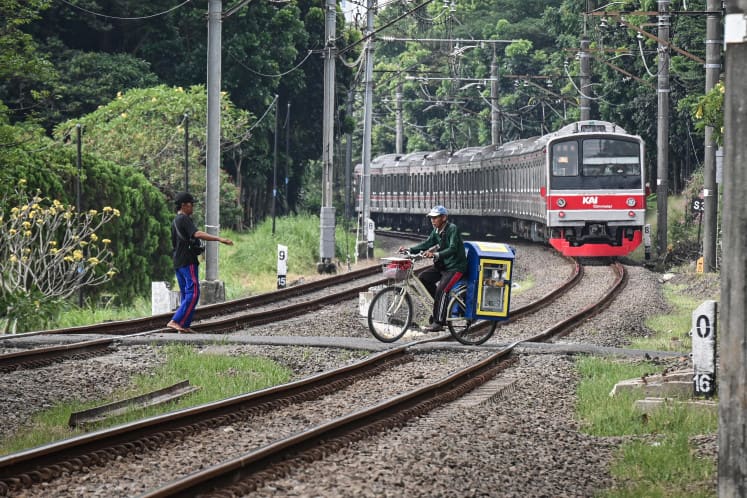
The Surabaya Regional Railway Line will modernize and electrify the existing 34-kilometer corridor linking Surabaya with Sidoarjo, a densely populated industrial satellite city. Current services run on diesel locomotives over single-track segments, limiting frequency and capacity. The project will install double tracks, overhead catenary systems, and modern signaling across the route.
Oliver Sperling, deputy head of mission at the German embassy in Jakarta, said the project reflects a long-standing partnership in transport infrastructure between the two countries. He emphasized that German and European firms are positioned to supply engineering expertise, electrification technology, and rolling stock as Indonesia moves toward climate-resilient transport systems.
Regional Rail as Climate Strategy
The Greater Surabaya metropolitan area, home to more than eight million people, has struggled with congestion and air quality as car ownership surges. The regional railway is expected to shift a portion of daily commuters from private vehicles and intercity buses onto electric rail, reducing both travel times and emissions.
Indonesia's national railway operator, Kereta Api Indonesia, has operated limited commuter services on the Surabaya-Sidoarjo corridor for years, but aging infrastructure and diesel traction have constrained ridership. Electrification and double-tracking will enable shorter headways and higher speeds, making rail a more competitive option for daily trips.
The project is the first segment of a broader vision to build out a commuter rail network across East Java, potentially extending to Malang and other cities in the region. Success in Surabaya could unlock additional financing for subsequent phases, following the model of Jakarta's Jabodetabek commuter system, which now carries more than one million passengers daily.
Europe's Infrastructure Play in Southeast Asia
The German financing comes as European governments and institutions intensify infrastructure engagement in Southeast Asia, particularly in sustainable transport and energy. The Global Gateway strategy, launched by the European Commission in 2021, seeks to deploy up to 300 billion euros globally by 2027, with a focus on projects that meet climate and governance standards.
KfW has been active in Indonesia for decades, financing projects ranging from geothermal power plants to urban water systems. The Surabaya rail deal is among the largest transport commitments in recent years, signaling confidence in Indonesia's ability to execute complex infrastructure under the current administration.
For Indonesia, diversifying financing sources beyond traditional partners like Japan and China has become a strategic priority. European lenders typically offer concessional terms and technical assistance that align with the government's emphasis on technology transfer and local capacity building.
Construction timelines and procurement details have not been finalized, but the government has indicated that civil works will begin in 2027, with commissioning targeted for the early 2030s. The project will require coordination among multiple agencies, including the Ministry of Transportation, state railway operator, and local governments in East Java.
RELATED STORIES
Bayan Resources Halts Coal Deliveries After Indonesia Quota Dispute
Lim Hui Ying · 3 min
Five ASEAN Members Back Regional Oil Stockpile as Study Nears Completion
Tran Quoc Bao · 3 min

Southeast Asian Firms Overlook Digital Pact Worth USD 2 Trillion
Lim Hui Ying · 4 min

Indonesia Charges Toba Pulp Lestari in $113 Million Tax Fraud Probe
Siti Nuraini · 3 min
Spot something wrong? Email editor@briefasia.com. We log every correction publicly.